
Coup Plot: Bolsonaro Sentenced to 27 Years by Brazil Court
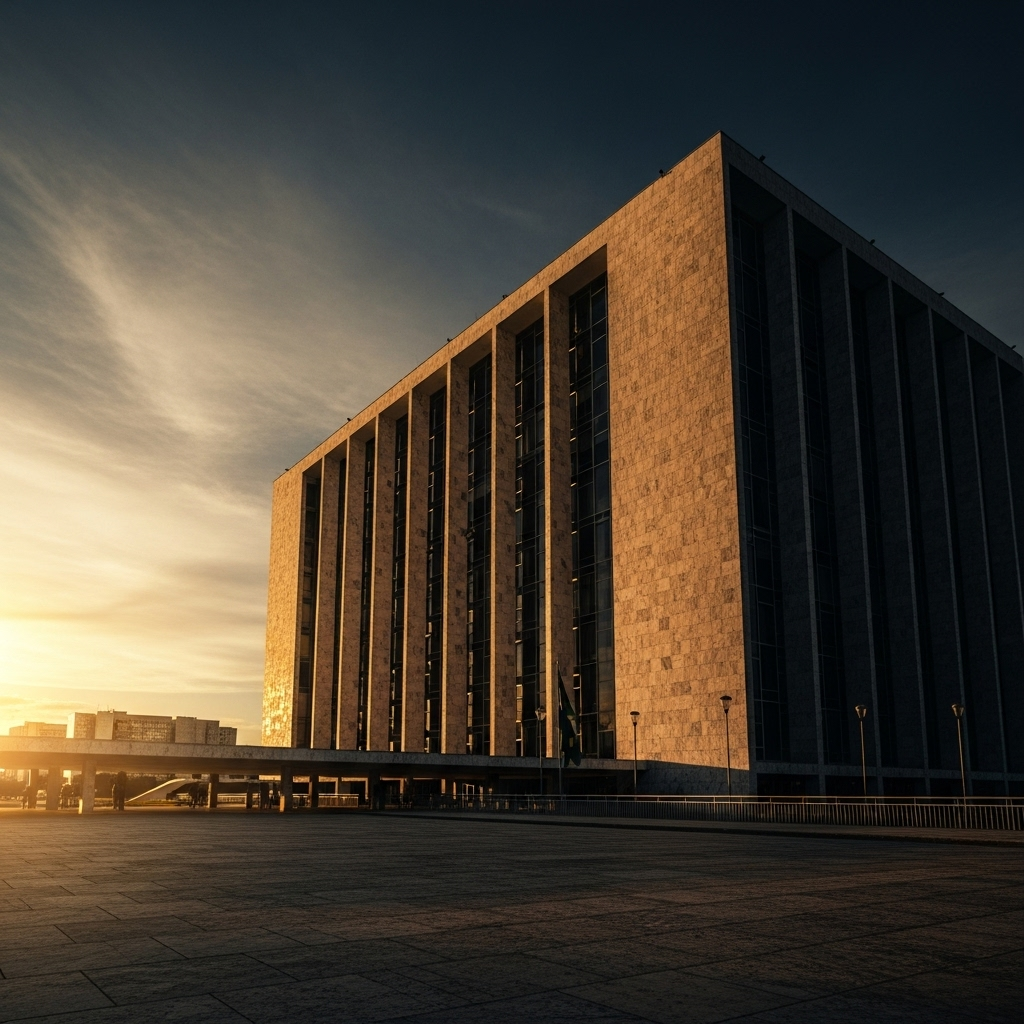
In a historic and seismic ruling, Brazil’s Supreme Federal Court (STF) has found former President Jair Bolsonaro guilty of leading a complex coup plot designed to violently overturn the results of the 2022 presidential election. The court handed down a staggering 27-year prison sentence for charges including high treason, sedition, and attempting to abolish the democratic rule of law, marking a dramatic conclusion to a saga that has captivated and divided the nation.
The verdict, delivered after months of intense legal battles and public scrutiny, represents a pivotal moment for Brazil’s young democracy. The prosecution successfully argued that Bolsonaro and a close circle of advisors orchestrated a multi-pronged strategy to discredit the election, incite military intervention, and illegally retain power following his narrow election loss to Luiz Inácio Lula da Silva.
The Verdict and The Charges
The STF’s 8-3 majority decision was read aloud by Justice Alexandre de Moraes, who has been a central figure in the investigation. Moraes described the evidence as “overwhelming and irrefutable,” painting a damning picture of a leader who actively sought to subvert the will of the people. The court found Bolsonaro guilty on several counts, with the most severe being the orchestration of the coup plot itself.
Key evidence presented during the trial included:
- Incriminating Video Footage: A video of a July 2022 meeting where Bolsonaro explicitly pressured cabinet members to spread disinformation about the electronic voting system and discussed plans for a “state of defense” to annul the election results.
- Witness Testimony: High-ranking military officials and former aides testified that they were directly ordered by Bolsonaro to prepare for a military takeover and to arrest political opponents, including Supreme Court justices.
- Digital Communications: A trove of messages from encrypted apps showed a clear chain of command, with Bolsonaro at the top, coordinating efforts to instigate riots and create a pretext for military intervention. This evidence was corroborated by previous investigations by federal police.
Prosecutors argued that these actions were not just political rhetoric but a concrete and dangerous conspiracy against the state. The 27-year sentence reflects the gravity of these charges, with the court emphasizing the need to send a powerful message that attacks on democracy will not be tolerated.
Unpacking the Details of the Coup Plot
The prosecution’s case laid out a chillingly detailed timeline of the conspiracy. The alleged coup plot was not a spontaneous act but a calculated plan that began months before the election. According to court documents, the strategy involved several phases.
First was the “Disinformation Phase,” where Bolsonaro and his allies relentlessly attacked the integrity of Brazil’s internationally respected electronic voting machines. This was intended to sow doubt and lay the groundwork for challenging a potential loss. The court found this to be a deliberate tactic to create a loyal base of followers who would believe the election was stolen.
The second phase, the “Legal Obstruction Phase,” involved drafting a presidential decree that would have declared a state of emergency, annulled the election, and ordered the arrest of Justice de Moraes. A draft of this decree was found at the home of Bolsonaro’s former justice minister, Anderson Torres, which became a smoking gun in the investigation. This document was presented as clear proof of intent to dismantle democratic institutions.
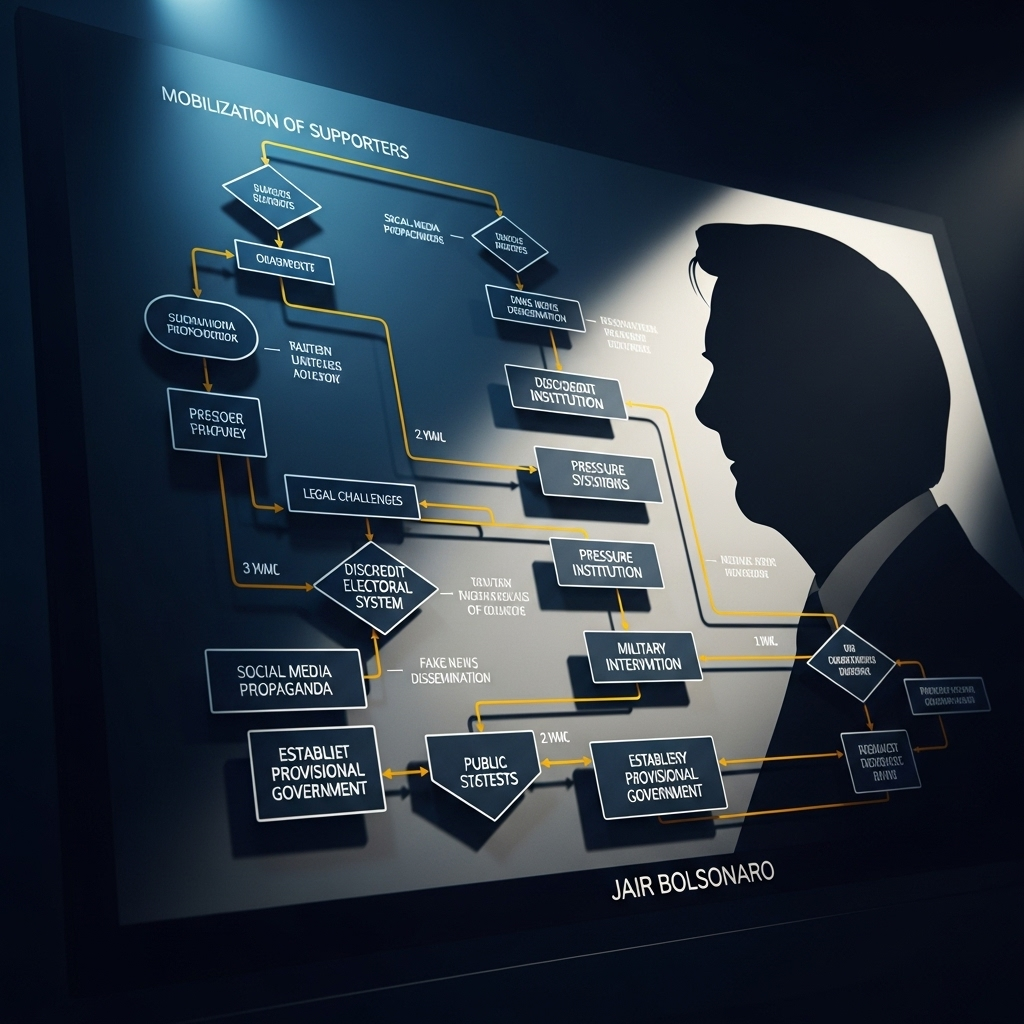
Finally, the “Insurrection Phase” culminated in the January 8th, 2023 riots, where thousands of Bolsonaro’s supporters stormed Congress, the Supreme Court, and the presidential palace. While Bolsonaro was in the United States at the time, the court ruled that his inflammatory rhetoric and direct encouragement were the primary catalysts for the violence. The prosecution successfully linked the planning meetings to the subsequent riots, arguing they were a direct result of the failed coup plot.
National Reaction and Political Fallout
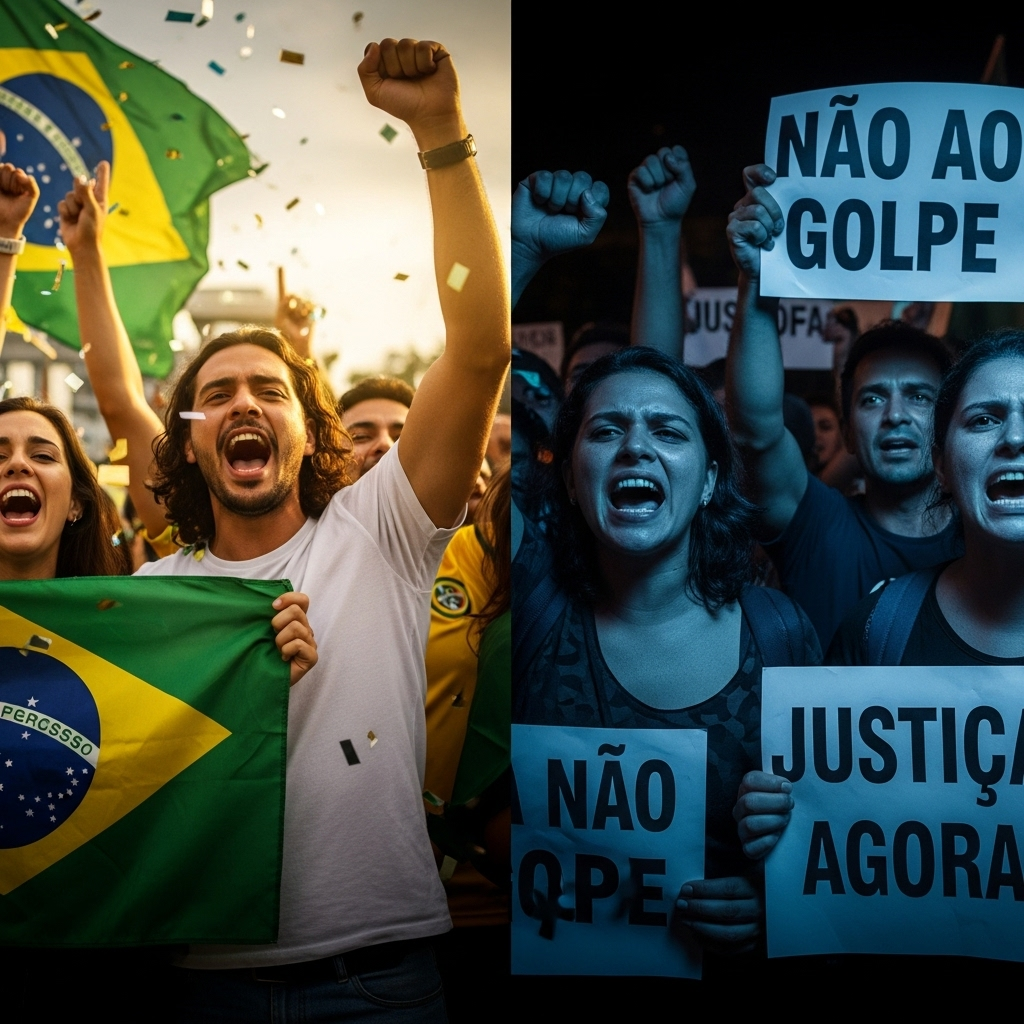
The verdict has been met with a torrent of mixed reactions across the deeply polarized country. In major cities like São Paulo and Rio de Janeiro, supporters of President Lula and pro-democracy advocates gathered to celebrate the ruling, waving Brazilian flags and chanting slogans in support of the Supreme Court. Many hailed it as a victory for justice and a crucial defense of the constitution.
Conversely, Bolsonaro’s fervent supporters have reacted with anger and disbelief. Small but vocal protests have emerged, with many echoing the former president’s claims that he is the victim of a political witch hunt. On social media, hashtags like #BolsonaroPoliticalPrisoner trended, fueled by right-wing influencers who called the verdict a “judicial dictatorship.” Security has been reinforced around key government buildings in anticipation of potential unrest.
Bolsonaro’s legal team has already announced its intention to appeal the decision, a process that could take years. In a fiery statement, his lawyer called the trial a “political spectacle” and maintained the former president’s innocence. However, legal experts note that overturning a decision from the nation’s highest court is exceedingly difficult.
What’s Next for Bolsonaro and Brazil?
With this sentence, Jair Bolsonaro’s political career is effectively over. Already barred from running for office until 2030 due to a separate conviction, this prison sentence solidifies his removal from the political landscape. The immediate question is when, and if, he will be incarcerated, pending the lengthy appeals process.
For Brazil, this is a watershed moment. The conviction of a former president on charges of plotting a coup is a powerful affirmation of the strength and independence of its judicial institutions. It sends a clear signal to any future political actors that attempts to undermine democracy will have the most severe consequences. Many analysts believe this will help stabilize the political climate in the long run, though short-term turbulence is expected.
The ruling forces the Brazilian right to redefine itself without its towering figurehead. The “Bolsonarismo” movement now faces a leadership vacuum, which could lead to either fragmentation or the rise of a new leader who may adopt a more moderate or even more extreme stance. The future of the country’s conservative politics hangs in the balance.
Ultimately, the sentencing of Jair Bolsonaro for the coup plot closes a tumultuous chapter in Brazilian history. It serves as both a cautionary tale about the fragility of democracy and a testament to the resilience of the institutions designed to protect it. The world will be watching as Brazil navigates the aftermath and works to heal its deep political divisions, hopefully entering a new chapter of democratic consolidation.
“`


