
Dem governors: 5 states see new crime crackdowns now
In a notable shift responding to public concern and persistent crime rates, several prominent dem governors are championing and implementing new, aggressive crime-fighting initiatives. Moving beyond broader reform conversations, these state leaders are now targeting specific, high-visibility issues like organized retail theft, carjackings, and fentanyl trafficking with focused task forces and increased funding. This represents a significant pivot in states traditionally known for progressive policies, signaling a pragmatic approach to public safety ahead of upcoming election cycles.
This article breaks down the new crime crackdowns being rolled out in five key states led by Democratic governors, detailing the specific actions they are taking to restore a sense of security for their constituents.
In This Article:
California’s War on Organized Retail Theft
In California, Governor Gavin Newsom is taking direct aim at the rampant organized retail theft that has plagued cities like Los Angeles and San Francisco. In response to brazen “smash-and-grab” robberies, the state has significantly expanded its Organized Retail Crime Task Force (ORCTF), operated by the California Highway Patrol (CHP).
The new strategy involves embedding CHP investigators with local police departments and district attorneys’ offices to build stronger cases that can be prosecuted more effectively. Funding has been boosted by over $250 million to support these collaborative efforts, enabling more arrests and the recovery of millions in stolen merchandise. Governor Newsom has emphasized that California will not tolerate this level of criminal activity, stating that the state is “doubling down on our efforts to apprehend these criminals and shut down the stolen goods market.”
This crackdown also includes a new digital forensics unit dedicated to tracking the online marketplaces where stolen goods are often resold. By targeting the financial incentive, officials hope to dismantle the criminal networks from the top down. Read more about the economic impact of retail crime in our related coverage.

New York’s Multi-Pronged Public Safety Push
New York’s Governor Kathy Hochul has launched a comprehensive public safety plan focusing on gun violence and crime in the transit system. A key component is the Interstate Task Force on Illegal Guns, which brings together law enforcement from neighboring states to stop the flow of illegal firearms into New York. This initiative has already resulted in the seizure of thousands of illegal weapons.
In New York City, Governor Hochul has coordinated closely with Mayor Eric Adams on the “Cops, Cameras, and Care” initiative to make the subway system safer. This includes a surge of police officers in high-traffic stations and an expansion of security camera networks throughout the transit system. The “Care” component involves deploying more mental health outreach teams to connect individuals in crisis with services, addressing one of the root causes of public disorder.
“Public safety is my top priority,” Governor Hochul stated in a recent press release. “We are using every tool at our disposal to make our streets and our subways safer for all New Yorkers.”
Illinois Targets Expressway Shootings and Carjackings
In Illinois, Governor J.B. Pritzker is confronting the alarming rise in expressway shootings and carjackings, particularly in the Chicago metropolitan area. A major part of the state’s response is the installation of hundreds of high-resolution cameras and automated license plate readers on all 1,700 miles of expressways in Cook County.
This technology provides law enforcement with critical evidence to identify and track vehicles involved in violent crimes. The data is shared in real-time between state and local police, leading to a higher rate of apprehension. Since its implementation, the program has assisted in hundreds of investigations related to vehicular hijacking, terrorism, and kidnapping.
Furthermore, Governor Pritzker signed legislation that dedicates more resources to multi-jurisdictional carjacking task forces. These teams coordinate efforts across city and suburban police departments to disrupt carjacking rings that often operate across municipal boundaries. The law also provides funding for community-based violence prevention programs aimed at steering at-risk youth away from criminal activity.

Pennsylvania’s Crackdown on Fentanyl and Gun Violence
With a background as the state’s former Attorney General, Pennsylvania Governor Josh Shapiro has made combating the opioid crisis and gun violence the centerpiece of his public safety agenda. A major new initiative involves the creation of a statewide Fentanyl and Opioid Task Force, which coordinates the efforts of state police, federal agencies like the DEA, and local health departments.
The task force focuses on disrupting the supply chain of the deadly synthetic opioid by targeting major traffickers. At the same time, it aims to expand access to life-saving resources like naloxone and addiction treatment services. Governor Shapiro has authorized the use of state police resources to support local police departments in high-crime areas of Philadelphia and Pittsburgh, specifically to get illegal guns off the streets.
His administration is also investing in advanced forensic technology to help trace firearms used in crimes, a strategy aimed at solving more cases and identifying straw purchasers. This dual approach of aggressive enforcement against suppliers and enhanced support for communities reflects a comprehensive strategy to tackle two of the state’s most pressing issues. For more details, see the latest reports from the Pennsylvania State Police.
What Michigan’s Dem Governors Are Doing About Crime
In Michigan, the administration led by Governor Gretchen Whitmer is taking a community-focused yet firm approach to crime reduction. While many dem governors are creating statewide task forces, Michigan is also funneling significant resources directly to local communities through the new “MI Safe Communities” program.
This program provides over $75 million in grants to local governments to hire more police officers, raise officer salaries to remain competitive, and support community violence intervention (CVI) programs. CVI programs use trusted community members to interrupt cycles of violence before they escalate. This model has shown success in reducing homicides and shootings in other cities.
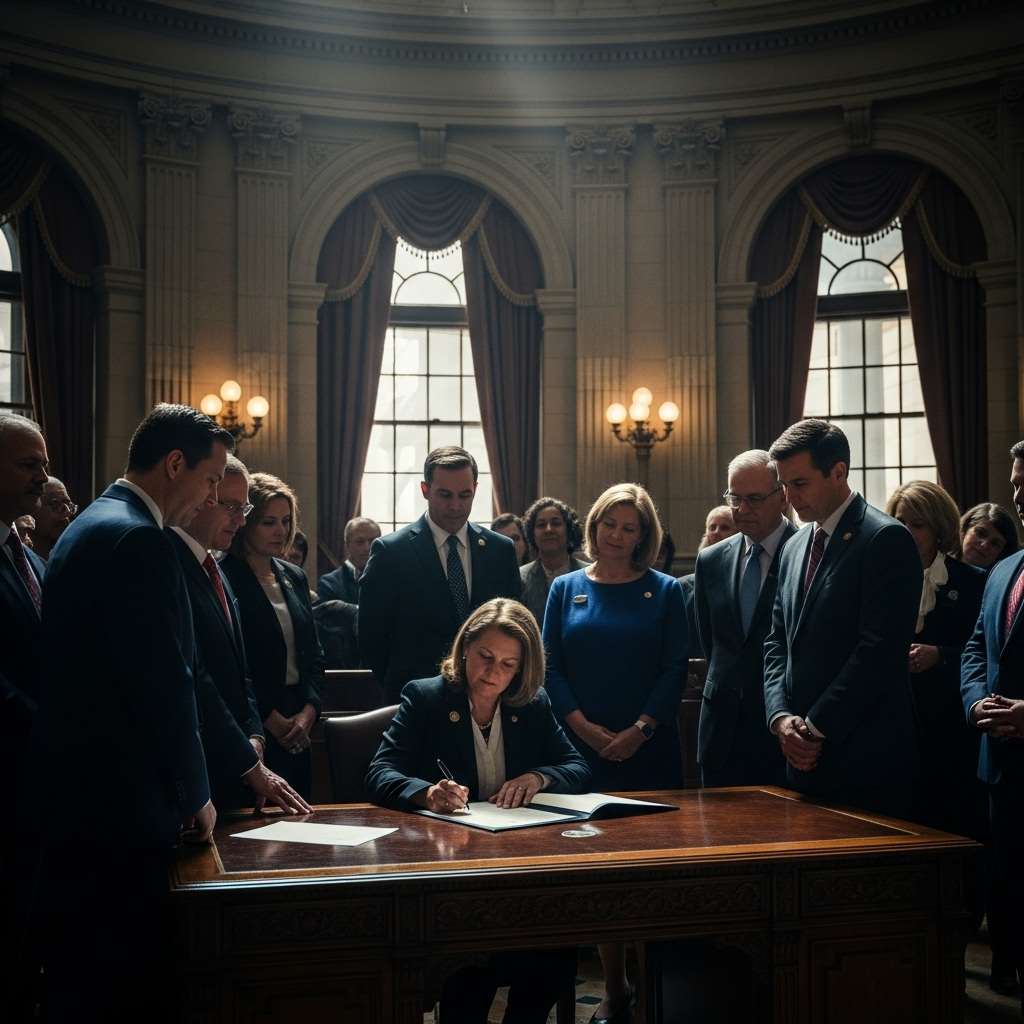
Additionally, Governor Whitmer recently signed a package of bills aimed at curbing gun violence. This includes legislation for universal background checks, safe storage requirements, and extreme risk protection orders (also known as “red flag” laws). This legislative push, combined with direct funding for local law enforcement and community groups, forms a comprehensive strategy aimed at both preventing and responding to violent crime.
A New Approach to Public Safety
The recent crackdowns in these five states illustrate a clear trend: Democratic governors are actively embracing tough-on-crime policies to address voter concerns head-on. By targeting specific, highly visible crimes with dedicated funding and specialized task forces, these leaders are demonstrating a commitment to public safety that is both tangible and politically astute.
While long-term solutions and criminal justice reform remain part of the broader conversation, the immediate focus has shifted to enforcement and security. This pragmatic pivot could redefine the party’s platform on crime and public safety for years to come. You can explore a different perspective in our article on recent bipartisan efforts in Congress.
“`


