
DR Congo Mourners: Over 20 Killed in Jihadist Attack
A horrific attack in the Democratic Republic of Congo has left a community in deep sorrow after suspected jihadist militants targeted a wake. Initial reports from local authorities confirm that more than 20 people were killed while attending a funeral ceremony. The grieving gathering of DR Congo mourners was violently disrupted in the volatile eastern region of the country, a place long plagued by armed conflict and instability.
The assault, which took place in the Beni territory of North Kivu province, is being attributed to the Allied Democratic Forces (ADF), a militant group with established ties to the Islamic State. This latest act of violence underscores the severe security challenges facing the region and the grave danger civilians face in their daily lives, even during moments of solemn remembrance.
Details of the Attack on the Funeral
According to local civil society leaders and military sources, the assailants descended upon the village late in the evening. The community had gathered to mourn the passing of a resident when the militants, armed with machetes and firearms, launched their coordinated assault. The attack was swift and brutal, leaving little chance for the victims to escape.
“They came out of the bush and just started shooting and cutting people down,” one survivor recounted to a local journalist. “We were there to say goodbye to a loved one, and it turned into a bloodbath. It is a level of cruelty that is impossible to comprehend.” The targeted gathering of mourners highlights a chilling tactic used by the ADF to instill maximum fear and disrupt the social fabric of communities.
The official death toll currently stands at over 20 fatalities, but officials fear the number could rise as more information becomes available and search parties check the surrounding areas. In addition to the killings, several homes and properties were looted and set on fire, compounding the community’s loss.
The Plight of the DR Congo Mourners and Community Response
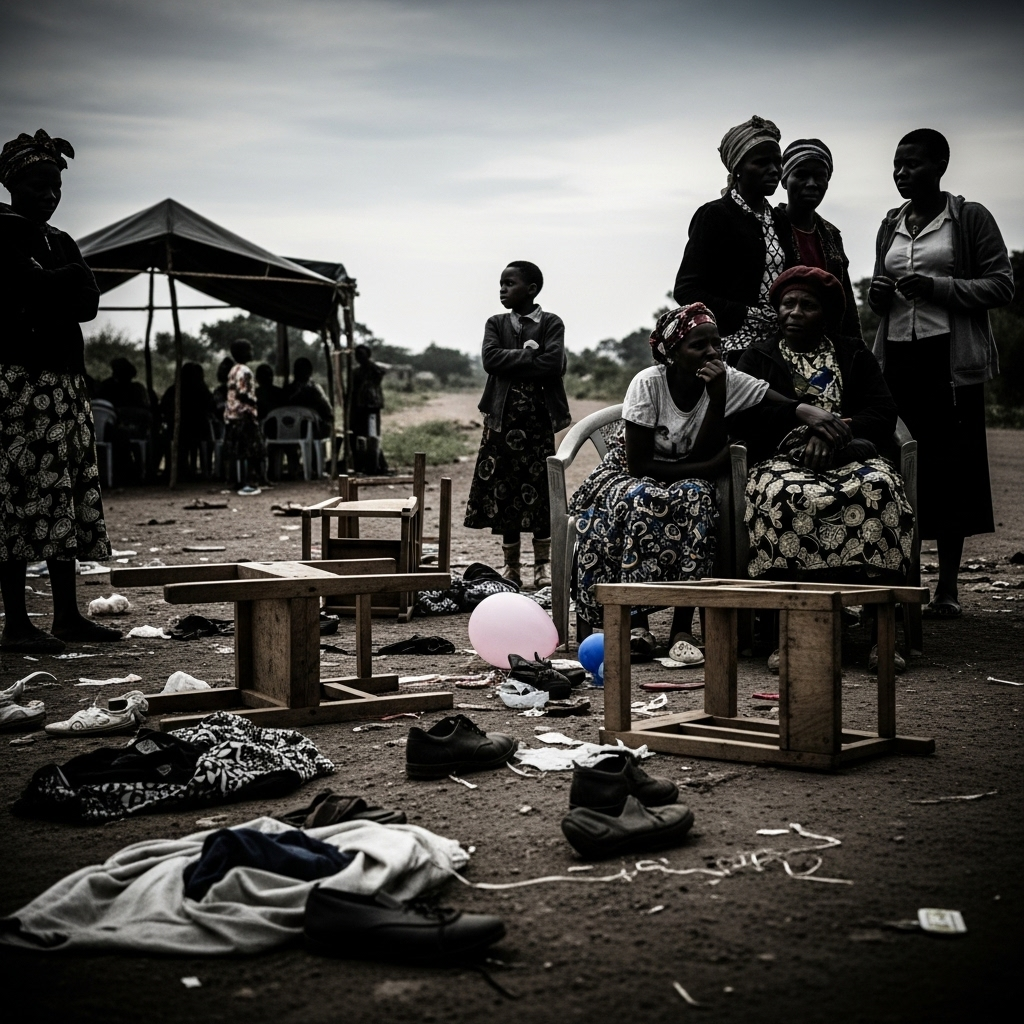
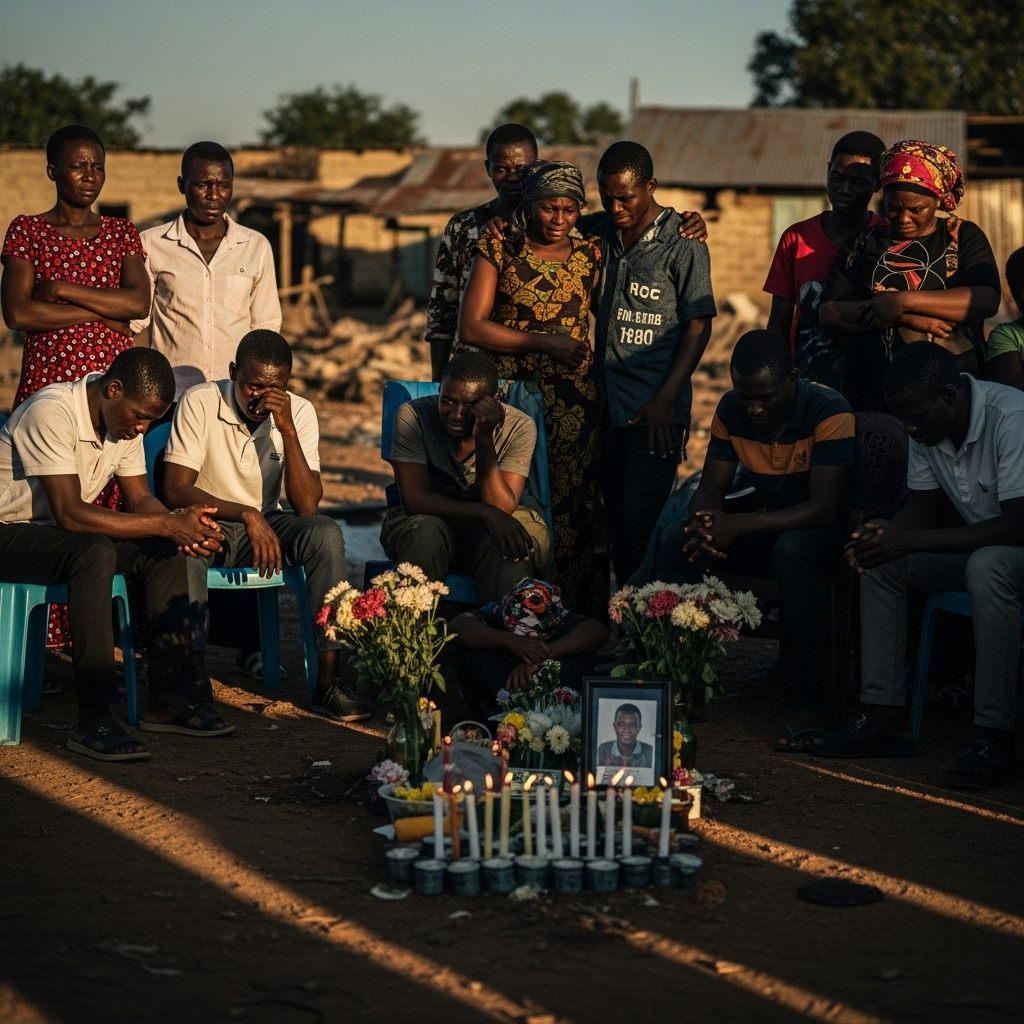
The immediate aftermath of the attack is one of profound shock and grief. The very people who had gathered to support one another in a time of loss have now become the center of a new, more profound tragedy. The surviving DR Congo mourners are left to grapple not only with their original bereavement but also with the violent deaths of their friends and family members.
Local community leaders have made urgent calls for increased security and government intervention. “We feel abandoned and unprotected,” said a representative from a local rights group. “These attacks happen with alarming frequency, and the response is never enough to prevent the next one. We need the army and the UN peacekeepers to establish a more permanent and robust presence here.”
The humanitarian needs in the wake of the attack are immense. Survivors require medical attention for their injuries, psychological support for their trauma, and basic necessities after their homes were destroyed. For more on the humanitarian situation in the region, you can see reports from the UNHCR on the DRC emergency.
Who are the Allied Democratic Forces (ADF)?
The Allied Democratic Forces (ADF) are widely believed to be responsible for this massacre. Originally a Ugandan rebel group, the ADF has operated in eastern DRC for decades. In 2019, the group pledged allegiance to the Islamic State (IS) and is now often referred to as the Islamic State – Central Africa Province (ISCAP).
Despite joint military operations by the Congolese (FARDC) and Ugandan (UPDF) armies aimed at dismantling their networks, the ADF has proven resilient. The group has adapted its tactics, frequently splitting into smaller, more mobile cells that carry out brutal attacks on “soft targets” like villages, farms, and, in this case, funeral gatherings. Their goals are to terrorize the population, control territory, and exploit the region’s vast natural resources to fund their operations.
The Broader Context of Conflict in Eastern Congo
The attack on the mourners is not an isolated incident but a symptom of the deep-seated and complex conflict that has ravaged eastern Congo for nearly three decades. The region is a volatile mosaic of over 120 different armed groups, each with its own motivations, ranging from ethnic grievances and land disputes to the illegal exploitation of minerals like gold, coltan, and cobalt.
Civilians are consistently caught in the crossfire. Violence from groups like the ADF and M23 has led to one of the world’s most severe humanitarian crises. Millions have been internally displaced, and countless others live in constant fear. The inability of the state to establish a monopoly on violence and provide security for its citizens has created a power vacuum that these militant groups exploit with impunity.
This persistent insecurity has crippled development, destroyed livelihoods, and left generations of Congolese citizens traumatized. The cycle of violence is a major focus for organizations working on the ground, as explored in our previous article on regional peace efforts in the DRC.
International Reaction and Calls for Justice
International bodies and human rights organizations have condemned the attack in the strongest terms. The United Nations Organization Stabilization Mission in the Democratic Republic of the Congo (MONUSCO) has often expressed its commitment to protecting civilians but faces immense logistical and security challenges in the vast and difficult terrain of eastern DRC.
Human Rights Watch and Amnesty International have repeatedly called for accountability for the atrocities committed by the ADF and other armed groups. They urge the Congolese government and its international partners to redouble their efforts to protect civilians, investigate these crimes, and bring the perpetrators to justice. “Impunity only fuels the cycle of violence,” a recent report stated. “There can be no lasting peace in the DRC without justice for the victims.”
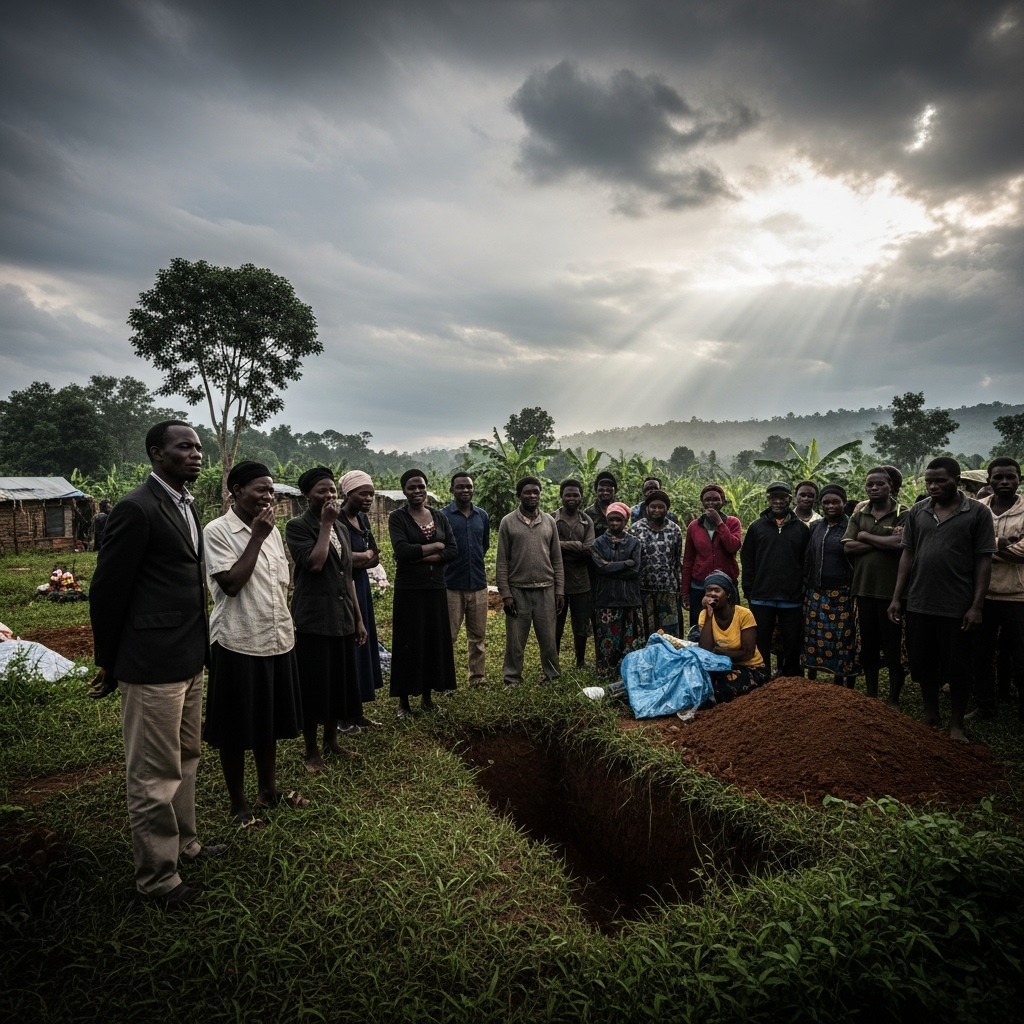
For the bereaved community in Beni, these calls for justice are a distant hope. Their immediate reality is one of burying their dead, caring for the wounded, and facing a future filled with uncertainty and fear. The attack serves as a brutal reminder of the human cost of the protracted conflict in the Democratic Republic of Congo.
“`


