



Mystery Ship: 1 Florida Man’s Amazing Mud Flat Find
Mystery Ship: 1 Florida Man’s Amazing Mud Flat Find
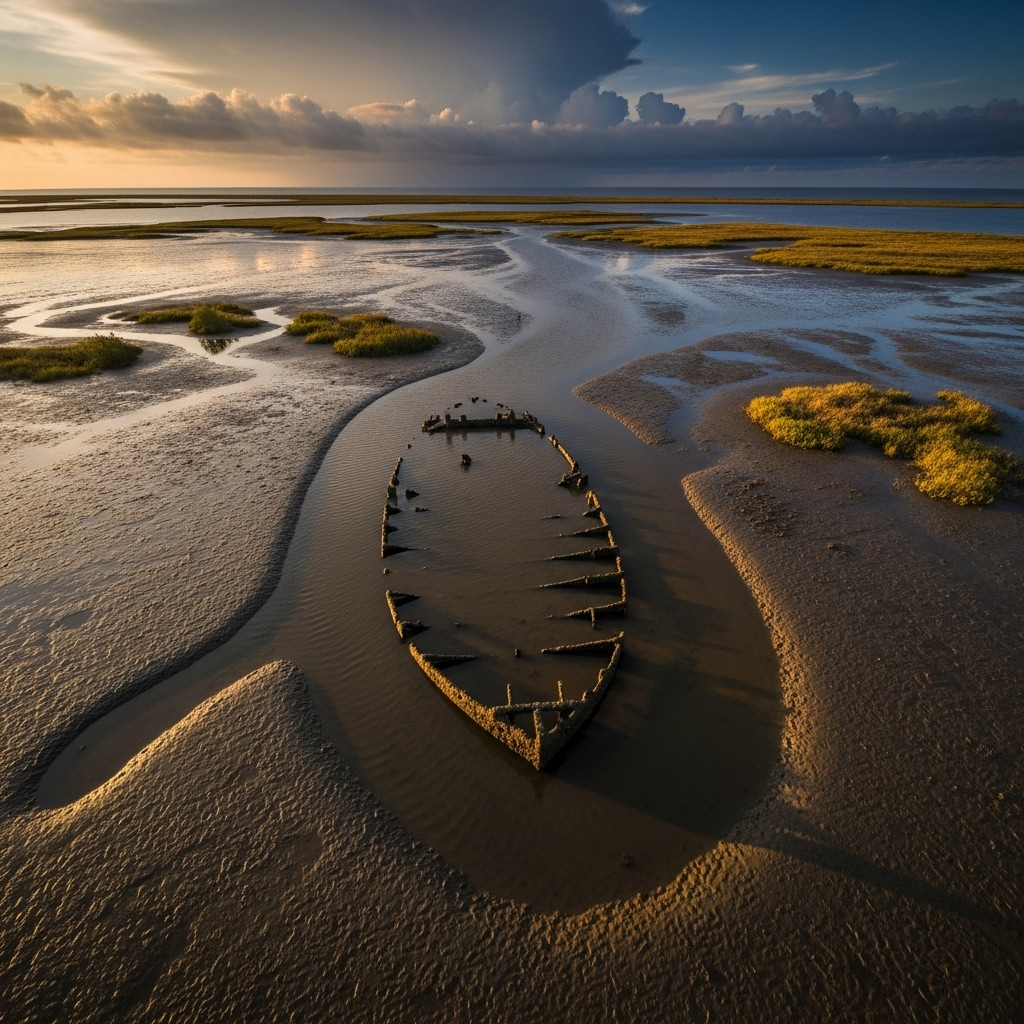
In the shallow, murky waters of Florida’s Nature Coast, an unusually low tide revealed something extraordinary. For one local man, it was the discovery of a lifetime: a massive, half-buried mystery ship that could rewrite a piece of local history.
Article Contents
An Unusual Day on the Flats
Randy Peters, a 62-year-old retired fishing guide, has spent most of his life navigating the intricate network of creeks and mud flats along Florida’s Gulf Coast. He thought he’d seen it all. But on a sweltering afternoon last week, a strange confluence of a neap tide and persistent offshore winds exposed a section of the seabed he’d never seen before.
“The water was just… gone,” Peters recounted, still in disbelief. “Lower than I’ve ever witnessed in my sixty-plus years out here. That’s when I saw it. Just a dark outline, a curve that didn’t belong.”
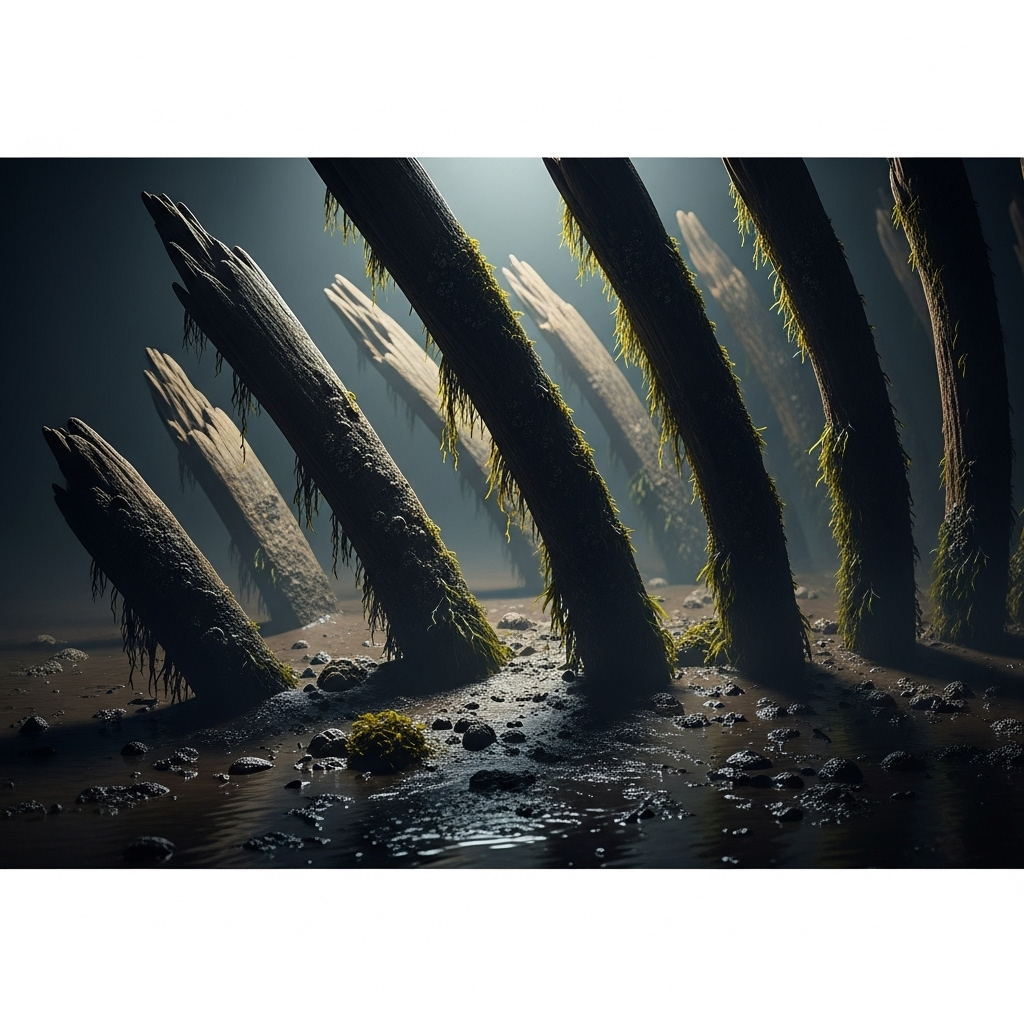
Intrigued, Peters carefully maneuvered his flat-bottomed skiff closer. What he initially dismissed as a cluster of old logs or a submerged vehicle quickly revealed itself to be something far more significant. Protruding from the thick, gray mud were the massive, curved ribs of a wooden vessel. It was the unmistakable skeleton of a long-lost ship.
This was no ordinary find; it was a genuine mystery ship, slumbering just beneath the surface, waiting for the perfect moment to reveal its secrets.
Unearthing the Mystery Ship: A Closer Look
Word of Peters’ discovery spread like wildfire through the small coastal community. Soon, a small, respectful group of locals and history enthusiasts joined him at the site during the next low tide. The scale of the wreck was astonishing.
Initial measurements suggest the visible portion of the hull is nearly 80 feet long and 25 feet wide, though much of the vessel remains entombed in the mud. The wood, blackened with age, is incredibly dense and heavy. Experts who have seen photos speculate it could be live oak, a timber famously used in the construction of naval warships like the USS Constitution due to its exceptional strength and resistance to rot.
“The construction is what gets you,” said Maria Flores, a local high school history teacher who visited the site. “You can see the hand-hewn timbers and the large wooden pegs, or ‘treenails,’ holding the planks together. There’s not a modern nail in sight. This is old. Really old.”
The location of the wreck, far inside a protected bay and away from modern shipping channels, only deepens the puzzle. How did this large vessel end up here? Was it seeking refuge from a hurricane? Was it scuttled intentionally? The questions surrounding this mystery ship are as vast as the Gulf itself.
What is the Identity of This Ship?
Speculation is running rampant. Could this be a lost Spanish treasure galleon from the 16th or 17th century? Florida’s coastline is famous for such wrecks, with untold riches still believed to be lost beneath the waves. The robust construction could certainly be consistent with that era.
Another theory points to a 19th-century merchant vessel. During the 1800s, this region was a hub for shipping cotton, lumber, and turpentine. A powerful storm, a common occurrence in the Gulf, could have easily driven a ship of this size aground, where it was swallowed by the silt and forgotten.
A more romantic notion suggests it might be a Prohibition-era “rum-runner.” These fast ships were known to use shallow, hidden coves to evade the Coast Guard while smuggling liquor into the United States. While most were smaller, a larger “mother ship” could have been used as a floating warehouse. (For more local history, see our article on Florida’s Forgotten Past).
Without a full excavation and artifact analysis, the true identity of the mystery ship remains just that—a mystery. State archaeologists are hopeful that the anaerobic, or oxygen-free, mud has preserved not only the hull but also its potential contents.
What Happens Next for the Find?
Randy Peters did the right thing: he immediately reported his find to the Florida Division of Historical Resources. The site is now protected under state law, making it illegal to disturb the wreck or remove any artifacts.
A team of maritime archaeologists is scheduled to perform a preliminary survey next month. Their first step will be to use non-invasive tools like side-scan sonar and magnetometers to map the entire debris field without digging.
“The primary goal is preservation through documentation,” said Dr. Allenby of the state’s archaeology division. “Excavation is incredibly expensive and complex. Once you remove these timbers from the mud, they can begin to decay rapidly. We need a solid plan before we bring anything up.”
For now, the tide has come back in, once again hiding the great wooden skeleton beneath its blanket of water and mud. But now, it’s no longer forgotten. The discovery has ignited a passion for history in the community and raised hopes that we may soon have a new, tangible link to the past.
This amazing mud flat find serves as a powerful reminder that history is not just in books; sometimes, it’s right under our feet—or our boats. For more information on similar finds, you can visit the St. Augustine Lighthouse Archaeological Maritime Program, which has done extensive work on Florida shipwrecks.

“`


