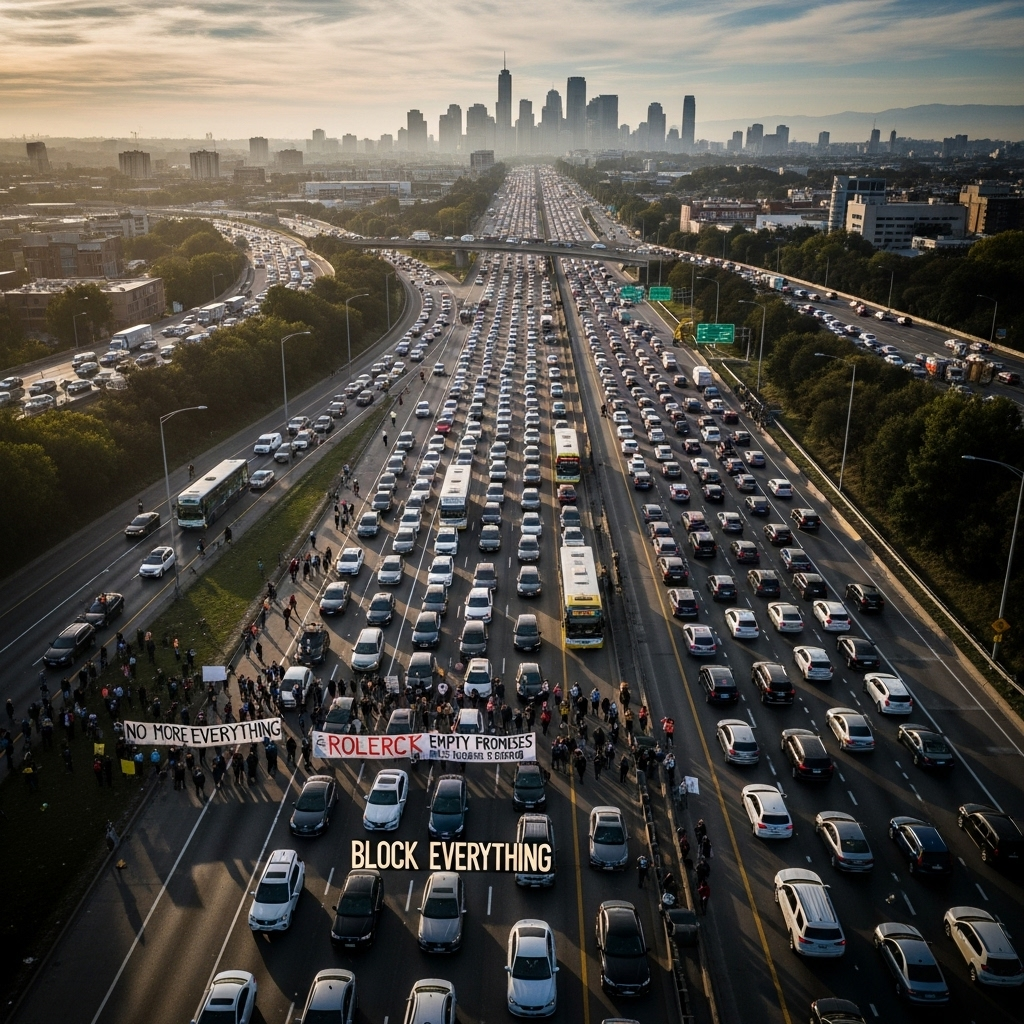
‘Block everything’ protests: Hundreds arrested in France
Major cities across France have been brought to a standstill as the ‘block everything’ protests, initiated by a coalition of farmers, transport workers, and union members, escalated dramatically over the last 48 hours. Authorities report that hundreds of arrests have been made as demonstrators clashed with riot police in Paris, Lyon, and Marseille. The protests, aimed at disrupting the national economy to force government concessions on fuel costs and environmental regulations, have paralyzed key infrastructure.
What Are the Protests About?
The movement, known colloquially as “Opération Tout Bloquer” or the ‘block everything’ protests, stems from long-simmering frustrations among several key sectors of the French economy. At the forefront are the nation’s farmers, who argue that a combination of low prices for their produce, rising operational costs, and stringent EU environmental policies are pushing them toward bankruptcy.
They have been joined by transport and logistics workers, who are protesting record-high diesel prices and a new “eco-tax” on heavy goods vehicles. “We are the backbone of this country, but we are being treated like the enemy,” said Jean-Luc Dubois, a spokesperson for a prominent transport union. “We are not asking for the moon; we are asking for the ability to make a decent living.”
Core demands of the protestors include:
- A cap on fuel prices for agricultural and commercial vehicles.
- The immediate suspension of new environmental regulations they deem unfair.
- Guaranteed minimum prices for agricultural products to protect them from cheaper imports.
- Greater government support for rural communities and industries.
This coalition represents a powerful, if disparate, force united by a shared sense of economic disenfranchisement. For more background on the grievances, you can read our in-depth analysis on European farmers’ unrest.
Escalation of the ‘Block Everything’ Protests
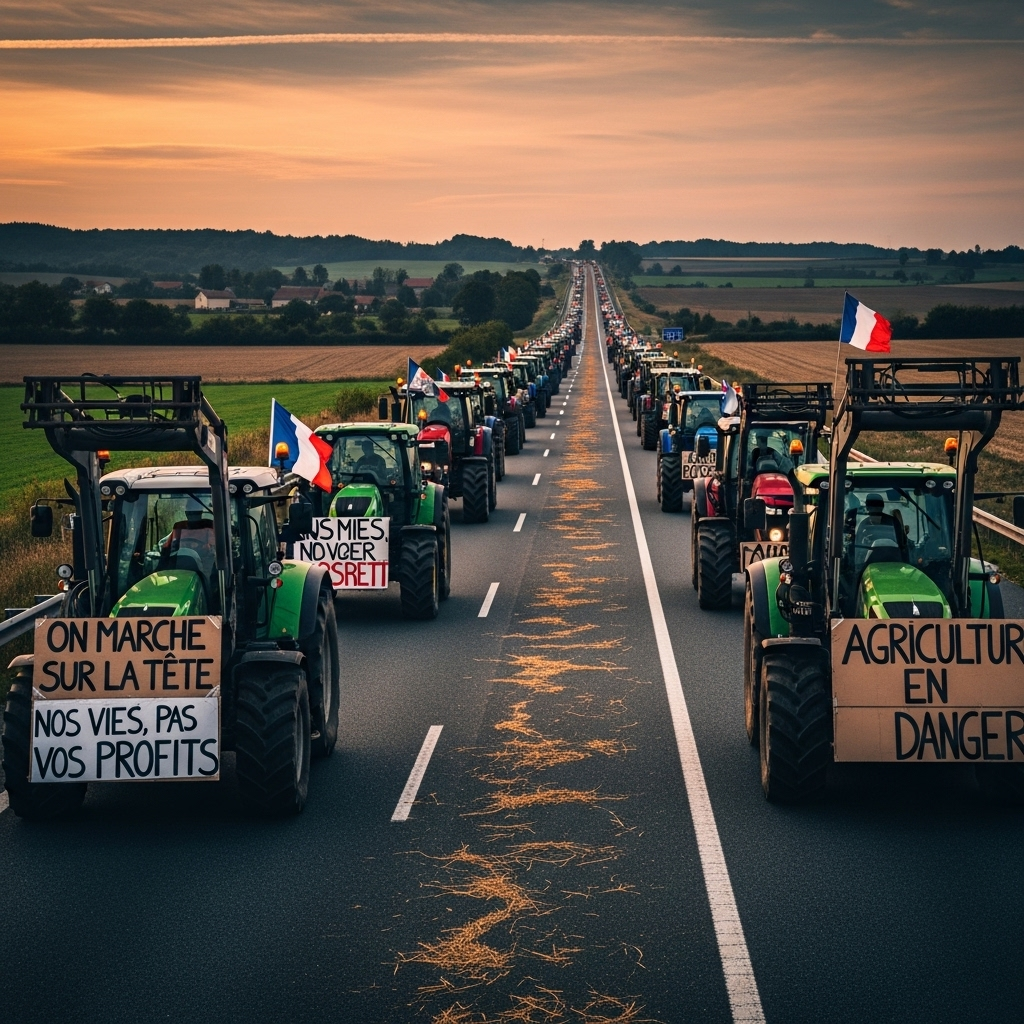
What began as localized demonstrations has rapidly transformed into a coordinated national campaign of disruption. Protest organizers have made good on their promise to “block everything,” targeting major highways, ports, oil refineries, and distribution centers. On Wednesday, the A1 motorway, the main artery connecting Paris to the north, was completely blocked by hundreds of tractors, causing miles of traffic jams and forcing commuters to abandon their vehicles.
In the southern port city of Marseille, fishermen used their boats to blockade the entrance to the main commercial harbor, preventing container ships from docking. This strategic move is designed to maximize economic pressure, hitting supply chains at their most vulnerable points. Similar scenes have played out across the country, with reports of roadblocks near Lyon, Bordeaux, and Strasbourg.
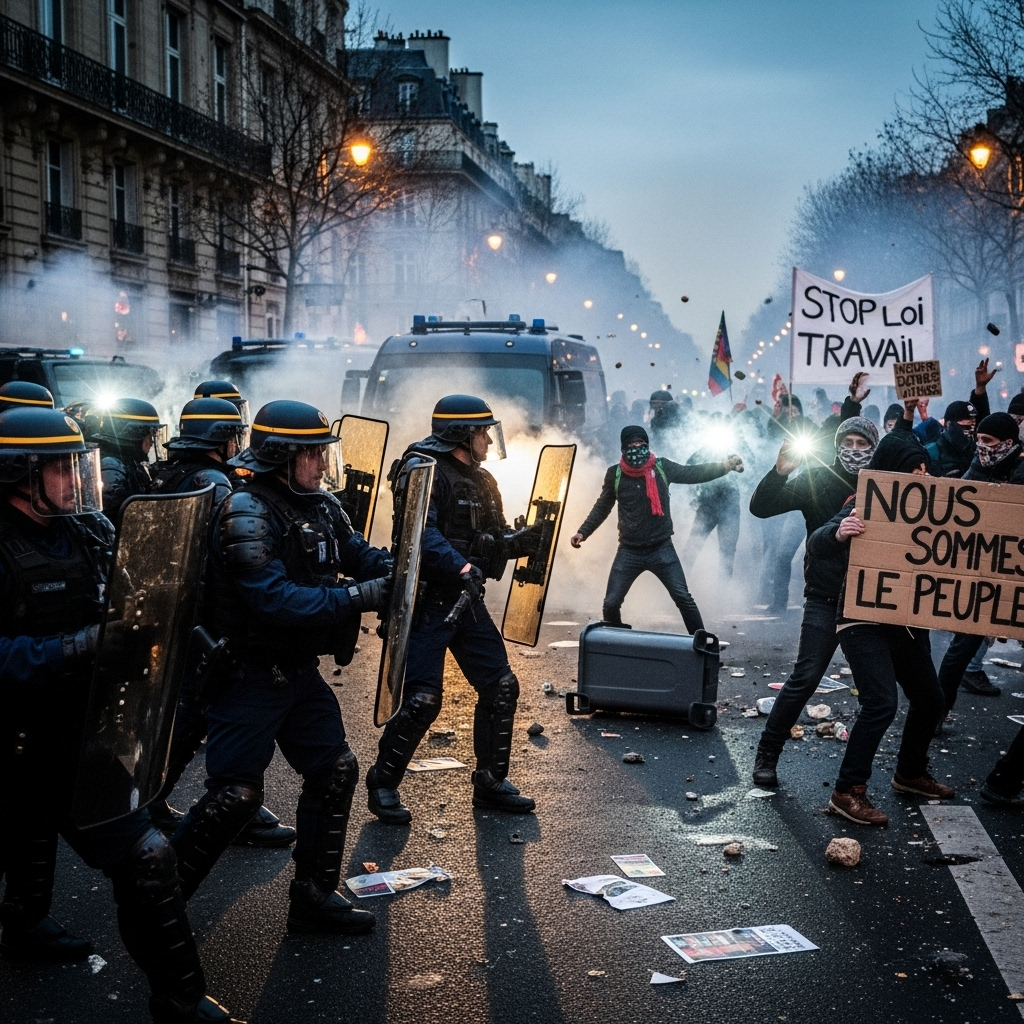
The situation turned volatile in the suburbs of Paris, where some demonstrators set fire to tires and pallets. Clashes erupted when police moved in to clear the blockades. Protesters threw projectiles, and police responded with tear gas and water cannons. It is in these tense standoffs that the majority of the arrests have occurred. Over 450 individuals have been taken into custody nationwide as of Thursday morning, a figure that is expected to rise.
Government Response and Mass Arrests
The French government has taken a hardline stance against the disruptions. Interior Minister Gérard Darmanin condemned the violence and property destruction, stating that the right to protest “does not include the right to destroy or to endanger the lives of others.” In a press conference, he confirmed the significant number of arrests and warned that law enforcement would continue to act decisively to restore order.
“We understand the concerns of our farmers and transport workers,” the Minister stated, “but chaos is not a method of negotiation. We will not allow the country to be held hostage.” He announced the deployment of an additional 15,000 police and gendarmerie officers to critical locations to dismantle roadblocks and secure strategic infrastructure.
The government has opened a crisis cell to manage the situation and has invited protest leaders to talks, but on the condition that the blockades are lifted first. This precondition has been rejected by protest organizers, who fear losing their only leverage. For official statements, you can visit the French Ministry of the Interior’s website. The ongoing standoff suggests a prolonged conflict unless one side is willing to compromise.
Economic Impact and Public Reaction
The economic fallout from the ‘block everything’ protests is already being felt. The national logistics and supply chain federation, TLF, estimates daily losses are in the hundreds of millions of euros. Supermarkets are beginning to report shortages of fresh produce and other goods, while manufacturing plants have warned of potential shutdowns if parts and raw materials cannot get through.
The blockades are also causing significant disruption for the general public. While initial polling suggests a degree of sympathy for the protesters’ core complaints, patience is wearing thin among citizens trapped in traffic, unable to get to work, or facing empty store shelves. “I support the farmers, I really do,” one Parisian motorist told a local news channel. “But I have been stuck in my car for six hours. This is not sustainable.”
The movement’s success hinges on maintaining public support, a delicate balancing act. The longer the disruptions continue, the more likely public opinion is to turn against them, potentially giving the government a stronger mandate to use force to end the blockades. The administration is keenly aware of this dynamic, as seen in their public communications which highlight the inconvenience caused to ordinary citizens. For a deeper dive into the potential financial consequences, see our report on the fragility of France’s economic policy.
The coming days will be critical. If the government and protest leaders cannot find a path to dialogue, the ‘block everything’ protests could lead to even greater civil unrest and inflict lasting damage on the French economy. The situation remains tense and unpredictable, with both sides digging in for what could be a long and costly confrontation.