
‘block everything’ protests: 100s arrested in France
France was gripped by widespread chaos this week as the ‘block everything’ protests escalated, leading to major disruptions across the country and culminating in the arrest of several hundred demonstrators. The movement, which started as a grassroots initiative on social media, has paralyzed key infrastructure, including highways, ports, and distribution centers, in a powerful display of civil disobedience against new economic policies.
Table of Contents
What Sparked the ‘Block Everything’ Protests?
The origins of the ‘block everything’ protests can be traced back to a series of recently announced government austerity measures. These include a controversial fuel tax hike, cuts to public sector pensions, and a loosening of labor laws that unions argue will erode workers’ rights. For weeks, discontent simmered online, with hashtags like #BloquonsTout (Block Everything) gaining traction across various social media platforms.
Unlike traditional union-led demonstrations, this movement is characterized by its decentralized and leaderless structure. It has drawn support from a diverse cross-section of French society, including farmers, truck drivers, students, and middle-class families who feel the economic squeeze. Analysts point to a deep-seated frustration with the rising cost of living and a perception that the government is out of touch with the struggles of ordinary citizens.
The sentiment was summed up by a protester in Lyon, who told a local news crew, “We are not asking for the moon. We are asking to live with dignity. When you can no longer afford to fill your tank to get to work, or buy groceries for your children, something has to give.” This feeling of being pushed to the brink is the core fuel for the ‘block everything’ protests.
On-the-Ground Chaos: A Nation at a Standstill
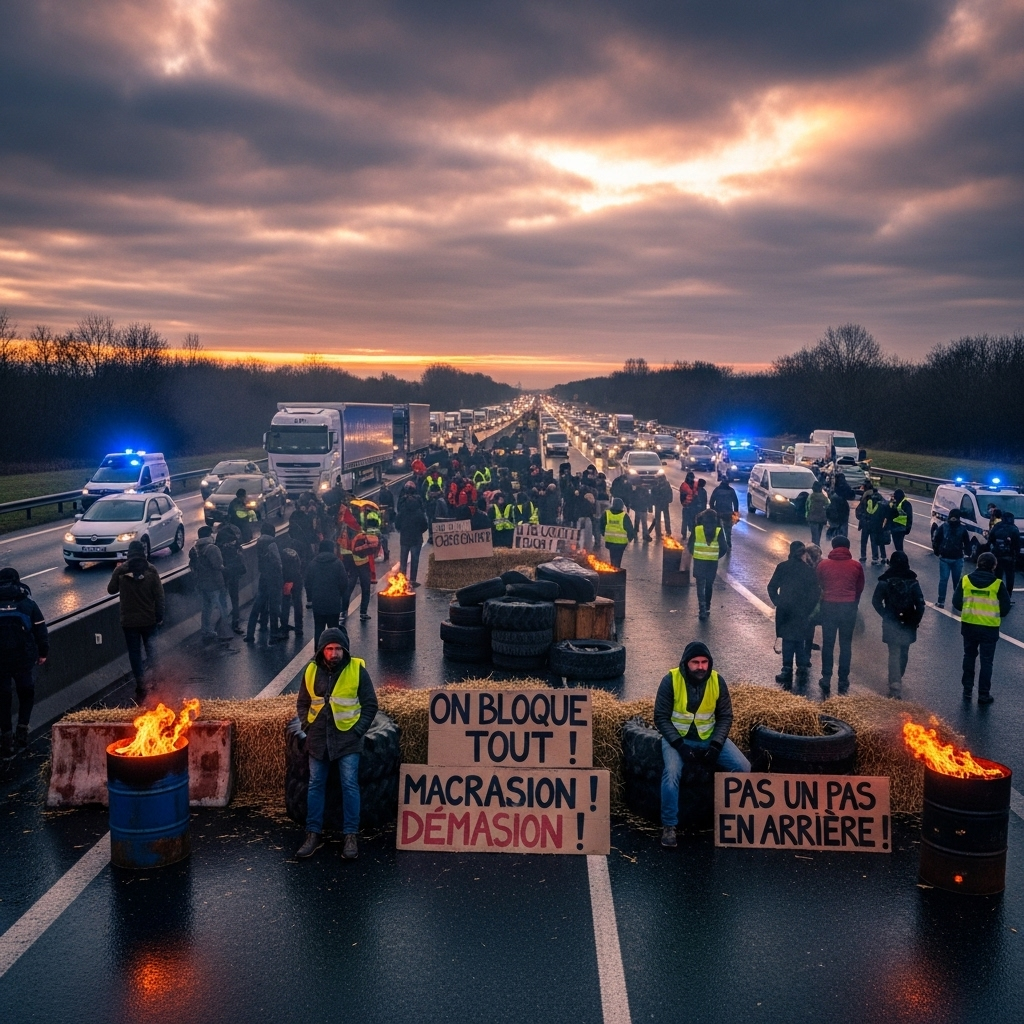
The call to action was swift and effective. Overnight, strategic points across France were brought to a halt. Protesters used vehicles, burning tires, and human chains to block major motorways, including the vital A1 autoroute connecting Paris to Lille. The impact was immediate, causing miles-long traffic jams and significant delays for commuters and commercial transport.
In port cities like Marseille and Le Havre, dockworkers joined the protests, refusing to unload cargo ships and effectively sealing off maritime trade. These actions created a ripple effect throughout the supply chain, with reports of impending shortages of fresh produce and other goods in supermarkets. You can learn more about the economic effects of supply chain disruptions on the World Trade Organization website.
The protests were not confined to transport hubs. In Paris, demonstrators blockaded several government buildings, while in smaller towns, “go-slow” operations, known as opérations escargot, saw convoys of tractors and trucks driving at a snail’s pace, causing further gridlock. The scale and coordination of these disruptions were unprecedented for a movement without a central leadership, highlighting the power of digital organization.
The Government’s Response: Clashes and Mass Arrests
Initially, the government’s response was measured, calling for dialogue and urging protesters to remain peaceful. However, as the blockades intensified and economic costs mounted, the official tone hardened. Interior Minister Gérald Darmanin declared a “zero tolerance” policy for actions that endangered public safety or blocked critical infrastructure.
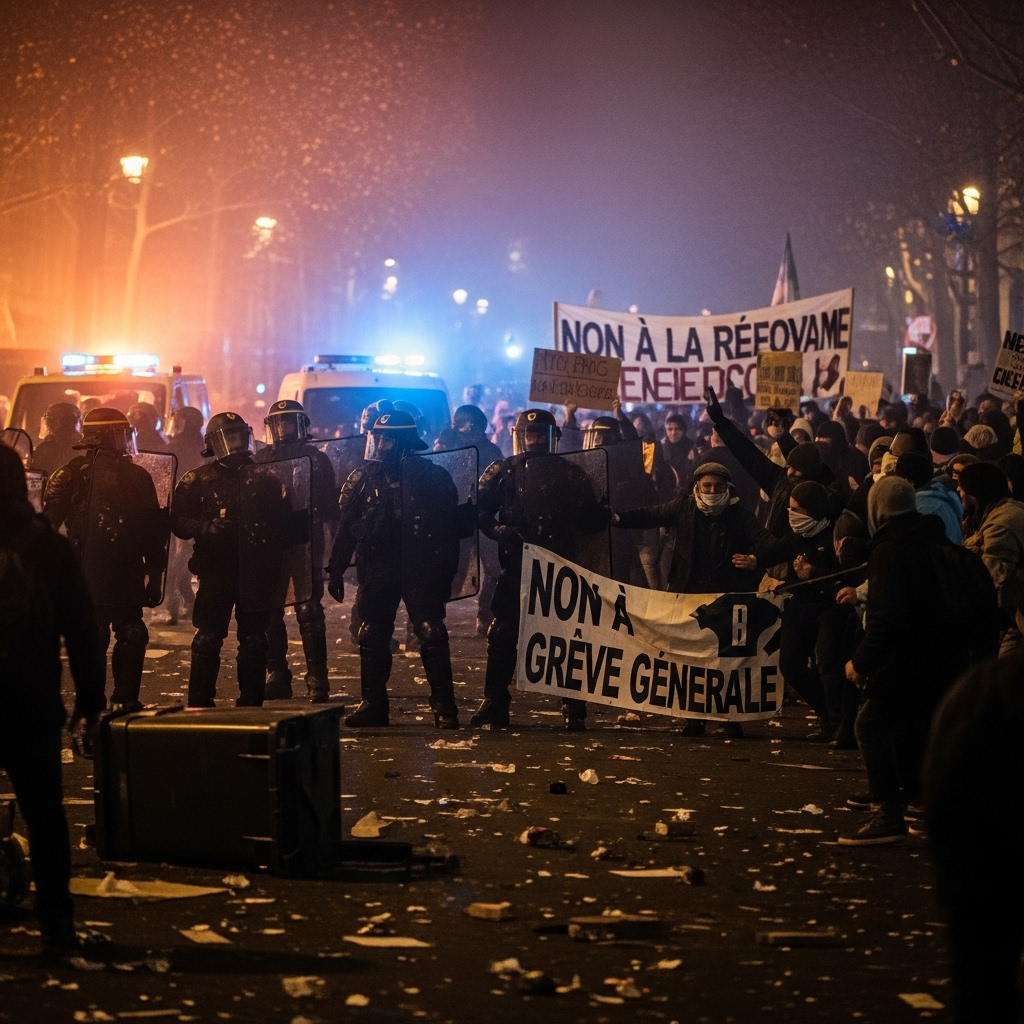
This shift in strategy led to tense standoffs between protesters and law enforcement. Riot police, or CRS (Compagnies Républicaines de Sécurité), were deployed in force to dismantle the blockades. Eyewitnesses reported the use of tear gas and water cannons in several cities, including Nantes and Toulouse, as officers moved to clear the roads. These confrontations resulted in dozens of injuries on both sides.
By Thursday morning, the French Ministry of the Interior confirmed that over 400 individuals had been arrested in connection with the ‘block everything’ protests. The charges range from obstructing traffic to vandalism and violence against law enforcement officers. The government maintains that while the right to protest is protected, endangering the economy and public order is a red line that cannot be crossed. For more details on recent French political events, see our related articles.
Analyzing the Economic Fallout of the Protests
The economic impact of the ‘block everything’ protests is already significant and is expected to grow if the disruptions continue. The French National Federation of Road Transport (FNTR) estimated that the blockades are costing the logistics industry hundreds of millions of euros each day. Perishable goods are rotting in trucks, manufacturing plants are facing component shortages, and retailers are unable to restock their shelves.
Beyond logistics, the tourism and hospitality sectors are also feeling the pain. The images of chaos and conflict have led to cancelled hotel bookings and a drop in tourist visits, particularly in Paris. The movement’s core strategy is economic disruption, and by that measure, it has been incredibly successful in pressuring the government.
Economists warn that a prolonged protest could have a noticeable impact on France’s quarterly GDP growth. The government now faces a difficult balancing act: conceding to the protesters’ demands could be seen as a sign of weakness and encourage future disruptions, while a continued hardline stance risks deepening social divisions and escalating the economic damage.
What’s Next for France and the Protest Movement?
With hundreds arrested and no clear end in sight, the future of the ‘block everything’ protests remains uncertain. The mass arrests may intimidate some, but they could also galvanize others, turning the arrested protesters into martyrs for the cause. The movement’s decentralized nature makes it difficult for the government to negotiate, as there are no official representatives to engage with.
President Emmanuel Macron, who has remained largely silent on the issue, is expected to address the nation in the coming days. His speech will be critical in determining the next phase of this crisis. A conciliatory tone, perhaps offering to delay or modify the most controversial policies, could de-escalate the situation. Conversely, a defiant stance could pour more fuel on the fire.
For now, the protesters have vowed to continue their actions. Online forums are buzzing with plans for new blockades and different forms of civil disobedience. The ‘block everything’ protests have revealed a deep fracture in French society, and regardless of the immediate outcome, the underlying grievances that sparked this movement are unlikely to disappear overnight.
“`


