
‘Block Everything’ Protests: Over 300 Arrested in France
Nationwide demonstrations saw major highways and city centers brought to a standstill as tensions over economic policies boil over. The disruptive ‘block everything’ protests that have swept across France culminated in significant clashes with law enforcement, leading to the arrest of over 300 individuals, according to the Ministry of the Interior.
The protests, organized by a loose coalition of agricultural unions, transportation workers, and citizens’ groups, aimed to paralyze the country’s economic infrastructure. Major cities including Paris, Lyon, and Marseille experienced severe disruptions as demonstrators used tractors, trucks, and makeshift barricades to block critical routes. The movement has drawn comparisons to the “Gilets Jaunes” (Yellow Vests) protests of previous years, signaling a deep-seated public frustration with the current government’s economic direction.
Table of Contents
What Sparked the ‘Block Everything’ Protests?
The immediate catalyst for the widespread unrest appears to be the government’s recently proposed “Carbon Contribution Levy,” a new tax aimed at accelerating the nation’s transition to green energy. Critics argue that the levy disproportionately affects lower and middle-income families, as well as industries reliant on fossil fuels, such as agriculture and logistics. Farmers, in particular, claim the tax is the final straw after years of dealing with shrinking margins, foreign competition, and stringent EU environmental regulations.
“This isn’t just about one tax; it’s about our survival,” said Jean-Luc Dubois, a farmer protesting on the A1 motorway near Paris. “We are being regulated and taxed out of existence. We were left with no choice but to ‘block everything’ to make them listen.”
The sentiment is shared by truck drivers, who face rising operational costs. The levy, combined with already high fuel prices, threatens the viability of many small and independent transport companies. The government maintains that the tax is essential for meeting its climate targets as outlined in the Paris Agreement and has announced support packages for affected sectors, but protesters have dismissed these measures as “too little, too late.”
A Nation at a Standstill: Tactics and Impact
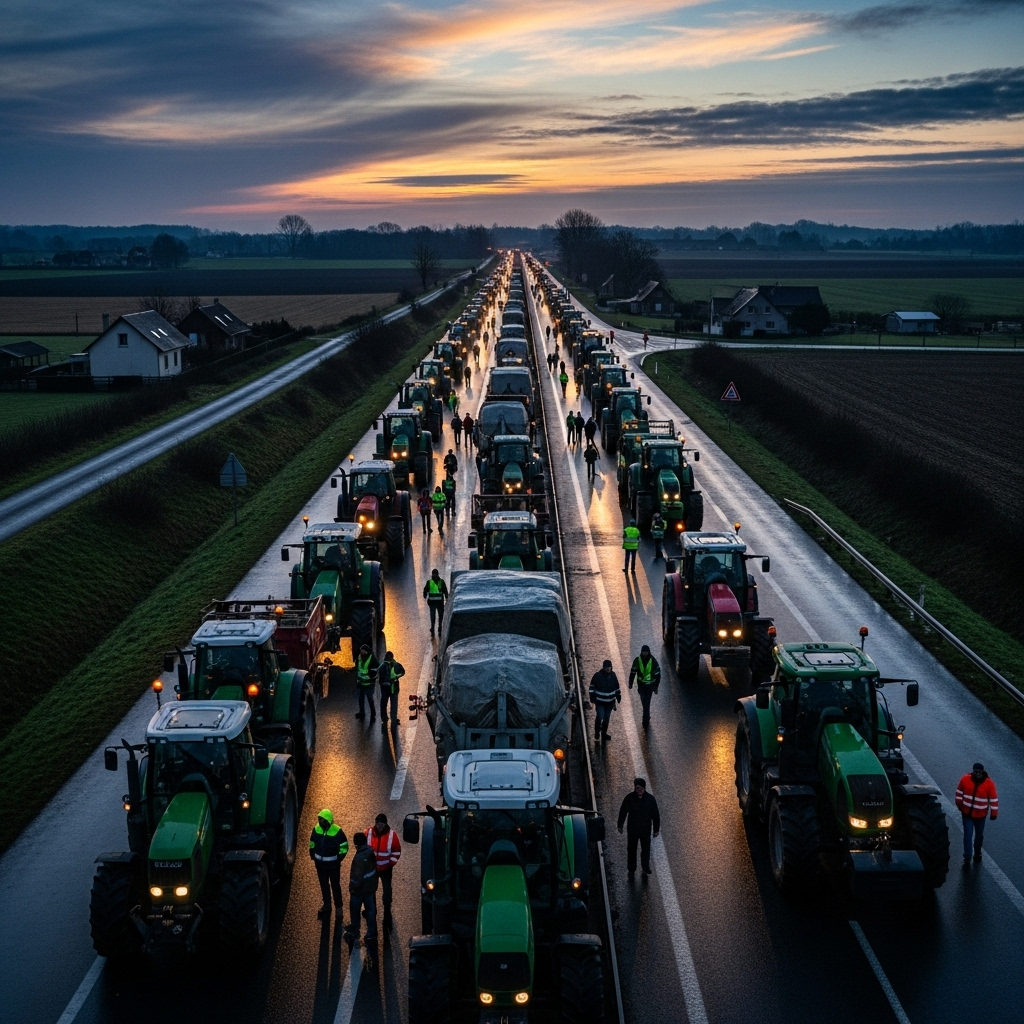
The “tout bloquer” or ‘block everything’ strategy was executed with startling efficiency. From the early hours of the morning, convoys of tractors sealed off major motorways surrounding key cities. In Marseille, protesters blocked access to the main port, a critical hub for Mediterranean trade. In central Paris, activists chained themselves together, shutting down several major intersections around the Arc de Triomphe.
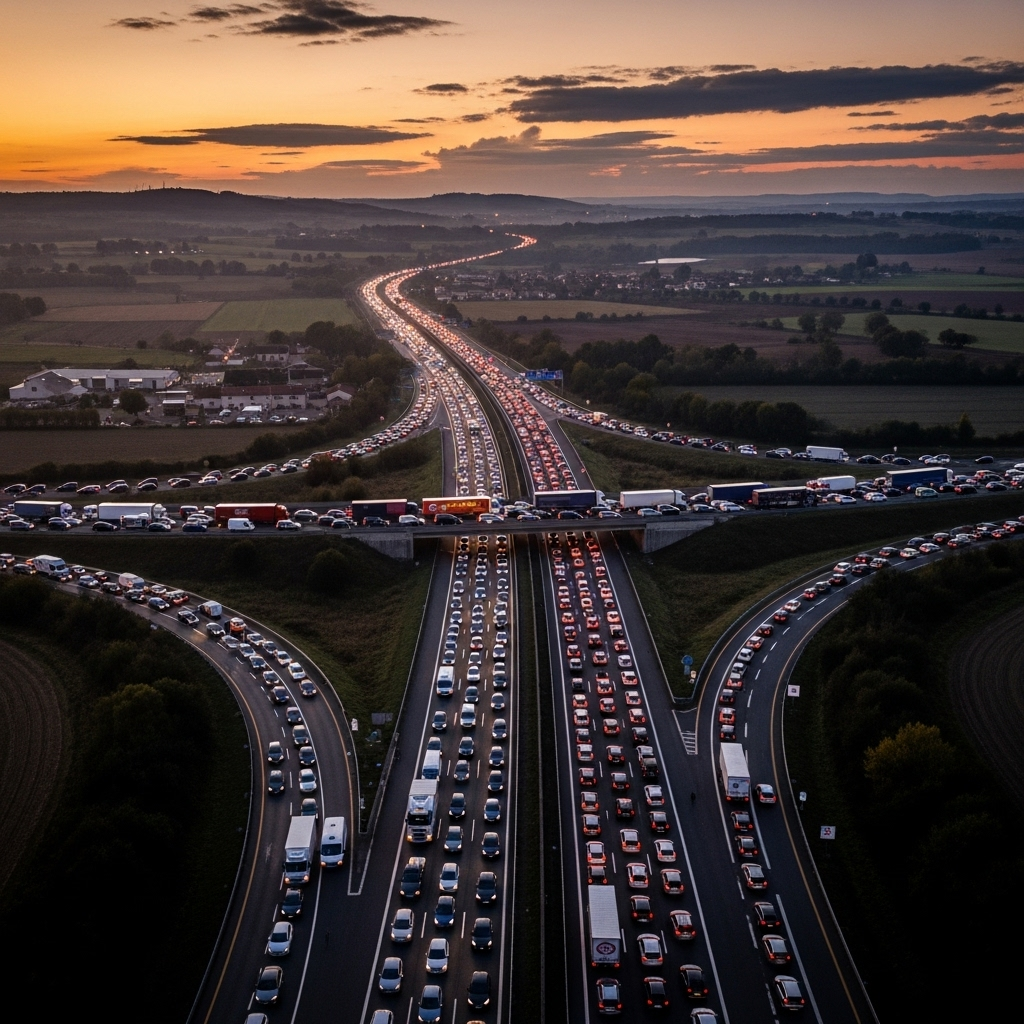
The economic impact was immediate. Supply chains were severed, causing shortages in some supermarkets and halting production at factories reliant on just-in-time deliveries. The National Federation of Road Transport reported estimated losses of over €50 million for the first day alone. Commuters faced gridlock, with many abandoning their vehicles to walk for miles.
An official from the Paris transport authority described the situation as “unprecedented chaos.” The coordination, while appearing decentralized and organic online, suggests a significant level of planning among the various groups involved. Social media platforms were flooded with images and videos of the blockades, further amplifying the movement’s message and reach.
The Government’s Firm Response
Faced with a paralyzed nation, the French government took a hard-line stance. Interior Minister Gérald Darmanin announced that while the right to protest is protected, “the right to paralyze the economy and endanger citizens is not.” He authorized a massive police deployment, with over 15,000 officers mobilized nationwide.
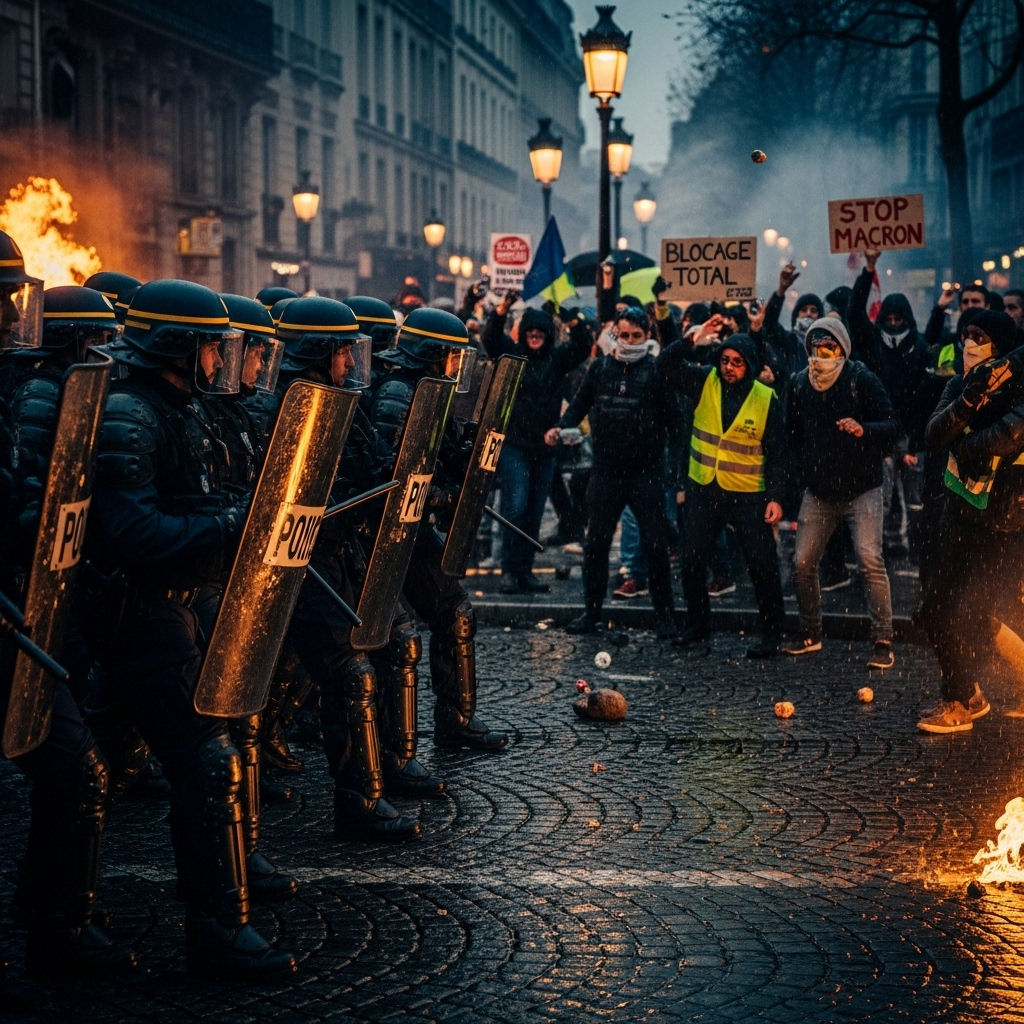
The primary police objective was to dismantle the blockades on critical infrastructure. Clashes erupted at several locations as riot police used tear gas and water cannons to disperse demonstrators. The ministry confirmed that 312 arrests had been made by late afternoon for offenses including obstructing traffic, destruction of public property, and violence against law enforcement officers.
“We will not allow chaos to rule,” Minister Darmanin stated in a press conference. “We have shown tolerance, but our red line has been crossed. Order will be restored.” Despite the crackdown, many protesters have vowed to continue their actions in the coming days.
Historical Context and Comparisons
The ‘block everything’ protests evoke strong memories of the “Gilets Jaunes” movement that began in late 2018. That movement, also sparked by a fuel tax increase, grew into a broader anti-government protest against economic inequality. The current demonstrations share a similar grassroots origin, a reliance on social media for organization, and a deep-seated anger at the political establishment, which is perceived as being out of touch with the struggles of ordinary people.
Analysts note, however, a key difference: the more direct involvement of organized labor, particularly agricultural and transport unions. This gives the ‘block everything’ protests a more structured and strategically potent character than the more anarchic early days of the Yellow Vests. For more on that movement, you can read our previous analysis: The Enduring Legacy of the Gilets Jaunes.
This history of powerful, disruptive social movements is a defining feature of the French Fifth Republic. The government is acutely aware that if mishandled, these protests could escalate into a prolonged political crisis, severely weakening its mandate.
What’s Next for France?
With protest leaders calling for an indefinite continuation of the blockades and the government refusing to back down on its core policy, France appears to be heading for a protracted standoff. President Emmanuel Macron’s office has called for calm and announced that the Prime Minister will meet with representatives from the leading unions tomorrow in an attempt to de-escalate the situation.
The success of these negotiations will be crucial. If a compromise cannot be reached, the country could face days or even weeks of further disruption, with significant consequences for its economy and social cohesion. The ‘block everything’ protests have laid bare the deep economic and social fractures within French society, posing one of the most significant challenges to the government’s authority to date.
The world is watching to see if France can find a path out of its current paralysis, or if the blockades will become an entrenched feature of a long, discontented autumn.
“`


