
outside mosques: French suspect 1 foreign power in attacks
French intelligence services are investigating a coordinated series of provocative acts targeting locations outside mosques across the country, with mounting evidence suggesting a sophisticated disinformation campaign orchestrated by a single foreign power. The incidents, which range from inflammatory graffiti to staged, minor altercations, appear designed to stoke social division and incite fear within France’s Muslim community and the wider public.
Sources within the French General Directorate for Internal Security (DGSI) have indicated that the pattern of these events, coupled with a simultaneous surge in online agitation, points away from homegrown extremism and towards a state-sponsored “hybrid warfare” tactic. The goal, they believe, is to destabilize French society ahead of upcoming European elections.
A Pattern of Intimidation Outside Mosques
The wave of incidents began several weeks ago but has recently escalated in both frequency and visibility. Reports from Paris, Marseille, Lyon, and Strasbourg describe a consistent methodology. In the early morning hours, symbols and slogans aimed at provoking both anti-immigrant and anti-establishment sentiment have appeared on pavements and walls outside mosques and Islamic cultural centers.
Notably, investigators have highlighted that the graffiti often contains deliberate grammatical errors in French, a known tactic used in past disinformation campaigns to feign authenticity while being easily traceable by linguistic analysts. “This is not the work of a local fringe group,” a source close to the investigation stated. “The coordination is too precise, the messaging too uniform. It’s a signature we have seen before.”
Beyond vandalism, there have been several documented cases of what authorities are calling “staged provocations.” These involve individuals engaging in loud, disruptive arguments or feigning altercations outside mosques during prayer times, all while being filmed by hidden accomplices. The resulting videos are then heavily edited and rapidly disseminated on social media platforms like Telegram and X (formerly Twitter), often accompanied by misleading or entirely false narratives.

The primary objective of these actions is not to cause significant physical harm but to create a pervasive sense of insecurity. This strategy aims to make public spaces feel unsafe, particularly for French Muslims, and to fuel a news cycle of division and outrage. One community leader in Lyon described the atmosphere as “poisonous,” noting that “they want us to be afraid in our own neighborhoods, and they want our neighbors to be afraid of us.”
The Foreign Power Connection: Unraveling the Disinformation Campaign
While French officials have not publicly named the foreign power, intelligence analysts are reportedly focusing on Russia. The tactics align closely with the “active measures” playbook employed by Moscow in other European nations: exploit existing social fissures, amplify extremist voices on both sides, and undermine public trust in democratic institutions. For more information on these tactics, experts at the Atlantic Council’s DFR Lab have published extensive research on the subject.
The digital component of this campaign is what provides the strongest evidence. DGSI’s cyber warfare division has tracked the spread of the videos and images from the incidents outside mosques back to a network of bot accounts and coordinated inauthentic user profiles. This network immediately amplifies the content, ensuring it trends in specific regions and is picked up by legitimate news aggregators and unsuspecting users.
The ultimate motive appears to be geopolitical. By fomenting internal unrest in a key EU and NATO member state, the foreign power aims to:
- Distract the French government from foreign policy issues.
- Weaken European unity on matters of security and diplomacy.
- Influence public opinion to favor political parties that may hold a more isolationist or Moscow-friendly stance.
An internal memo allegedly circulating within the Ministry of the Interior warns that these attacks on community harmony are a “low-cost, high-impact” form of aggression designed to test France’s societal resilience. Read more about France’s New Law on Digital Security, which was designed to combat such threats.
Official Statements and Public Reaction
French Interior Minister Gérald Darmanin addressed the nation yesterday, vowing a “firm and uncompromising” response. “France will not be divided,” he declared. “We will not allow any foreign power to import its conflicts and its strategies of chaos onto our soil. We are deploying increased security patrols around places of worship and are dedicating significant resources to unmasking and neutralizing those responsible, both on our streets and online.”
Leaders of the French Council of the Muslim Faith (CFCM) have condemned the acts while simultaneously calling for calm and unity. In a joint statement, they urged community members not to fall into the “trap of provocation” and to report any suspicious activity to the authorities. “Our response must be one of solidarity and republican fraternity,” the statement read. “These attacks are not just against Muslims; they are an attack on the very fabric of France.”
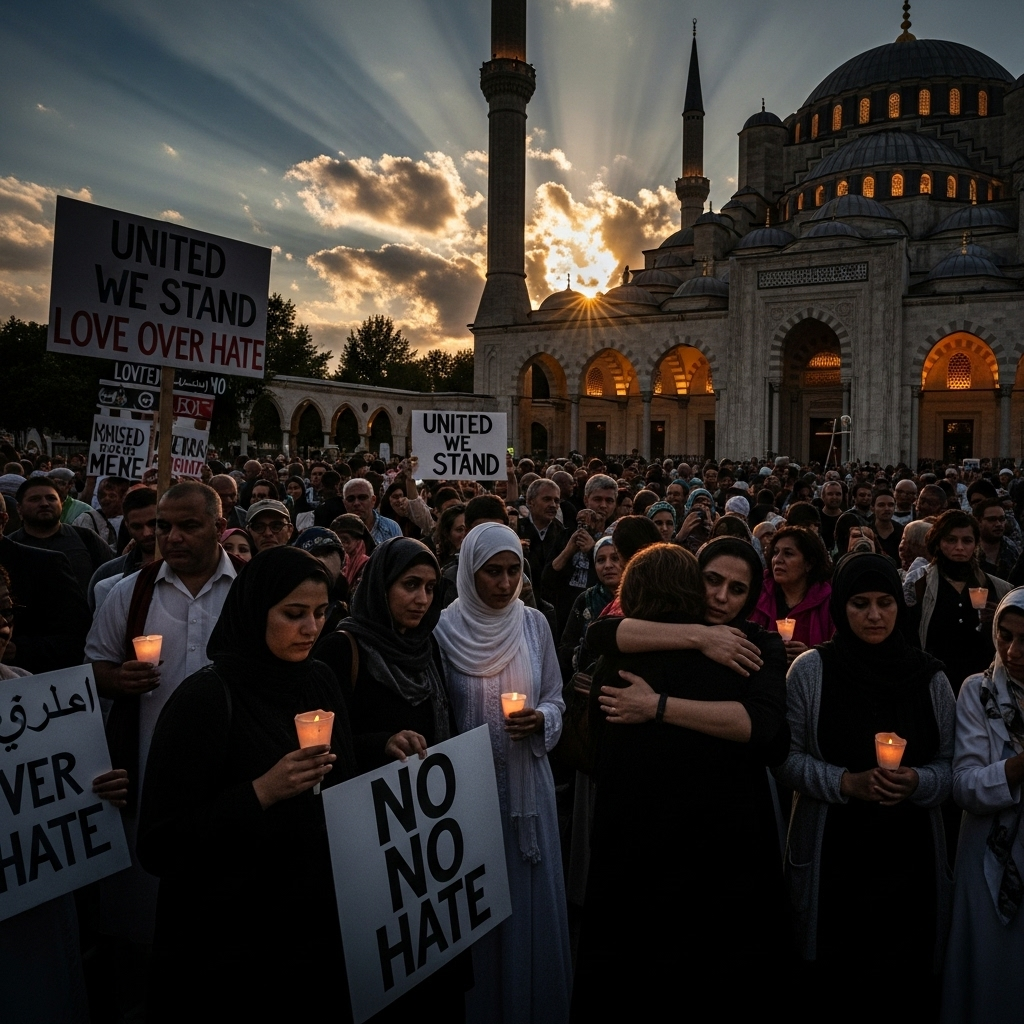
The public reaction has been one of widespread concern. Hashtags like #JeSuisUnis (I am United) have trended, and interfaith groups have organized solidarity gatherings in several cities. These events aim to counteract the narrative of division being pushed by the disinformation campaign. The focus is on demonstrating that the attempts to sow discord have failed, strengthening community bonds instead.
Broader Implications for European Security
The situation in France is not an isolated case. Security agencies across Europe have noted a marked increase in similar disinformation-fueled incidents. From election interference in Germany to the amplification of anti-immigrant sentiment in Italy, the strategy of using hybrid tactics to weaken democratic societies is a growing threat. The EU’s own watchdog, the East StratCom Task Force, has documented thousands of cases of pro-Kremlin disinformation targeting the bloc.
This new front—targeting physical community spaces like the areas outside mosques—represents an alarming evolution. It bridges the gap between the digital and physical worlds, demonstrating a willingness to risk real-world violence to achieve strategic objectives. For a comprehensive overview of France’s security posture, see our guide on Understanding France’s Vigipirate Security Alert System.

In response, France is bolstering its counter-measures. This includes not only increased police presence but also a significant investment in its VIGINUM agency, the government body tasked with detecting and fighting foreign digital interference. The French government has also initiated high-level diplomatic conversations with its allies to coordinate a unified response.
The path forward requires a multi-faceted approach: enhancing cybersecurity, fostering media literacy to help the public identify disinformation, and strengthening community relations to build resilience against divisive narratives. The events outside mosques in France are a stark reminder that in the 21st century, national security is inextricably linked to social cohesion and digital vigilance.
“`


