
Gen Z’ protest: 1 dead in Nepal over social media ban
A widespread Gen Z’ protest against a new, sweeping social media ban in Nepal turned deadly this week, leaving one young demonstrator dead and dozens injured in the capital, Kathmandu. The tragic event highlights a growing global flashpoint between governments seeking to control the digital sphere and a generation that views online access as a fundamental right.
The protests, which erupted just hours after the government’s announcement, have paralyzed parts of the city and drawn international condemnation. What began as a digitally organized outcry has now spilled onto the streets, with profound and heartbreaking consequences.
Table of Contents
The Ban That Broke the Internet
The unrest was triggered by the Nepalese Ministry of Communication and Information Technology’s sudden decision to block access to several major social media platforms, including TikTok, Instagram, and X (formerly Twitter). In a statement, the government cited concerns over “the spread of misinformation, threats to social harmony, and the erosion of national culture.”
Officials argued the ban was a necessary measure to protect national security and the well-being of its citizens, particularly the youth. However, the move was implemented with little public consultation, catching millions of users by surprise and effectively cutting off a primary channel for communication, commerce, and expression for the country’s younger population.
Critics immediately labeled the act as a draconian measure of censorship, an attempt to stifle dissent in a country with a vibrant and often critical online community. The lack of a clear legal framework or appeals process for the ban further fueled public anger.

A Gen Z’ Protest Takes Shape
Within hours of the ban, the response was swift and digitally savvy. Using Virtual Private Networks (VPNs) and encrypted messaging apps like Telegram and Signal, a leaderless but highly coordinated Gen Z’ protest began to form. Hashtags like #NepalDigitalDarkness and #KeepUsConnected trended globally as Nepalese youth bypassed the restrictions to organize.
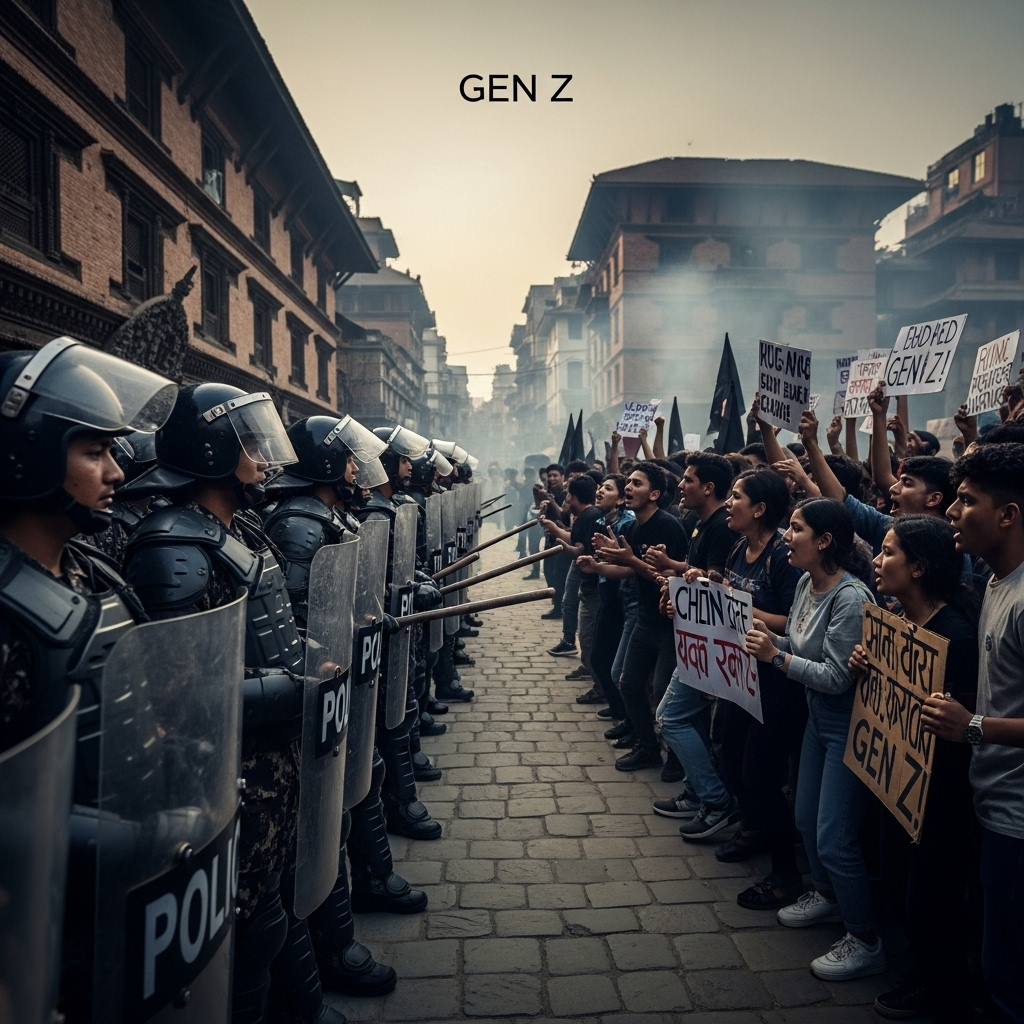
The protest that materialized on the streets of Kathmandu was characteristic of Gen Z activism worldwide. It was decentralized, visually driven, and deeply intertwined with online culture. Demonstrators, most of them students and young professionals under 25, carried signs with internet memes, QR codes linking to information about digital rights, and slogans like “Our Voices Can’t Be Muted.”
They used their phones not just to organize but to document and livestream every moment, creating a real-time record of their demonstration and ensuring their message reached an international audience despite the local blackout.
From Peaceful Rally to Deadly Clash
The demonstration, which began peacefully at Maitighar Mandala, a popular protest site, escalated as thousands marched toward the main government administrative complex at Singha Durbar. Witnesses report that police, equipped with riot gear, formed blockades to halt the protestors’ advance.
Tensions boiled over, and scuffles broke out between the lines of police and the front ranks of the demonstrators. Authorities deployed tear gas and water cannons to disperse the crowd, which responded by throwing water bottles and stones. It was in the ensuing chaos that tragedy struck. Rohan Karki, a 19-year-old college student, sustained a fatal head injury. According to fellow protestors, he was struck by a police baton, though an official investigation is pending.
The death of Karki has become a rallying cry for the movement, transforming the protest from an issue of internet freedom into a fight for justice and accountability. “They didn’t just take our apps; they took a life,” one protestor told a local news outlet.
The Digital Lifeline for Nepal’s Youth
For Nepal’s Gen Z, the social media ban is more than an inconvenience; it’s an attack on their identity, community, and livelihood. Unlike previous generations, they are digital natives who have grown up with the internet as an integral part of their social and economic lives. These platforms are their primary sources of news, their spaces for political discourse, and their marketplaces.
Many young Nepalese are part of the global gig economy, working as content creators, digital marketers, and e-commerce entrepreneurs. TikTok and Instagram, in particular, were vital tools for small businesses and influencers to reach customers. The ban has effectively shuttered these digital storefronts overnight, threatening the financial stability of thousands.
Furthermore, these platforms have been crucial for activism and social awareness, allowing young people to engage with issues from climate change to political corruption. Organizations like the Electronic Frontier Foundation have long warned that such internet shutdowns are a tool of modern authoritarianism, used to silence dissent and control the public narrative.
Government Response and What’s Next
In the wake of the deadly protest, the Nepalese government has called for calm but has so far refused to reverse the ban. The Home Ministry has promised a “full and impartial” investigation into Rohan Karki’s death but has also warned of a “zero tolerance” policy towards “violent and destructive” protests.
The international community is watching closely. Human rights organizations have condemned both the social media ban and the violent crackdown, calling it a grave violation of the rights to freedom of expression and peaceful assembly. The event is another example of the broader trend of digital authoritarianism in Asia, where governments are increasingly using technology to assert control.
As dusk fell over Kathmandu, protestors lit candles and held vigils for Karki, their resolve seemingly stronger than ever. The tragedy has galvanized the movement, turning a digital-first protest into a sustained, physical occupation. The youth of Nepal are now fighting not just for their internet, but for their future and their voice.


