
IRS Fires Top Aide, 1 Key Figure in Lerner Scandal Gone
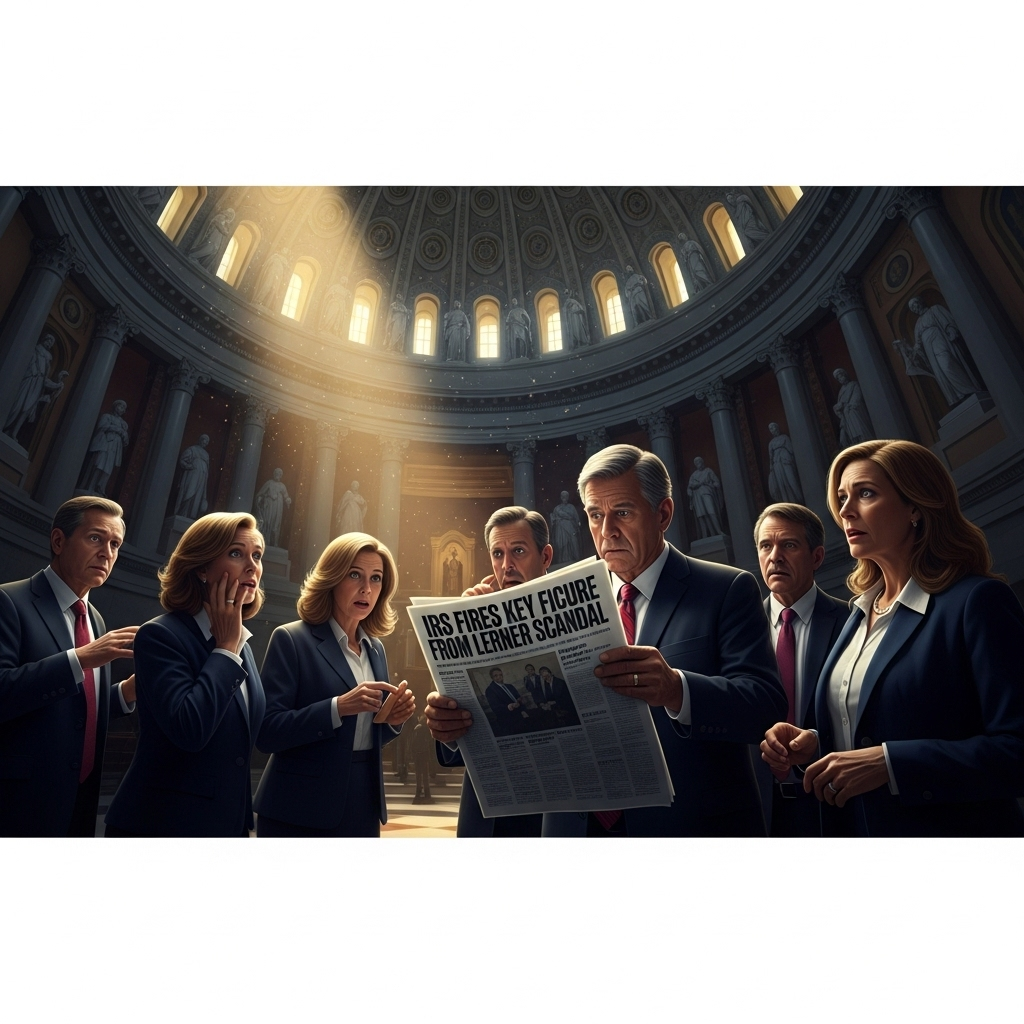
In a long-awaited move that closes a significant chapter of a decade-old controversy, the Internal Revenue Service (IRS) has terminated a high-ranking official deeply implicated in the Lois Lerner targeting scandal. The news that the IRS fires Gregory Harmon, a senior aide who worked directly under Lerner, has sent shockwaves through Washington, reigniting discussions about accountability and agency reform.
Harmon’s dismissal marks the most significant personnel action taken by the agency in years related to the scandal, where conservative and Tea Party groups seeking tax-exempt status were subjected to improper scrutiny. For years, critics have demanded accountability, and this firing is being seen by many as a delayed but necessary step toward justice.
The Scandal Revisited: A Brief History
To understand the gravity of today’s news, it’s essential to look back at the original scandal that rocked the IRS. Beginning around 2010, the agency was accused of using politically charged keywords to flag applications for tax-exempt status for extra review. Groups with “Tea Party,” “Patriot,” or “9/12” in their names were disproportionately affected, leading to significant delays and intrusive questioning that many saw as an attempt to stifle political dissent.
The controversy came to a head in 2013 when Lois Lerner, then head of the IRS’s Exempt Organizations unit, publicly apologized for the “inappropriate” criteria used. This admission triggered multiple congressional investigations and a firestorm of public outrage. Investigations revealed a culture of mismanagement and potential political bias within the agency.
Despite the intense scrutiny, very few individuals faced direct consequences. Lerner herself retired in 2013, avoiding termination. This lack of accountability has been a persistent source of frustration for lawmakers and watchdog groups, making the recent news that the IRS fires a key player all the more significant.

Why the IRS Fires Harmon Now
The timing of Harmon’s dismissal has raised many questions. Why now, over a decade after the scandal first broke? Sources within the agency, speaking on the condition of anonymity, point to the conclusion of a lengthy, and previously undisclosed, internal review by the Treasury Inspector General for Tax Administration (TIGTA). This review allegedly uncovered new evidence directly linking Harmon to directives that expanded the targeting criteria beyond what was previously known.
“The evidence was irrefutable,” one source claimed. “It showed a clear pattern of overreach orchestrated by Harmon, with or without Lerner’s explicit day-to-day command. The agency had no choice but to act.” This final report provided the legal and administrative foundation the current IRS leadership needed to proceed with termination, a process often complicated by federal employment protections.
Another factor may be the current political climate. With renewed focus on government agency oversight, the IRS may be attempting to demonstrate a commitment to impartiality. This is a classic ‘clean house’ maneuver, designed to restore a fraction of the public trust that was eroded during the scandal. By showing that the IRS fires even long-entrenched figures, the commissioner hopes to send a message that the agency is turning a new page.
Harmon’s Role in the Controversy
Gregory Harmon was not a public-facing figure like Lois Lerner, but congressional reports identified him as a key operational manager within the Exempt Organizations unit. He was described as Lerner’s “right-hand man,” responsible for translating broad directives into specific actions for the line agents in the Cincinnati office where most of the applications were processed.
During the initial investigations, Harmon’s name appeared in numerous email chains that discussed the “Be On the Lookout” (BOLO) lists. He was accused of helping to draft and approve the criteria that singled out conservative groups. Furthermore, he was one of the officials involved in the infamous “lost” emails, where a hard drive crash conveniently wiped out a significant portion of Lerner’s communications.
While Harmon maintained he was simply following orders, the new TIGTA report allegedly shows he took initiative in expanding the scope of the reviews. He reportedly encouraged agents to ask “unnecessarily invasive” questions about donors and political affiliations, going beyond the standard procedure for vetting 501(c)(4) “social welfare” organizations. You can read more about our previous coverage on procedural issues in our article, “A History of IRS Procedural Debates.”

Political and Public Reaction
The news was met with a mixture of vindication and renewed anger on Capitol Hill. House Oversight Committee Chairman James Comer called the firing “a decade too late, but a welcome step towards accountability.” He added, “This proves what we’ve been saying all along: the rot within the IRS was deep. The American people deserve to know who else was involved.”
Democrats, on the other hand, have been more cautious. While acknowledging the need for accountability, some have framed it as the agency addressing a past mistake. “The IRS has taken corrective action,” said one senior Democrat on the Ways and Means Committee. “This closes a painful chapter and allows the agency to focus on its critical mission of serving the American taxpayer.”
Public interest groups that were targeted in the scandal have expressed a sense of cautious relief. “For years, we were told this was just a few rogue agents in Cincinnati,” said a spokesperson for a prominent conservative nonprofit. “The fact that the IRS fires a D.C.-based senior aide to Lois Lerner confirms our belief that this was directed from the top. It’s a small victory, but it’s a victory nonetheless.” This sentiment is echoed by many who followed the story closely, as documented by news archives like the Reuters news agency.
What’s Next for the IRS?
Harmon’s firing is a symbolic act, but its practical impact remains to be seen. The IRS has undergone significant procedural changes since 2013 to prevent a similar scandal from recurring. New guidelines are in place to ensure that application reviews are based on activity, not on names or political viewpoints.
However, the agency continues to struggle with a trust deficit. For many Americans, the scandal confirmed their worst fears about a powerful federal agency being used for political purposes. The firing of one official, no matter how senior, may not be enough to fully repair that damage. Critics will likely use this event to call for more sweeping reforms and perhaps even a new round of investigations to determine if other culpable individuals remain at the agency.
For now, the message is clear: the IRS is still dealing with the fallout of the Lerner era. While this termination may offer some closure, it also serves as a stark reminder of a dark period in the agency’s history and the ongoing need for vigilant oversight to protect the rights of all taxpayers, regardless of their political beliefs. The story of the IRS firing Gregory Harmon will be remembered as a critical, if belated, moment of reckoning.
“`


