
Polish Border: NATO Scrambles 4 Jets Amid Russia Strikes
Tensions soared along the polish border in the early hours of the morning as NATO scrambled four fighter jets in response to a massive Russian missile attack on western Ukraine. One of the Russian cruise missiles briefly violated Polish airspace, triggering an immediate and robust defensive posture from the alliance. The incident marks the latest in a series of provocations that test NATO’s resolve and highlight the ongoing risk of the war in Ukraine spilling over into allied territory.
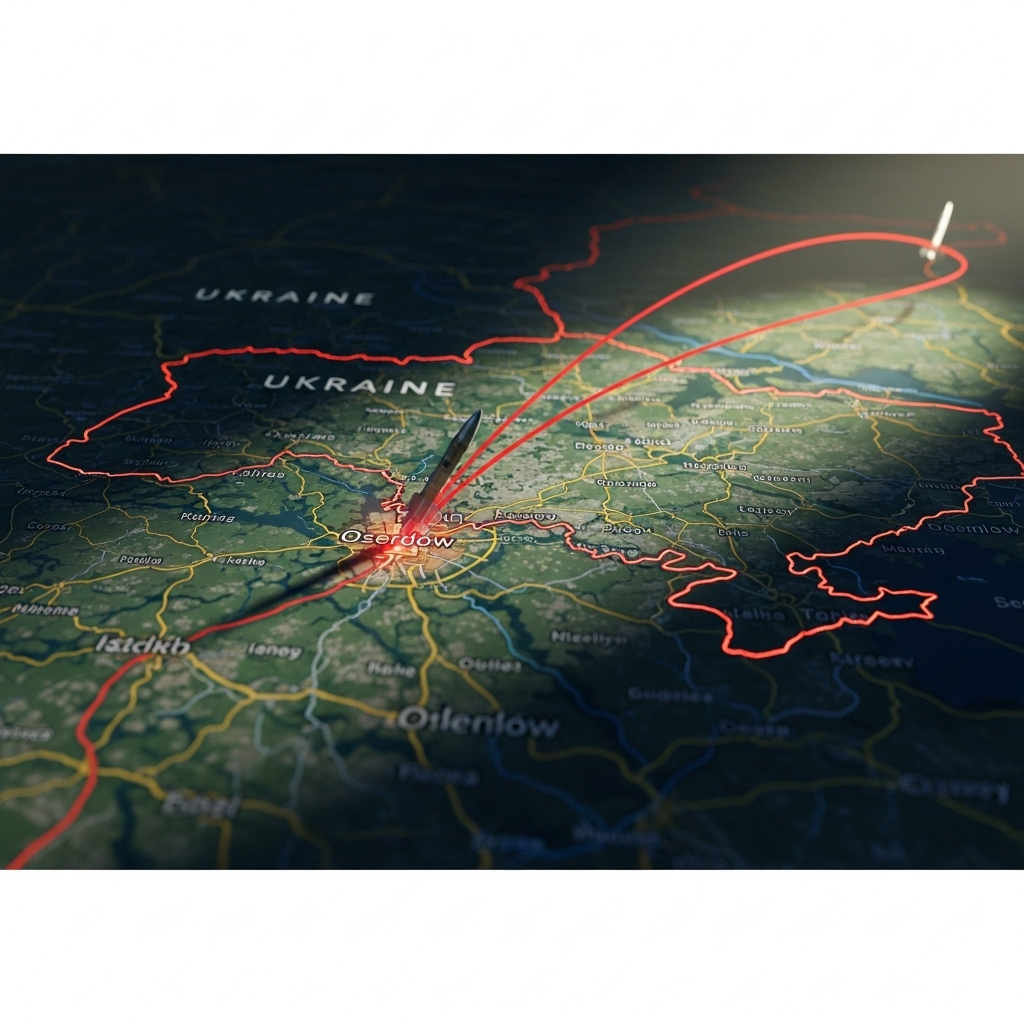
Poland’s Armed Forces Operational Command reported that the aerial object entered Polish airspace near the town of Oserdów and remained there for 39 seconds. In response, Polish and allied aircraft were activated to secure the skies. This rapid mobilization underscores the high state of alert maintained along NATO’s eastern flank.
Table of Contents
A Tense Morning Along the Polish Border
The day began with air raid sirens wailing across western Ukraine, including the Lviv region which directly borders Poland. Russia launched a large-scale barrage involving dozens of cruise missiles and attack drones aimed at critical infrastructure. It was during this intense assault that Polish military radar systems detected a missile heading towards its territory.
According to a statement from Poland’s military, the missile was traveling at nearly 800 kilometers per hour (about 500 mph) at an altitude of 400 meters. It crossed into Polish territory for 39 seconds, covering a distance of approximately two kilometers before altering its course and heading back towards Ukraine. This short duration did not diminish the seriousness of the breach.
Residents in the Lublin Voivodeship, the region where the incursion occurred, were placed on high alert. “All procedures were initiated to ensure the safety of Polish airspace,” the Operational Command stated on social media. The incident serves as a stark reminder to civilians living near the polish border of their proximity to an active and unpredictable warzone.
NATO’s Response: The Quick Reaction Alert
The response from both Poland and its NATO allies was immediate. The moment the object was identified as a potential threat, the Quick Reaction Alert (QRA) protocol was activated. This standard NATO procedure ensures that fighter jets are airborne within minutes to intercept any unidentified or hostile aircraft approaching allied airspace.
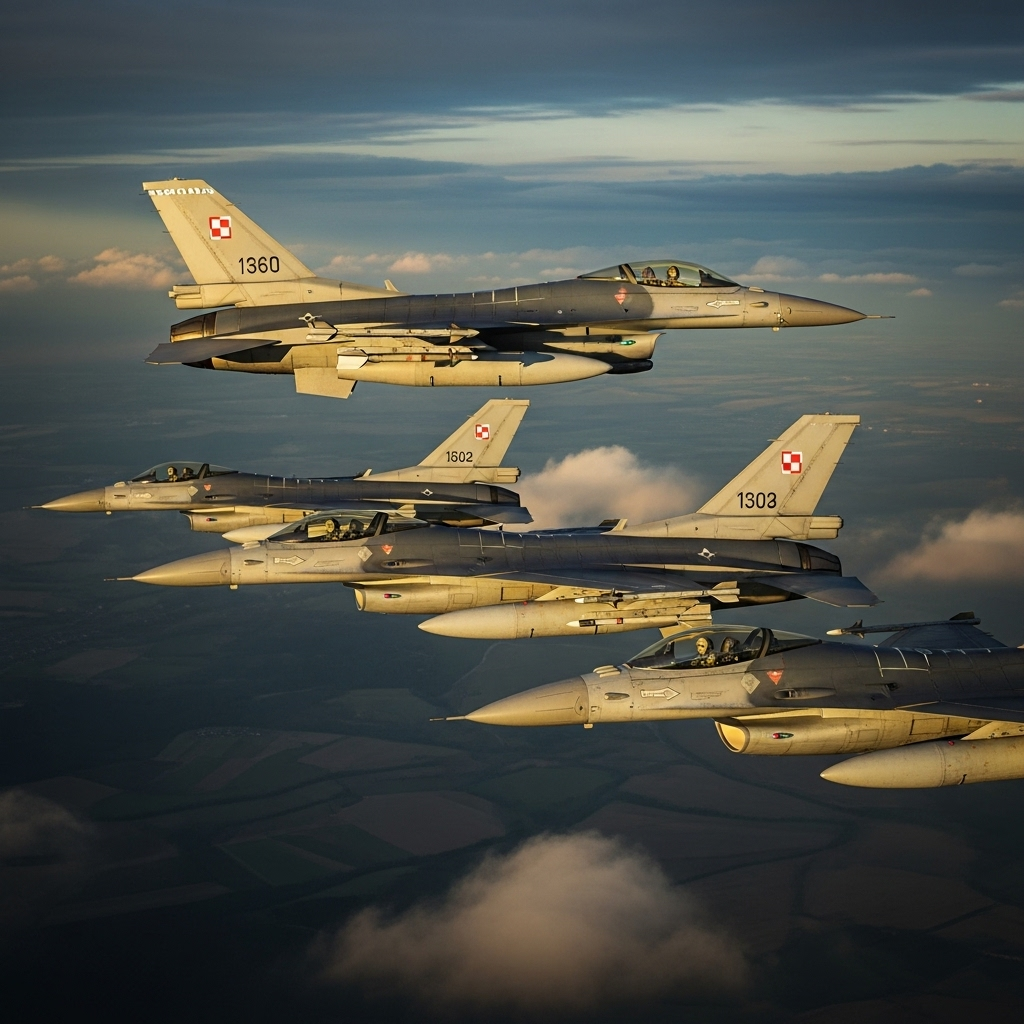
In this instance, two Polish F-16 fighter jets and two allied jets, part of NATO’s air policing mission, were scrambled. Their primary mission was to track the missile and be prepared to engage if it posed a direct threat to Polish infrastructure or population centers. “The Polish army is monitoring the situation on an ongoing basis,” said Defence Minister Władysław Kosiniak-Kamysz. “We are in constant contact with our allies.”
While the decision was made not to shoot down the missile due to its brief presence and trajectory away from populated areas, the scramble itself sends a powerful message. It demonstrates that NATO’s integrated air and missile defense system is fully operational and that the alliance takes any violation of its sovereign airspace with the utmost seriousness.
A Pattern of Provocation? Past Incidents
This is not the first time the war in Ukraine has directly impacted the security of the polish border. Observers note a disturbing pattern of incidents that have repeatedly put the nation on high alert.
In December 2023, another Russian missile entered and then left Polish airspace during a similar large-scale attack on Ukraine. That event also triggered a major search operation and a heightened military readiness posture. More tragically, in November 2022, two Polish citizens were killed when a missile struck the village of Przewodów, just a few kilometers from the Ukrainian border. Investigations later concluded it was likely a stray Ukrainian air defense missile, but the event highlighted the deadly potential for miscalculation and spillover.
These repeated occurrences, whether intentional or accidental, force NATO to expend resources and maintain a constant, high-stakes watch. Each incident erodes the buffer between the conflict and NATO territory, increasing the risk of a direct confrontation. For more on the alliance’s defensive posture, see our report on NATO’s Reinforcements on the Eastern Flank.
The Geopolitical Fallout and Diplomatic Demands
The diplomatic fallout was as swift as the military response. The Polish Foreign Ministry immediately announced it would summon the Russian ambassador to demand an explanation for the airspace violation. “We call on the Russian Federation to stop its terrorist air attacks on the inhabitants and territory of Ukraine,” a ministry spokesperson said in a strongly worded statement.
Other NATO members were quick to voice their solidarity. A Pentagon spokesperson reiterated the United States’ “ironclad commitment” to the defense of Poland and all NATO allies. The sentiment was echoed by officials in the United Kingdom and Germany, who condemned the Russian aggression. For official alliance statements, you can visit the official NATO website.
As expected, initial reactions from Moscow are likely to be dismissive, often claiming a lack of evidence or framing such events as “provocations” by the West. This diplomatic tug-of-war is part of a broader hybrid conflict in which Russia tests NATO’s boundaries both militarily and politically, forcing the alliance to navigate the fine line between de-escalation and demonstrating credible deterrence.
What This Means for Security at the Polish Border
For Poland and its people, the key question is what comes next. This latest breach will almost certainly lead to a further strengthening of air defense capabilities along the polish border. This could include the deployment of additional Patriot missile batteries or other advanced surface-to-air systems, as well as an increase in the frequency of NATO air patrols.
The psychological impact on communities in eastern Poland cannot be understated. Living under the constant threat of stray missiles and the roar of friendly fighter jets creates an atmosphere of persistent anxiety. It reinforces the reality that while they are protected by NATO’s shield, the war is not a distant conflict but an immediate and present danger.
Ultimately, the incident serves as a critical test of NATO’s collective defense principle, enshrined in Article 5 of the North Atlantic Treaty. While a 39-second airspace violation does not trigger a full-scale military response, it forces the alliance to continually reassess its readiness and demonstrate that an attack on one is truly considered an attack on all. The security of the Polish border has never been more synonymous with the security of the entire Euro-Atlantic area.
In conclusion, the scramble of four NATO jets over a missile incursion is more than just a military maneuver. It is a symbol of the dangerous new reality in Eastern Europe. As Russia continues its brutal war against Ukraine, the polish border will remain a critical flashpoint, demanding unwavering vigilance and unity from the entire NATO alliance.
“`


