9,000 jobs cut: Ozempic-maker Novo Nordisk restructures
In a move that has stunned market analysts and its own workforce, Danish pharmaceutical giant Novo Nordisk has announced a sweeping corporate restructuring that will result in approximately 9,000 jobs being cut globally. The decision comes at a time of unprecedented financial success for the company, fueled by the staggering demand for its blockbuster drugs Ozempic and Wegovy.
Article Contents
The Rationale Behind the Restructuring
In a statement released early Wednesday morning, Novo Nordisk CEO Lars Fruergaard Jørgensen described the move as a “strategic realignment” designed to position the company for “sustained long-term growth and innovation.” While the company’s current portfolio is performing exceptionally well, the leadership aims to streamline operations and aggressively reallocate resources toward future high-potential research and development areas.
The company explained that the cuts are not a cost-saving measure in the traditional sense but rather a fundamental pivot. Resources and personnel will be shifted away from more traditional therapeutic areas and administrative functions. The focus will now be squarely on expanding the applications of its GLP-1 platform—the technology behind Ozempic and Wegovy—and investing heavily in new treatment areas such as cardiovascular disease, chronic kidney disease, and neurodegenerative disorders like Alzheimer’s.
“To maintain our leadership and capitalize on the scientific opportunities ahead, we must be agile,” Jørgensen’s statement continued. “This means making difficult decisions to stop certain activities and reallocate our investments to fuel the next wave of life-changing treatments.”
The Human Cost of the 9,000 Jobs Cut
The headline figure of 9,000 jobs represents roughly 12% of Novo Nordisk’s global workforce. The impact of these layoffs will be felt across the company’s international operations, with significant concentrations in its Danish headquarters and its North American commercial divisions. While specific numbers for each region have not been fully disclosed, sources indicate that R&D departments working on non-core projects, as well as sales and marketing teams for older products, will bear the brunt of the cuts.
The announcement has sent shockwaves through the company, where morale was reportedly at an all-time high due to the recent successes. Employees, who just months ago were celebrating record-breaking performance, now face an uncertain future. The company has promised comprehensive severance packages and outplacement services for affected staff, but the news remains a bitter pill to swallow.
This reduction in force is one of the largest in the pharmaceutical sector in recent years, highlighting the volatile nature of an industry where today’s blockbuster can quickly be overshadowed by tomorrow’s innovation pipeline. The human cost of this strategic pivot is significant, with thousands of highly skilled professionals now set to re-enter the job market.
A Paradox of Success: Soaring Profits, Staffing Cuts
The decision is particularly jarring when viewed against Novo Nordisk’s recent financial performance. The company’s market capitalization has skyrocketed, making it the most valuable company in Europe and surpassing the GDP of its home country, Denmark. Demand for Ozempic (for diabetes) and Wegovy (for weight loss) has been so immense that the company has struggled to keep up with production, leading to widespread shortages.
This “Ozempic paradox” of cutting jobs amidst booming success is a clear signal of the immense pressure from shareholders to not only maintain but accelerate growth. Analysts suggest that the stock market has already priced in the current success of GLP-1 drugs; to justify its massive valuation, Novo Nordisk must demonstrate a clear and credible plan for what comes next. By trimming what it considers to be less productive areas, the company is signaling to investors that it is ruthlessly focused on future profitability.
This strategy, while potentially rewarding for shareholders, underscores a modern corporate reality: even extraordinary success does not guarantee job security. The focus is perpetually on the next growth engine. For more information on the company’s financial journey, you can view its performance on platforms like Bloomberg Markets.
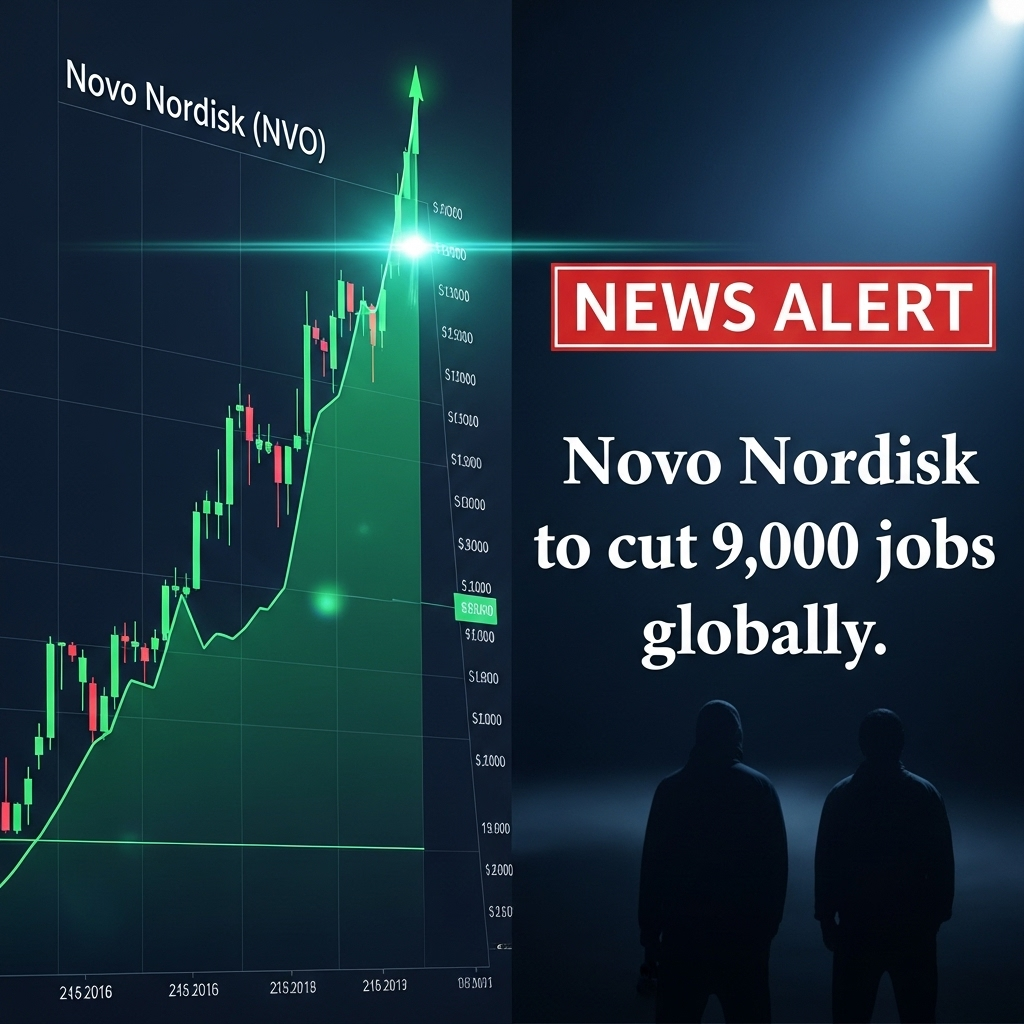
Novo Nordisk’s Strategic Pivot for the Future
The restructuring is a key part of Novo Nordisk’s vision for the next decade. The funds and intellectual capital freed up by the layoffs will be funneled into three primary areas:
- Expanding Manufacturing Capacity: A significant portion of the reallocated budget will go towards building new state-of-the-art manufacturing facilities to address the ongoing shortages of Ozempic and Wegovy and prepare for future demand.
- Broadening the GLP-1 Pipeline: Research will intensify on the potential of semaglutide and other GLP-1 agonists to treat a host of related metabolic conditions. Clinical trials exploring benefits for heart failure, fatty liver disease, and even addiction are already underway.
- Acquisitions and New Technologies: The company is expected to be more aggressive in acquiring smaller biotech firms and novel technologies, particularly in the fields of gene editing, RNA interference (RNAi), and cell therapies.
This forward-looking strategy shows a company that is refusing to rest on its laurels. By making tough choices now, Novo Nordisk aims to transform itself from a diabetes and obesity-focused company into a broader healthcare powerhouse. To understand the medications at the center of this success, you can read more about the drugs driving Novo Nordisk’s growth.

Industry Reaction and Broader Implications
The reaction from the pharmaceutical industry has been a mix of surprise and understanding. Competitors like Eli Lilly, which has its own successful GLP-1 drugs, will be watching closely. Some analysts believe this move could trigger a trend among other large pharmaceutical companies, prompting them to re-evaluate their own workforce and R&D pipelines, even in times of financial strength.
The message is clear: in the fast-paced world of pharma, size and past success are no longer sufficient. Agility, a focused R&D pipeline, and the ability to pivot quickly are the new metrics for long-term survival and dominance. The culling of 9,000 jobs at Novo Nordisk, while painful for those involved, is a calculated gamble on securing an even more dominant position in the healthcare landscape of tomorrow.
As the dust settles, the industry will be watching to see if this massive restructuring pays off, or if cutting so deeply during a period of strength was a strategic misstep. For now, it serves as a stark reminder that in the business of innovation, change is the only constant.
“`