
Ozempic’s Outcome: Can This 1 New Drug Offer Better?
The global conversation around weight loss and metabolic health has been dominated by one name: Ozempic. The effectiveness of this GLP-1 agonist has been nothing short of revolutionary for many, but the full picture of Ozempic’s outcome includes both remarkable successes and notable challenges. As science races forward, a critical question emerges: Is this the peak, or can a new generation of drugs deliver even better results with fewer drawbacks?
In this article, we’ll dive deep into the results patients are seeing with Ozempic and introduce a promising new contender that could reshape the landscape of weight management yet again. Let’s explore the data, the science, and what the future holds.
Understanding Ozempic’s Role and Impact
Ozempic, the brand name for semaglutide, wasn’t initially designed as a weight-loss drug. It was approved by the U.S. Food and Drug Administration (FDA) primarily to help manage blood sugar levels in adults with type 2 diabetes. However, its significant side effect of weight loss quickly captured public and medical attention. Its sister drug, Wegovy, which contains a higher dose of semaglutide, was later approved specifically for chronic weight management.
The drug works by mimicking a gut hormone called glucagon-like peptide-1 (GLP-1). This accomplishes several things:
- It prompts the pancreas to release insulin when blood sugar is high.
- It slows down “gastric emptying,” the process of food leaving the stomach, which makes you feel full for longer.
- It signals to the brain that you are satiated, reducing appetite and cravings.
This powerful mechanism is the driver behind its success stories, helping millions of people achieve health goals they previously found unattainable. For more details on the basic science, you can read our guide on understanding GLP-1 agonists.
A Deeper Look at Ozempic’s Outcome for Patients
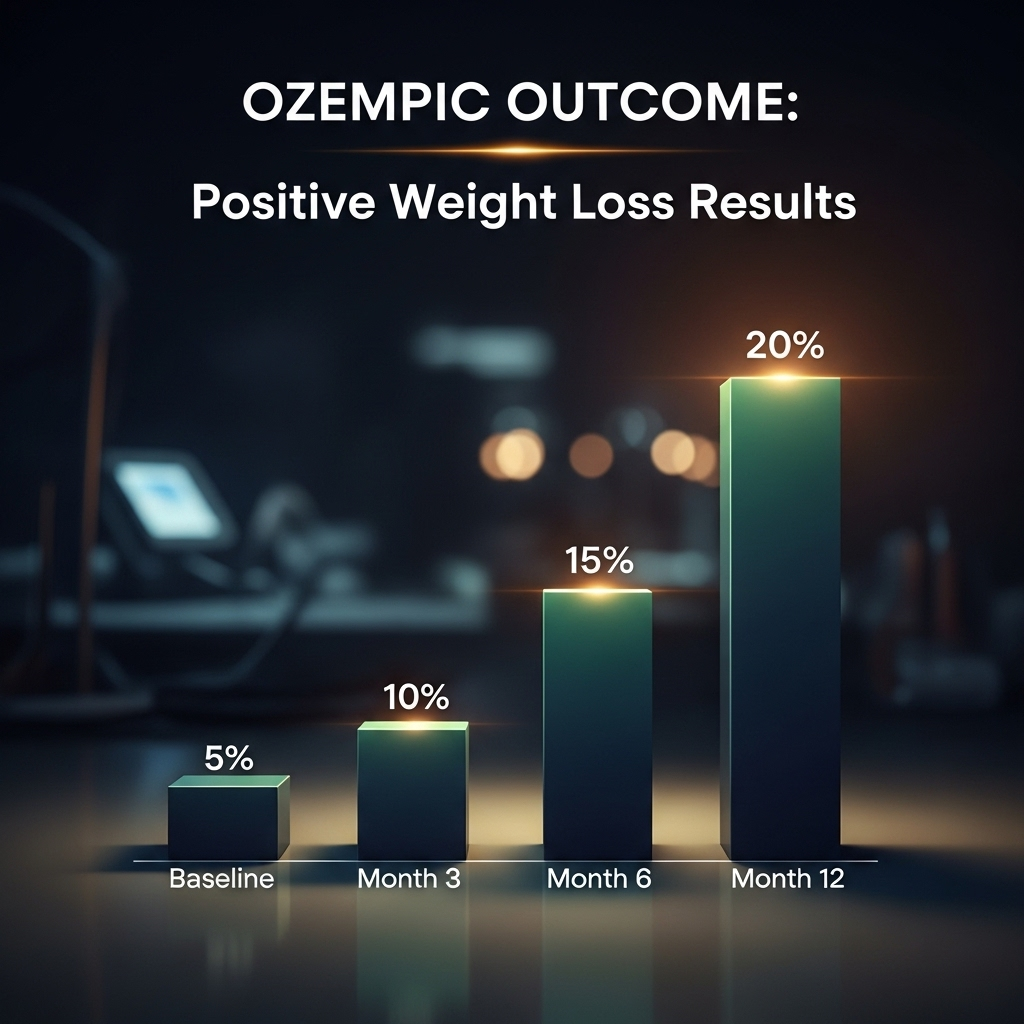
When we analyze Ozempic’s outcome, we see a spectrum of results. On one end, there are life-changing transformations. Clinical trials and real-world data show users losing, on average, 15% of their body weight. This level of weight loss can lead to dramatic improvements in comorbidities like high blood pressure, sleep apnea, and insulin resistance.
However, the outcome isn’t universally positive. The side effects are a significant part of the conversation. Common issues include:
- Nausea and vomiting
- Diarrhea or constipation
- Abdominal pain
- The risk of more severe, albeit rare, conditions like pancreatitis and gallbladder problems.
Furthermore, there’s the “Ozempic face” phenomenon—rapid weight loss leading to a gaunt facial appearance—and the challenge of muscle mass loss alongside fat loss. Perhaps the most critical consideration is sustainability. Many patients find that when they stop taking the medication, the weight quickly returns, making it a long-term, and often costly, commitment.
The New Contender: Introducing Retatrutide
As impressive as Ozempic is, the pharmaceutical world is already looking toward the next generation. Enter Retatrutide, a new investigational drug that is generating immense excitement in the medical community. Unlike Ozempic, which targets a single hormone receptor (GLP-1), Retatrutide is a “triple agonist.”
This means it targets three different hormone receptors involved in metabolism and appetite:
- GLP-1: The same receptor Ozempic targets, for appetite suppression and insulin control.
- GIP (glucose-dependent insulinotropic polypeptide): Another gut hormone that helps regulate blood sugar and may enhance the effects of GLP-1.
- Glucagon: A hormone that, in this context, is believed to increase energy expenditure and fat burning.
By activating all three pathways, the theory is that Retatrutide can produce a more potent and comprehensive metabolic effect. This multi-pronged approach aims to not only curb appetite more effectively but also to boost the body’s ability to burn calories.
Head-to-Head: Ozempic vs. Retatrutide
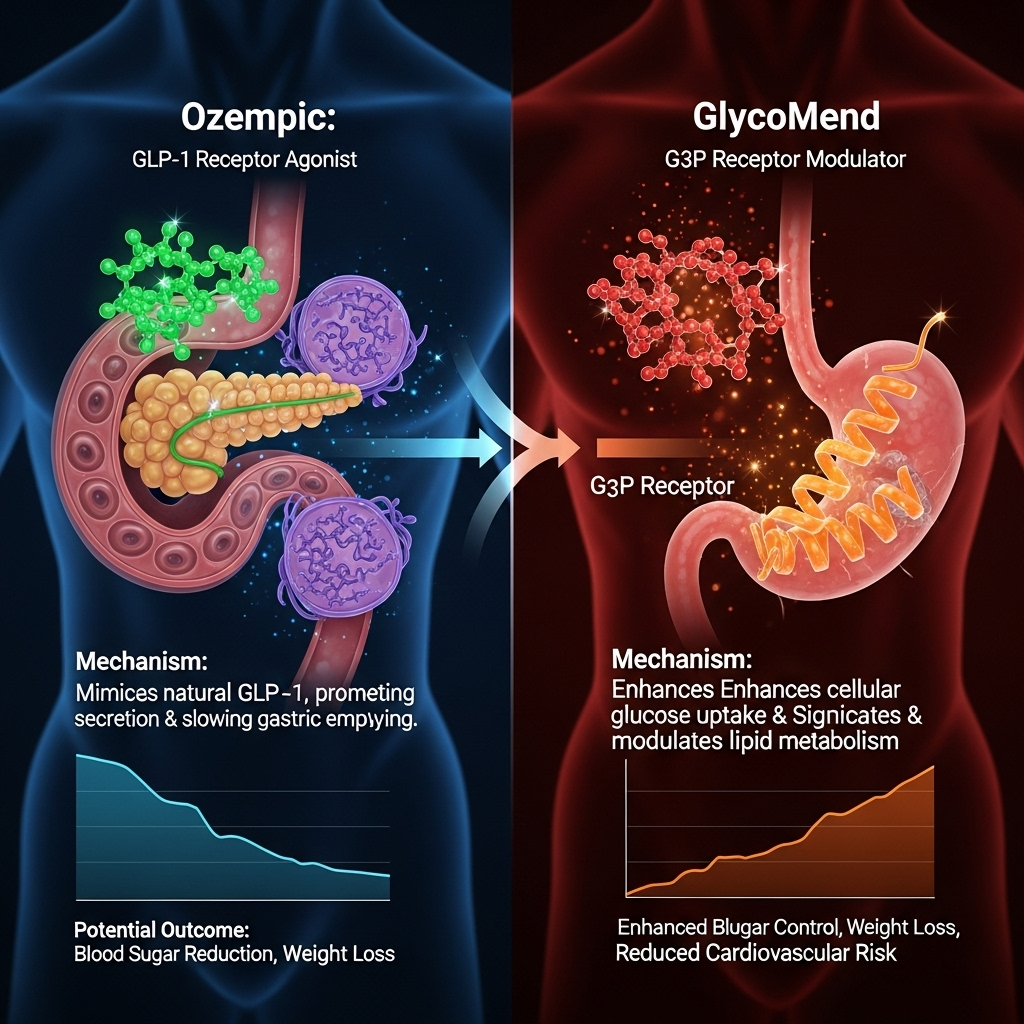
While Retatrutide is still in clinical trials and not yet available to the public, the early data is staggering. A Phase 2 trial published in the New England Journal of Medicine presented jaw-dropping results.
Let’s compare what we know so far:
Average Weight Loss:
- Ozempic/Wegovy: Around 15% of total body weight over 68 weeks.
- Retatrutide: An astonishing average of 24.2% of total body weight at 48 weeks in its Phase 2 trial. This is the highest level of weight reduction ever seen with a pharmaceutical.
Mechanism of Action:
- Ozempic: Single-agonist (GLP-1). Focuses primarily on satiety and insulin regulation.
- Retatrutide: Triple-agonist (GLP-1, GIP, Glucagon). Adds energy expenditure and enhanced hormonal signaling to the mix.
Side Effects:
The side effect profile for Retatrutide appears similar to Ozempic, with gastrointestinal issues being the most common. However, because it’s still being studied, the long-term safety profile is not yet fully understood. Researchers are working to see if the triple-agonist action creates any unique challenges or, conversely, mitigates some existing ones.
The Future of Weight Management Drugs
The potential of Retatrutide represents a significant leap forward. It suggests that the impressive results seen with Ozempic’s outcome may just be the beginning. The future of metabolic medicine seems to lie in these multi-agonist drugs that can intervene in the body’s complex systems in a more nuanced and powerful way.
For patients, this is incredibly hopeful news. A drug that can deliver over 24% weight loss is approaching the effectiveness of bariatric surgery, but without the invasive procedure. This could provide a viable, powerful option for individuals with severe obesity and related health conditions.
The ultimate goal is to find treatments that not only maximize fat loss but also preserve muscle mass, have a manageable side effect profile, and are accessible and affordable for those who need them most. The journey from Ozempic to drugs like Mounjaro (a dual-agonist) and now Retatrutide shows a clear and rapid progression toward that goal.

So, can Retatrutide offer a better outcome? Based on the early data, the answer is a resounding “potentially, yes.” It promises greater efficacy, potentially pushing the boundaries of what’s possible with medication. However, the final verdict will depend on the full results of Phase 3 trials, long-term safety data, and real-world patient experiences. For now, Ozempic remains a powerful and proven tool, but the future looks even brighter.
“`


