
Outdoor Events: 5 Big Challenges in Event Security
There’s nothing quite like the energy of a live concert under the stars, the community feel of a local food festival, or the excitement of a marathon. Outdoor events offer a unique atmosphere that indoor venues simply can’t replicate. However, this freedom and openness also introduce a complex set of security challenges. Unlike a building with four walls and a roof, securing a park, field, or city street requires a dynamic and highly specialized approach. For event organizers, ensuring attendee safety is the number one priority, and that starts with understanding the unique risks involved.
From unpredictable weather to the sheer scale of an open space, the security logistics for outdoor events are significant. A successful event isn’t just one that’s fun—it’s one where every guest feels safe from start to finish. In this article, we’ll break down the five biggest challenges in event security that every planner of outdoor festivals, concerts, and gatherings must address.
Article Contents
1. Lack of a Fixed Perimeter
The single greatest challenge for many outdoor events is establishing a secure perimeter. An arena or concert hall has a limited number of clearly defined entry and exit points. A public park or a large field, however, is inherently porous. Without solid walls, creating a controlled environment is incredibly difficult.
This lack of a fixed boundary leads to several security vulnerabilities:
- Unauthorized Access: Individuals can easily attempt to sneak in, bypassing ticket sales and, more importantly, security screenings. This increases the risk of prohibited items like weapons or alcohol entering the venue.
- Difficult Access Control: Managing the flow of thousands of people is tough when the entry points are temporary structures. Long lines can form, creating frustration and potential flashpoints for conflict.
- Monitoring Challenges: A perimeter stretching for hundreds or even thousands of feet is difficult to monitor effectively. It creates blind spots where illicit activity can go unnoticed.
Effective solutions often involve a combination of physical barriers, technology, and personnel. Temporary fencing is a must, but it’s not foolproof. It must be patrolled by security staff, supported by surveillance cameras, and supplemented with clear, prominent signage directing attendees to official entry points.
2. Weather and Environmental Factors
When you host an event outdoors, you are at the mercy of the elements. Weather is not just a matter of comfort; it’s a major security and safety concern that can change in an instant. A comprehensive security plan must include contingencies for various weather-related scenarios.
Consider the impact of:
- Extreme Heat: Sun exposure and high temperatures can lead to dehydration, heatstroke, and other medical emergencies. This puts a strain on medical staff and resources.
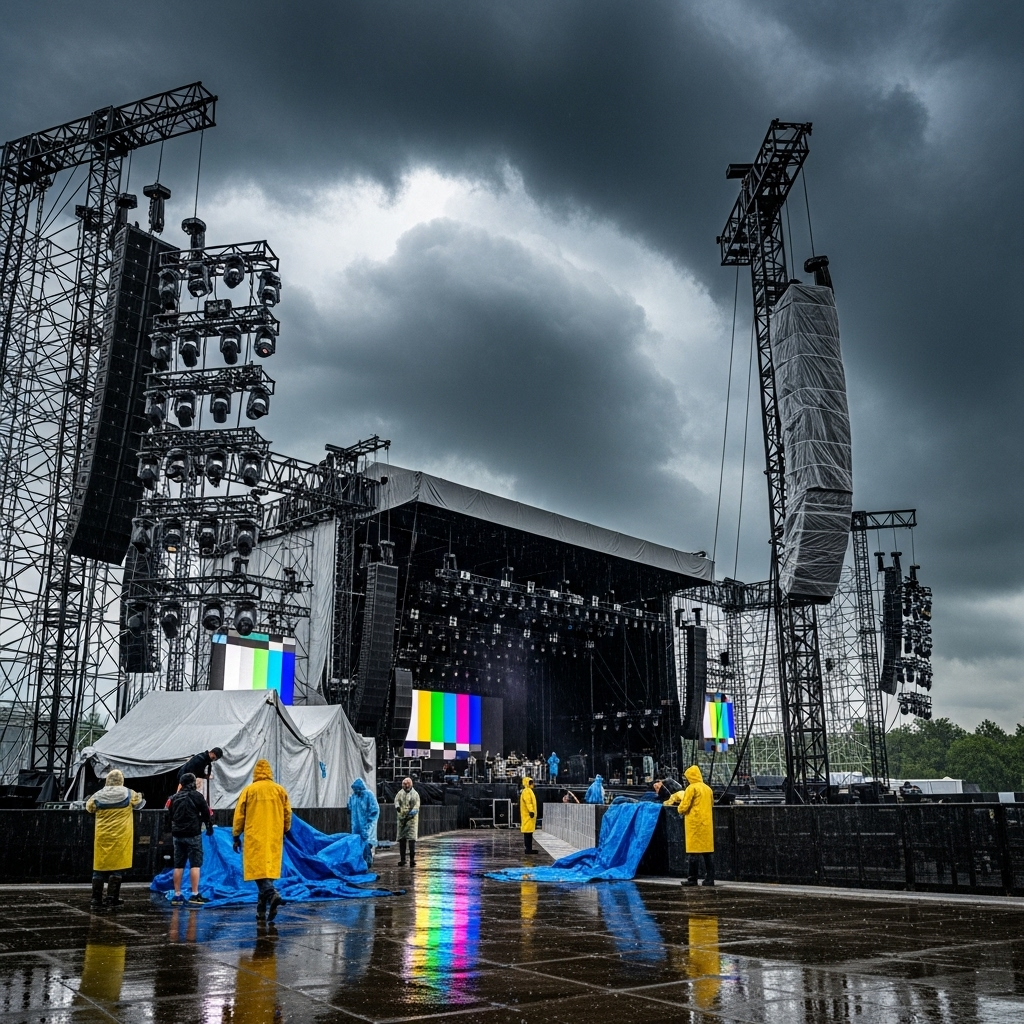
- Rain and Thunderstorms: A sudden downpour can create slip-and-fall hazards, damage expensive electronic equipment, and turn fields into mud pits. A lightning storm presents a severe, immediate threat that may require a full-scale evacuation.
- High Winds: Strong gusts of wind can topple stages, tents, and video screens, posing a direct physical threat to anyone underneath.
- Darkness: As day turns to night, visibility decreases significantly. Poor lighting can conceal criminal activity and make it harder for security to navigate and respond to incidents.
A robust plan involves proactive weather monitoring, clearly defined evacuation procedures for severe weather, designated shelters, and an adequate supply of resources like water stations for hot days. Proper site lighting for evening events is non-negotiable.
3. Crowd Management and Control in Open Spaces
Managing a crowd within the fixed seating of a stadium is one thing; managing it in an open field is another entirely. The lack of structured aisles and sections at many outdoor events can make crowd control a nightmare. The density of the crowd can shift unexpectedly, and a small incident can quickly escalate.
The primary danger in an open space is the risk of a crowd surge or stampede. Without physical structures to absorb pressure, a panicked rush in one direction can have a domino effect, leading to trampling and crush injuries. Security teams must be trained to recognize the signs of dangerous crowd density, such as individuals being unable to move freely.
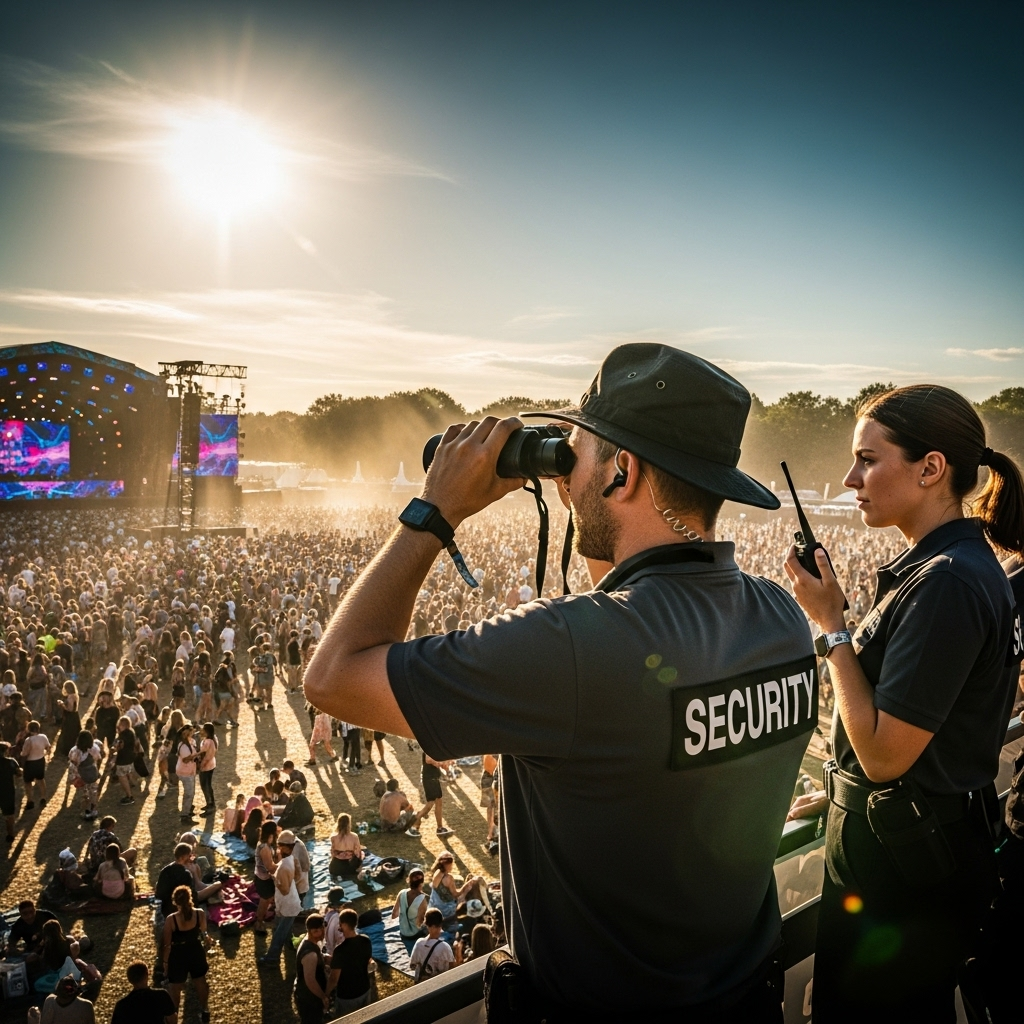
To mitigate these risks, planners should use barriers to create “zones” within the larger event space. This breaks up one massive crowd into smaller, more manageable sections. It’s also crucial to design and clearly mark dedicated pathways and emergency exit lanes to facilitate orderly movement, especially during an evacuation. Elevated observation posts give security a bird’s-eye view, allowing them to spot potential problems before they escalate.
4. Communication and Technology Failures
Clear and constant communication is the backbone of any effective security operation. At outdoor events, this can be surprisingly fragile. When thousands of attendees converge on one area, they often overwhelm local cellular networks, making mobile phones unreliable for staff communication.
Furthermore, two-way radios, while more reliable, can suffer from “dead zones” due to terrain, structures, or distance. A security guard on the far side of a festival ground might be unable to reach the central command post. Power is another critical factor. Surveillance cameras, lighting towers, and communication hubs all require electricity, and relying on a single power source without a backup generator is a recipe for disaster.
The solution is a multi-layered communication plan. This includes using dedicated, private radio channels with repeaters to boost the signal, establishing a pre-defined communication tree, and having runners available as a low-tech backup. A central command post with redundant power sources is essential to keep the operation running smoothly, no matter what.
5. Threat Assessment and Response for Outdoor Events
The open and accessible nature of outdoor events can make them attractive “soft targets” for those with malicious intent. A thorough threat assessment is crucial and must account for risks that are unique to an open-air environment. This goes beyond just screening attendees at the gate.
One of the most significant modern threats is the use of a vehicle as a weapon. A security plan for an event near any roadway must include hostile vehicle mitigation measures, such as strategically placed concrete barriers, bollards, or even large trucks. Another challenge is effectively screening for prohibited items. While bag checks and magnetometers are standard, the sheer volume of people and the temporary nature of checkpoints require highly efficient and well-trained staff.
Collaboration with local law enforcement and emergency services is absolutely vital. These agencies can provide valuable intelligence and resources. For comprehensive guidance on special event planning, resources like the FEMA Special Events Contingency Planning Guide are invaluable. A modern security plan may also incorporate overwatch from drones or elevated positions to monitor the wider area for suspicious activity approaching the perimeter.

Conclusion: Planning is Paramount for Safe Outdoor Events
Hosting successful and memorable outdoor events requires more than just great entertainment and good food. It demands a rigorous, proactive, and comprehensive approach to security. The challenges—from establishing a perimeter and battling the weather to managing large crowds and planning for credible threats—are significant but not insurmountable.
By understanding these five key challenges, event organizers can develop a layered security strategy that protects attendees, staff, and performers. Investing in experienced security professionals, creating detailed contingency plans, and fostering strong partnerships with local authorities are not optional expenses; they are fundamental to ensuring that the event is remembered for all the right reasons. For more tips on organizing a flawless gathering, check out our Ultimate Event Planning Checklist.


