
New species: 2 dancing spiders unlock evolution’s key
In a stunning discovery that has the scientific community buzzing, researchers have identified a new species of peacock spider—in fact, two of them—in the remote landscapes of Western Australia. These tiny arachnids, no larger than a grain of rice, are not just a colorful addition to the book of life; their unique and intricate courtship dances are providing unprecedented insights into the mechanics of evolution and speciation.
Table of Contents
Meet the New Species: Maratus Incredibilis & Maratus Saltator
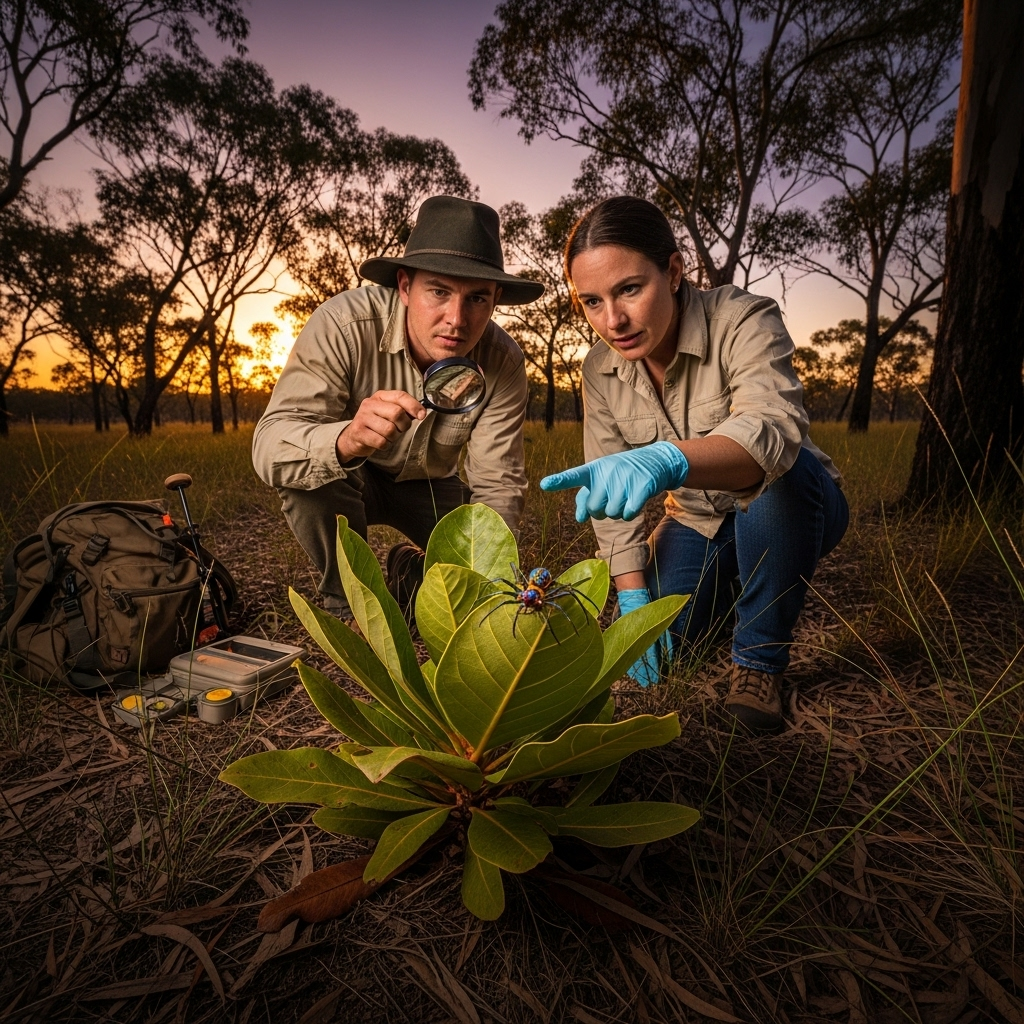
Deep within the Kwongan heathlands, a biodiversity hotspot, Dr. Alistair Finch and his team from the University of Melbourne stumbled upon what they initially thought was a known variant of the peacock spider genus (Maratus). However, closer observation revealed something extraordinary. The two spiders, now officially named Maratus incredibilis and Maratus saltator, represent an entirely new species group previously unknown to science.
“It was one of those eureka moments,” Dr. Finch explained. “We saw the male begin its courtship display, and the patterns and movements were unlike anything documented. We knew we had something special.”
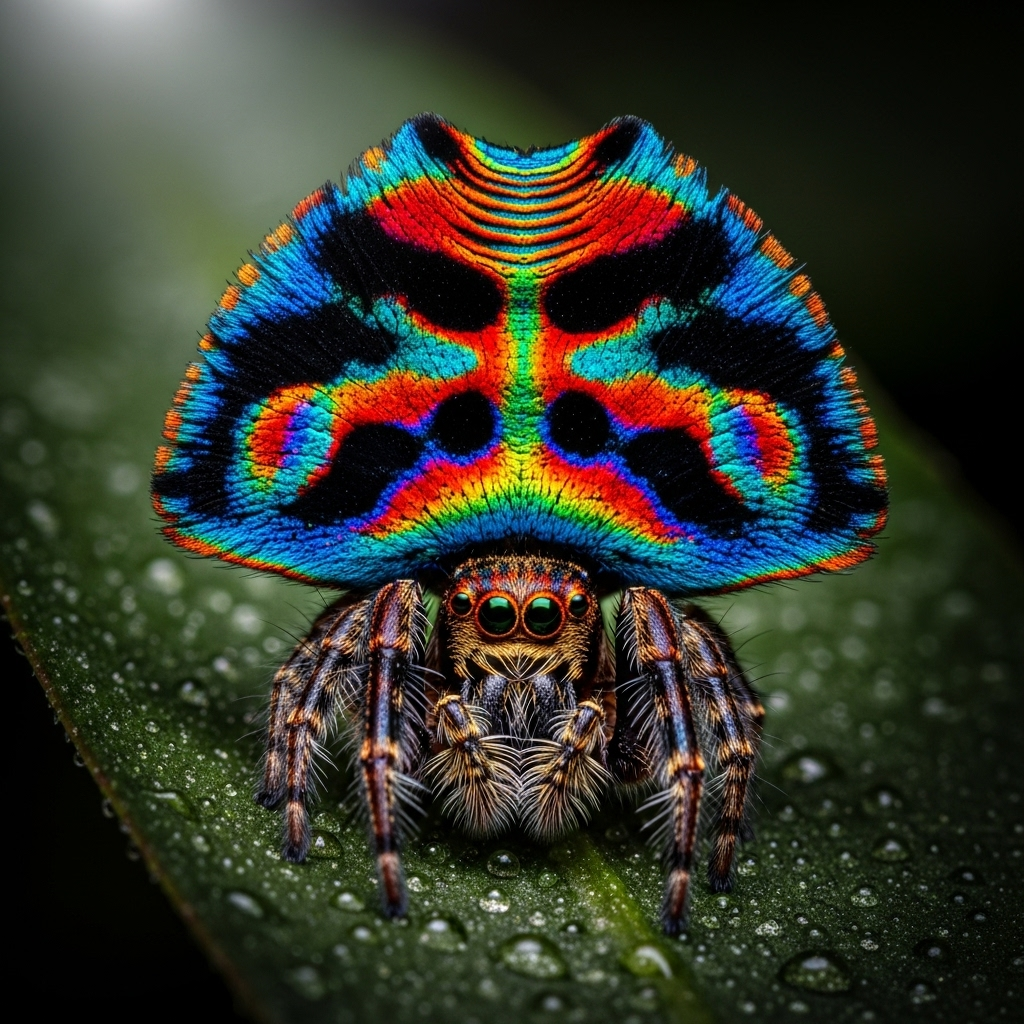
Peacock spiders are famous for their vibrant abdominal flaps, which they raise and wave in a mesmerizing dance to attract mates. M. incredibilis boasts a flap with an iridescent, almost holographic pattern resembling a spiral galaxy. In contrast, M. saltator, which translates to “the leaper,” has a striking geometric pattern of neon orange and blue and incorporates a series of dramatic vertical leaps into its routine.
These visual distinctions are crucial. They are the first clue that these spiders are reproductively isolated from their close relatives, a key requirement for being classified as a distinct species. For more details on the fundamentals of speciation, you can read about the process on Wikipedia’s comprehensive page.
The Dance of a Lifetime: A Complex Courtship Ritual
The discovery of a new species is always exciting, but what makes these two spiders revolutionary is the minute variations in their elaborate courtship dances. The team used high-speed cameras and motion-tracking software to analyze every shimmy, wave, and leap. They found that while the dances of M. incredibilis and M. saltator shared a common ancestral “language,” they had diverged into unique dialects.
The dance consists of several key components:
- Vibrations: The male drums on the ground, sending specific vibrational signals to the female to get her attention.
- Leg Waves: It raises its third pair of legs and waves them in a semaphore-like pattern.
- Abdomen Display: The grand finale involves raising its brilliantly colored abdomen flap and shaking it vigorously.
Dr. Finch’s team discovered that the rhythm of the vibrations and the specific sequence of leg waves differed between the two new species by mere milliseconds. However, these tiny differences are a matter of life and death. If a male performs the wrong dance, the female will not only reject him but may perceive him as a threat—or worse, as prey.
“This behavioral barrier is as effective as a mountain range in keeping the species separate,” notes co-author Dr. Lena Petrova. “The dance is a password, and if you have the wrong one, you don’t get in. This is a beautiful, living example of behavioral isolation driving evolution.” For similar exciting finds, check out our section on recent discoveries.
Unlocking Speciation: How Divergent Dances Drive Evolution
The discovery of these spiders provides a powerful, real-time window into speciation—the evolutionary process by which new biological species arise. Scientists have long theorized that changes in courtship rituals can lead to the formation of new species, but observing it with such clarity is rare.
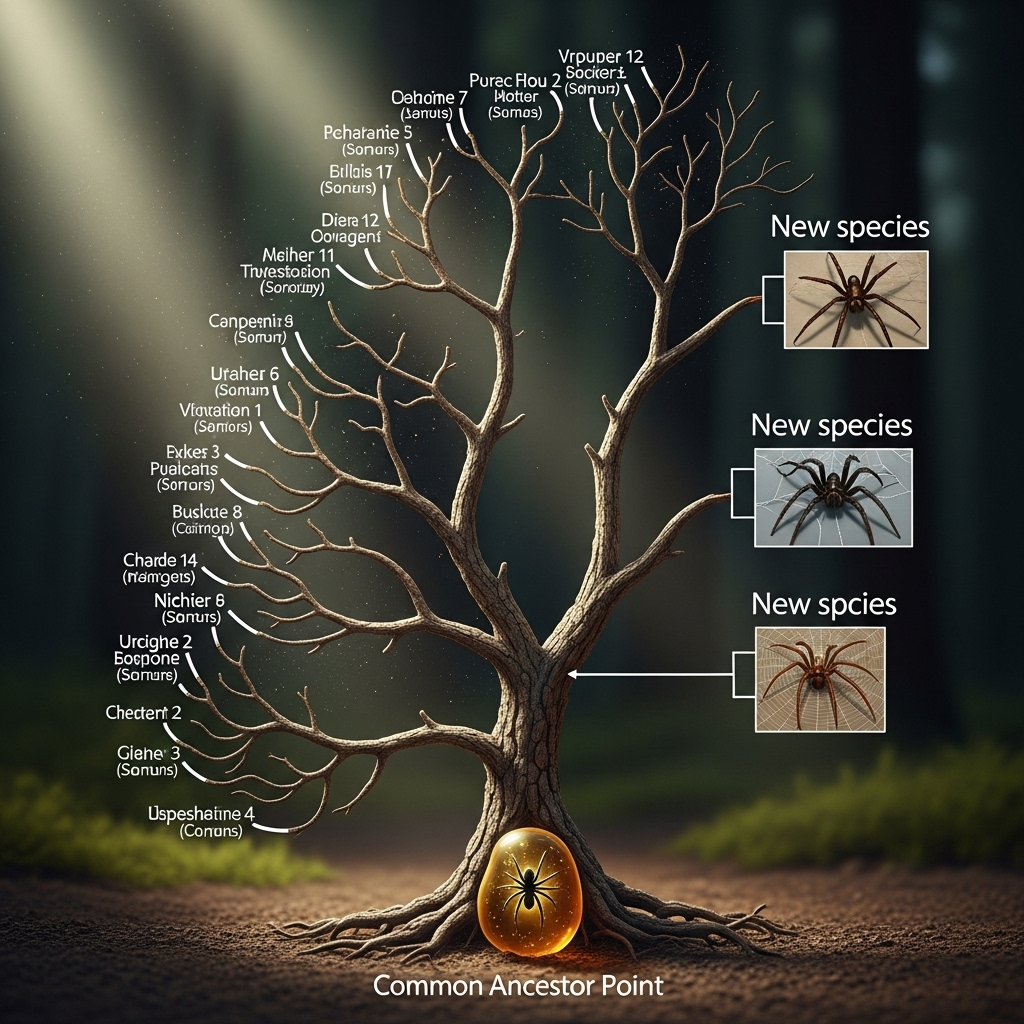
The two new species are thought to have diverged from a common ancestor just a few thousand years ago, a blink of an eye in evolutionary terms. It’s likely that a small population became geographically isolated. In that new environment, a slight variation in the male’s dance may have been preferred by females. Over generations, this preference was reinforced, leading to a rapid divergence in both the dance and the corresponding colorful patterns. Eventually, the dances became so different that the two groups could no longer interbreed, solidifying their status as separate species.
This finding supports the theory of “sensory drive,” which suggests that the environment shapes the sensory systems of animals, which in turn shapes their signaling systems, like courtship dances. In the dappled light of the heathlands, a slightly different color pattern or a more exaggerated leap might be more visible, giving that male a reproductive edge.
The Challenges of Identifying a New Species
Identifying a new species, especially one so small, is a monumental task that goes far beyond just spotting something that looks different. The research team had to conduct a rigorous, multi-step validation process to confirm their findings.
First, they performed detailed morphological analysis, using electron microscopes to compare the physical structures of the spiders, particularly their reproductive organs, to all known species. Next came the behavioral analysis of the dance, which provided the strongest evidence for reproductive isolation. Finally, they sealed the case with genetic sequencing.
The DNA analysis confirmed that M. incredibilis and M. saltator were genetically distinct from each other and from other Maratus species. The genetic divergence aligned perfectly with the observed behavioral and physical differences. “The genetics told the same story as the dance,” Dr. Finch proudly stated. “It was a perfect trifecta of evidence.” This rigorous process is crucial for officially naming a new species and having it recognized by the broader scientific community, as detailed in journals like PLOS ONE.
Future Implications for Biodiversity and Research
The discovery of this new species pair is more than just an academic curiosity. It highlights the incredible, often-hidden biodiversity that exists right under our noses. It serves as a potent reminder of how much we still have to learn about the natural world and the intricate evolutionary forces that shape it.
Furthermore, these spiders could become a model organism for studying the rapid evolution of complex behaviors. By understanding the genetic basis for their dance variations, scientists may be able to pinpoint the specific genes responsible for innate behaviors—a holy grail in the field of neurobiology.
As conservation efforts become increasingly urgent worldwide, discoveries like this underscore the importance of protecting unique habitats like the Kwongan heathlands. Each ecosystem holds countless unknown species, each with its own story and its own key to understanding the evolution of life on Earth. The legacy of these two tiny dancing spiders will be to inspire a new generation of scientists to keep looking, listening, and marveling at the wonders of our planet. The full research paper is expected to be published in next month’s issue of Nature.


