
Toxic Mushroom Lunch: 3 Dead, Killer Jailed for Life
Table of Contents
- The Day of the Fateful Lunch
- A Community in Shock: The Victims
- The Investigation Behind the Toxic Mushroom Lunch
- Motive and Malice: The Trial
- Justice Served: A Life Sentence
- How to Avoid a Toxic Mushroom Tragedy
In a case that has horrified the nation, a seemingly innocent family meal turned into a deadly trap. A toxic mushroom lunch meticulously prepared by Erin Patterson has resulted in the deaths of three of her family members and a life sentence for Patterson. The court found her guilty of murder, concluding that the serving of lethal death cap mushrooms was a deliberate and calculated act of malice, not a tragic culinary mistake.
The events that unfolded in the small town of Leongatha have served as a grim reminder of the hidden dangers that can lurk in nature and the shocking betrayals that can occur within a family. This article breaks down the timeline of the tragedy, the investigation that uncovered the truth, and the trial that brought a killer to justice.
The Day of the Fateful Lunch
On July 29th, Erin Patterson hosted a reconciliation lunch at her home, ostensibly to mend fractured relationships with her estranged husband, Simon Patterson, and his parents, Gail and Don Patterson. Also in attendance was Gail’s sister, Heather Wilkinson. Simon, a last-minute cancellation, unknowingly escaped the fatal meal.
Patterson served a Beef Wellington, a dish that would become the centerpiece of the police investigation. Prosecutors argued that she finely chopped and mixed deadly death cap mushrooms (Amanita phalloides) into the filling served to her guests. Crucially, Patterson claimed she and her two children ate a different version of the meal and suffered no ill effects. This detail would become a cornerstone of the prosecution’s case against her.
Within hours of the meal, the guests began experiencing violent gastrointestinal distress, the first horrifying sign of amatoxin poisoning. They were all hospitalized, but the potent toxins had already begun their devastating assault on their livers.
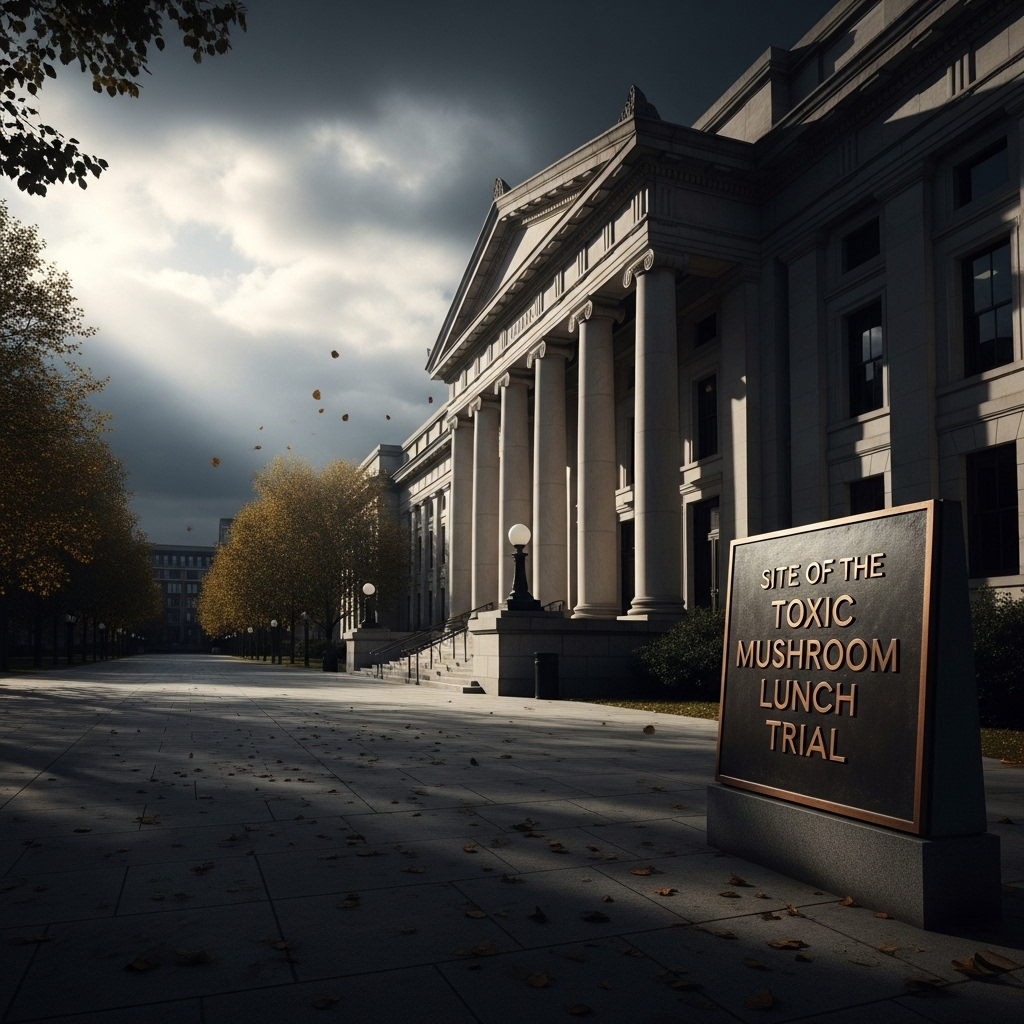
A Community in Shock: The Victims
The community was left reeling as news of the poisonings spread. The victims were well-known and beloved figures. Gail and Don Patterson, both 70, were retired teachers who had dedicated their lives to educating the town’s children. They were described as pillars of the community, kind and generous to a fault.
Heather Wilkinson, 66, was a respected local librarian remembered for her warm smile and passion for books. Her husband, Ian Wilkinson, the pastor of a local church, was also at the lunch and fell critically ill. He was the sole survivor among the four guests who ate the meal, though he required an emergency liver transplant and faced a long, arduous recovery.
The loss of three vibrant individuals under such shocking circumstances sent a wave of grief and disbelief through the town. “You never imagine something like this here,” one local resident told reporters. “To lose three wonderful people because of a toxic mushroom lunch is just unthinkable.”
The Investigation Behind the Toxic Mushroom Lunch
What initially seemed like a tragic foraging accident quickly turned into a homicide investigation. Homicide detectives were called in after the victims’ symptoms were identified as consistent with death cap mushroom poisoning. The focus swiftly fell on Erin Patterson, the cook and sole healthy adult from the gathering.
Patterson’s behavior following the lunch raised immediate red flags. She provided conflicting accounts to police and health officials about the source of the mushrooms and the preparation of the meal. A key piece of evidence was a food dehydrator that Patterson had dumped at a local waste facility. Investigators recovered the device and, through forensic analysis, found traces of death cap mushrooms, linking her directly to the poison.
The investigation meticulously pieced together a timeline of events, digital footprints, and witness testimony. They painted a picture not of an accidental poisoning, but of a carefully planned crime. The case of the toxic mushroom lunch became a complex puzzle involving mycology, digital forensics, and psychological profiling.

Motive and Malice: The Trial
During the tense, six-week trial, the prosecution laid out its case: Erin Patterson intentionally poisoned her in-laws in a desperate attempt to gain control over family assets and her estranged husband. Prosecutors presented evidence of a bitter separation and financial disputes, suggesting a clear motive for the horrific crime.
Patterson’s defense team argued that the incident was a terrible accident. They claimed she had purchased the mushrooms from an unnamed Asian grocery store months prior and had no idea they were poisonous. However, she could not produce a receipt or identify the store, and her story shifted multiple times under cross-examination.
The prosecution’s star witness was Ian Wilkinson, the sole survivor. In a powerful, emotional testimony, he recounted the events of the lunch and the devastating aftermath. The jury also heard from toxicologists who explained that the likelihood of accidentally confusing death caps with edible mushrooms in the quantity needed to kill three people was virtually zero for anyone with even basic foraging knowledge. For more information on local legal cases, you can read about our Unsolved Local Mysteries series.
A Life Sentence
After deliberating for four days, the jury found Erin Patterson guilty on three counts of murder and one count of attempted murder. The judge, calling her actions “unfathomably evil” and “a profound betrayal,” sentenced her to life in prison without the possibility of parole.
In handing down the sentence, Justice Cameron stated, “You manipulated and deceived those who trusted you. You turned a symbol of family and togetherness—a shared meal—into a weapon of devastating effect.”
The verdict brought a sense of closure to the victims’ families and the community, though the scars from the tragedy remain. The case stands as a chilling example of domestic malice and a cautionary tale about the irreversible consequences of a single, horrific decision.

How to Avoid a Toxic Mushroom Tragedy
While this case involved malicious intent, accidental poisonings from foraged foods are a real danger. A tragic toxic mushroom lunch can be avoided by following strict safety guidelines. Experts from organizations like the North American Mycological Association stress the following rules:
- Never Eat a Wild Mushroom You Cannot Identify with 100% Certainty: The popular saying is, “There are old mushroom hunters, and there are bold mushroom hunters, but there are no old, bold mushroom hunters.”
- Do Not Rely on Apps Alone: While mushroom identification apps can be helpful, they are not infallible. Cross-reference with multiple guidebooks and, ideally, a human expert.
- When in Doubt, Throw it Out: There is no room for error. If you have any hesitation about a mushroom’s identity, do not eat it.
- Cooked Does Not Mean Safe: Cooking does not destroy the deadly amatoxins found in death cap mushrooms and their relatives.
If you suspect someone has ingested a poisonous mushroom, contact Poison Control immediately and seek emergency medical help. Do not wait for symptoms to appear.


