Toxic mushroom lunch: 3 dead, murderer jailed for life
The chilling story of the toxic mushroom lunch that ended in three deaths and a life sentence has served as a horrifying reminder of how a seemingly innocent family meal can turn into a calculated act of murder. What began as a gathering over a home-cooked meal concluded in a courtroom, with Erin Patterson, 49, convicted of intentionally poisoning her former in-laws with one of the world’s deadliest fungi.
This case has gripped the nation, weaving a complex narrative of family strife, culinary deception, and a meticulous police investigation that ultimately unmasked a killer. For the small community of Leongatha, it’s a tragedy that will leave a permanent scar.
In This Article
- The Day of the Fatal Toxic Mushroom Lunch
- Investigation: Unraveling the Poison Plot
- Motive and Justice: The Courtroom Drama
- Life in Prison: The Aftermath of the Tragedy
- A Stark Reminder: The Dangers of Wild Mushrooms
The Day of the Fatal Toxic Mushroom Lunch
On a quiet Saturday in July, Erin Patterson hosted a lunch at her home, ostensibly as an olive branch to mend fences with her estranged husband’s family. The guests of honor were her former parents-in-law, Don and Gail Patterson, both 70, and Gail’s sister, Heather Wilkinson, 66. Heather’s husband, Ian Wilkinson, 68, was also in attendance. The centerpiece of the meal was a homemade beef Wellington, a dish Patterson had reportedly prepared with care.
Within hours of the meal, the four guests began to experience violent gastrointestinal distress. Their symptoms rapidly worsened, and they were soon hospitalized. Doctors quickly identified signs of severe liver and kidney damage, a hallmark of poisoning. Despite the best efforts of medical staff, Gail and Don Patterson, along with Heather Wilkinson, succumbed to their injuries over the following days. Ian Wilkinson was left fighting for his life, ultimately requiring a liver transplant to survive.
The only person who attended the lunch and remained unscathed was Erin Patterson herself. This crucial fact immediately raised red flags for investigators and became the central point around which the murder case would be built.
Investigation: Unraveling the Poison Plot
As the death toll rose, homicide detectives took over the investigation. Their focus was singular: the beef Wellington served at the toxic mushroom lunch. Patterson’s initial statements to police were inconsistent. She claimed to have used a mixture of button mushrooms from a supermarket and dried mushrooms purchased from an Asian grocery store months prior.
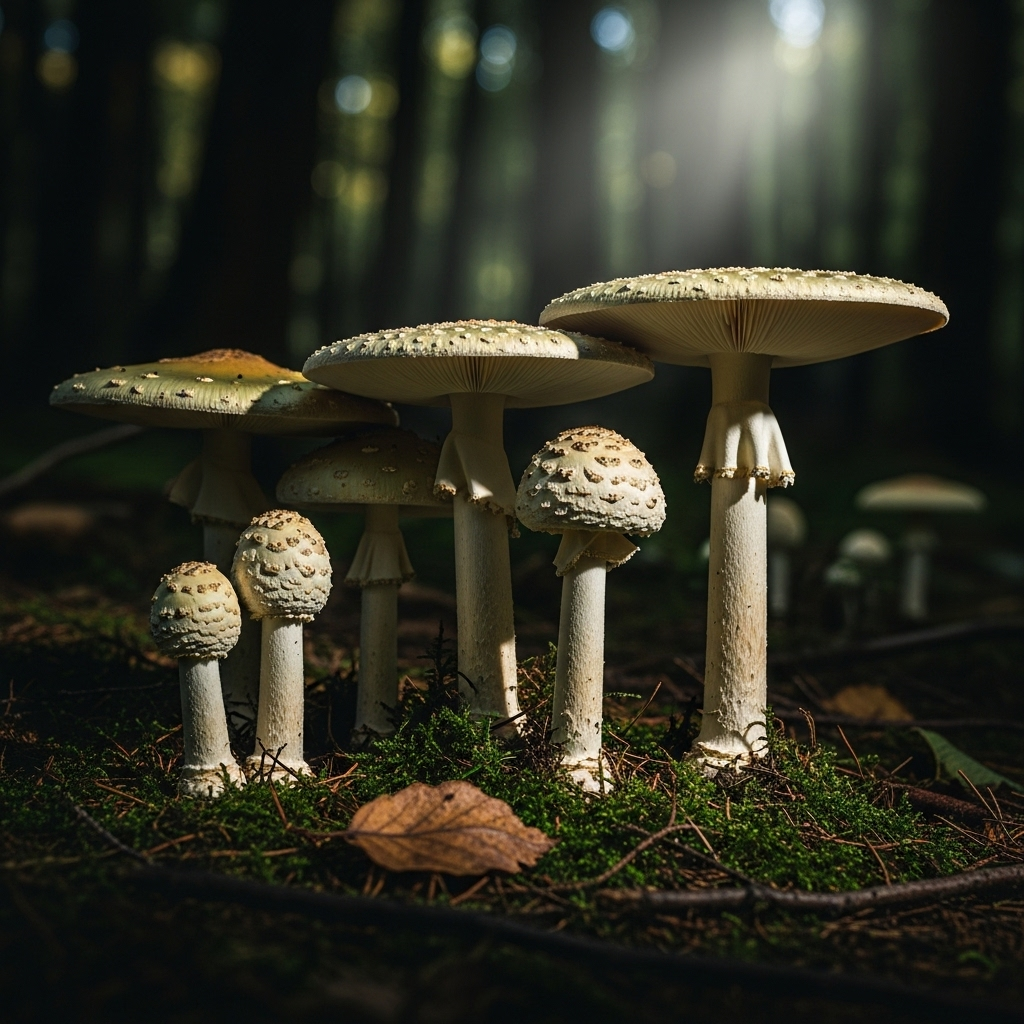
However, toxicology reports from the victims told a different story. They had ingested amatoxins, the potent poison found in Death Cap mushrooms (Amanita phalloides). These mushrooms are not sold commercially and are foraged in the wild. The key piece of evidence came when investigators discovered Patterson had disposed of a food dehydrator at a local landfill shortly after the lunch. Forensic analysis of the dehydrator revealed microscopic traces of Death Cap mushrooms, directly linking her to the deadly ingredient.
Detectives also discovered that Patterson’s estranged husband, Simon, was meant to be at the lunch but had cancelled at the last minute. This suggested that the intended target list may have been even larger. Patterson’s own children were also present at the house but ate a different meal and were unharmed, further pointing towards a calculated and deliberate act of poisoning rather than a tragic accident. For more information, you can read our guide on how to avoid common foraging mistakes.
Motive and Justice: The Courtroom Drama
The prosecution’s case, laid out over a tense six-week trial, painted Erin Patterson as a manipulative and vengeful woman. They argued the motive was rooted in a bitter separation from her husband and a desire to maintain control of the family home and assets. Prosecutors contended that by eliminating her in-laws, she sought to sever her husband’s family support system and inflict emotional devastation.
The state presented a mountain of evidence, including:
- The dehydrator with mushroom traces.
- Inconsistent timelines and stories provided by Patterson.
- Witness testimony detailing the acrimonious split.
- Internet search history on Patterson’s devices related to mushroom toxins and poison-induced organ failure.
Patterson’s defense team argued that the deaths were a tragic accident. They claimed she had no idea the mushrooms were poisonous and that she had purchased them from an unknown person, believing them to be edible. They insisted she loved her family and would never intentionally harm them. Patterson took the stand in her own defense, tearfully proclaiming her innocence, but her testimony was riddled with contradictions that the prosecution expertly dismantled during cross-examination.

Life in Prison: The Aftermath of the Tragedy
After three days of deliberation, the jury returned a verdict: guilty on three counts of murder and one count of attempted murder. Gasps filled the courtroom as the verdict was read. Patterson remained stoic, showing little emotion.
During sentencing, the judge delivered a scathing rebuke, sentencing her to life in prison without the possibility of parole. “You used a meal, an act typically associated with family, care, and generosity, as a weapon,” the judge stated. “This was a wicked and calculated act of betrayal against people who trusted you.”
The surviving victim, Ian Wilkinson, released a statement through his family, expressing profound grief for the loss of his wife and relatives, and gratitude for the liver donor who saved his life. The community remains in shock, struggling to comprehend how such a horrific event could have happened in their midst. The case stands as a dark monument to domestic malice hidden behind a veneer of normalcy.
A Stark Reminder: The Dangers of Wild Mushrooms
Beyond the courtroom drama, this tragedy serves as a critical public service announcement about the extreme dangers of consuming wild mushrooms. The Death Cap mushroom, responsible for the deaths in this case, tragically resembles some edible Asian straw mushrooms, making misidentification a fatal risk for amateur foragers.
Experts stress that there is no simple test to distinguish a poisonous mushroom from an edible one. Myths like “if an animal eats it, it’s safe” are dangerously false. Furthermore, cooking, boiling, or drying does not neutralize amatoxins. The only way to be safe is to be 100% certain of a mushroom’s species, which requires expert-level knowledge.
The golden rule of mushroom foraging is simple: When in doubt, throw it out. Never consume a wild mushroom unless you are absolutely certain of its identity. For reliable information on mushroom safety, consult resources from official bodies like the Centers for Disease Control and Prevention (CDC) or contact your local poison control center.