UK Investment: 5 Takeaways from the ABPI Report
The latest report from the Association of the British Pharmaceutical Industry (ABPI) provides a crucial health check on the life sciences sector. For anyone tracking the landscape of UK investment, this document is essential reading. It paints a detailed picture of the challenges and opportunities facing one of the nation’s most innovative industries. We’ve analysed the data to bring you the five most important takeaways.
Understanding these trends is vital for policymakers, investors, and industry leaders alike. The report underscores the fierce global competition for capital and talent, highlighting where the UK is excelling and where it needs to improve to maintain its position as a global life sciences hub.
In This Article:
1. R&D Spending Shows Resilience but Faces Headwinds
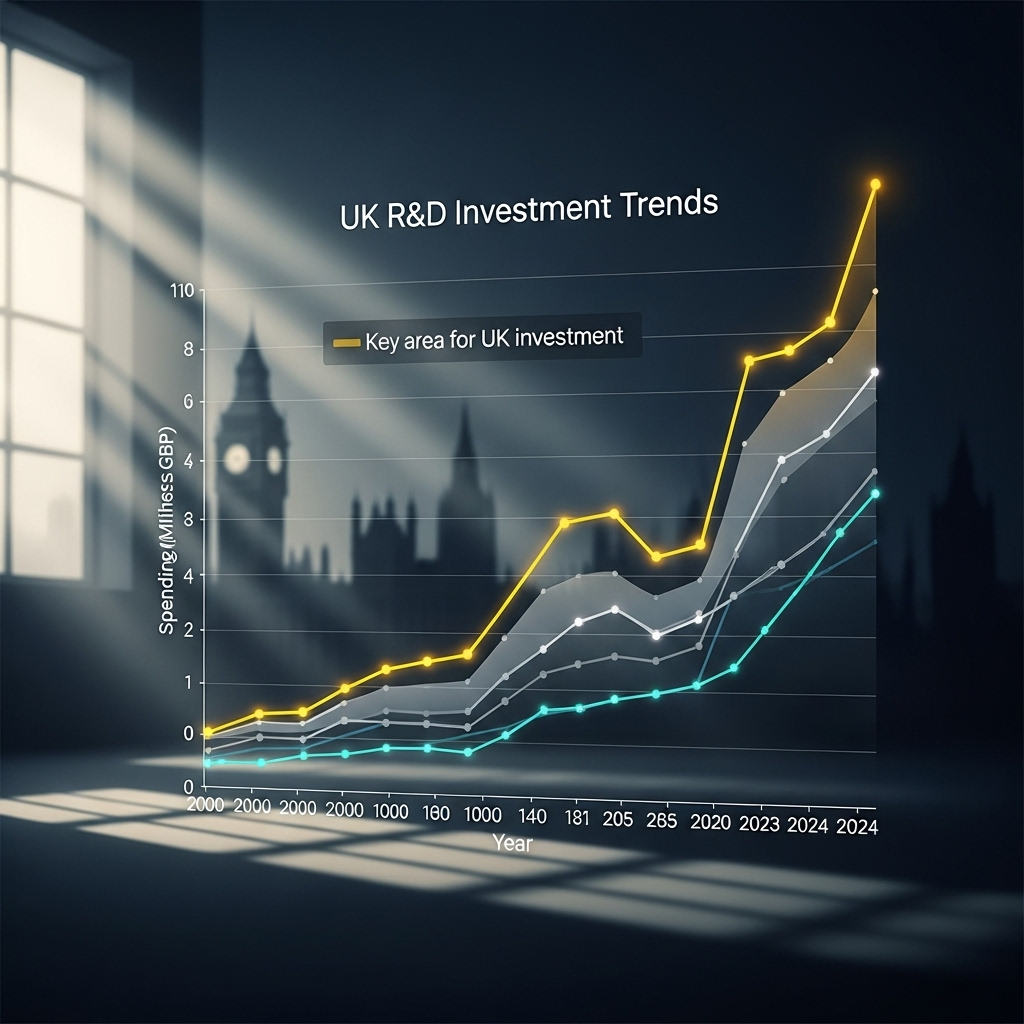
One of the headline findings from the ABPI report is the state of Research and Development (R&D) expenditure. The data shows that pharmaceutical R&D spending in the UK remains substantial, forming the backbone of the country’s innovation ecosystem. In the last year, the sector ploughed billions into discovering the next generation of medicines, confirming its status as a high-value contributor to the economy.
However, the report sounds a note of caution. While the total figure is robust, the rate of growth has slowed compared to international competitors. Countries like the US, China, and Germany are aggressively increasing their R&D incentives, creating a more attractive environment for global pharmaceutical companies to allocate their budgets. The report suggests that without a competitive fiscal environment, including enhanced R&D tax credits, future UK investment in this critical area could be at risk.
The ABPI highlights that for every £1 the pharmaceutical industry invests in R&D, an additional £1.27 is generated in the wider economy. This multiplier effect demonstrates that fostering R&D is not just about scientific discovery; it’s a powerful engine for broad economic growth.
2. Clinical Trial Activity is a Mixed Bag
Clinical trials are the bridge between laboratory discovery and patient access. The UK has historically been a world leader in this field, thanks to the NHS and its renowned academic institutions. The report indicates that the UK continues to be a preferred location for early-phase (Phase I and II) clinical trials, which test the safety and initial efficacy of new compounds.
The concern lies with later-phase (Phase III) trials. These are larger, more complex, and more expensive studies that are crucial for getting a new medicine approved. The report reveals a decline in the UK’s share of global Phase III trials. This is a significant red flag, as these trials not only provide patients with early access to innovative treatments but also represent a major source of inward investment.
Several factors contribute to this trend, including slower study setup times and regulatory hurdles compared to other regions. The ABPI calls for a streamlined and predictable process to reverse this decline. Ensuring the UK remains a top-tier destination for all phases of clinical research is paramount for the health of both patients and the economy. For more details, you can review the official ABPI publications on their website.
Government Policy’s Direct Impact on UK Investment
The report leaves no doubt that government policy and commercial agreements have a direct and immediate effect on the pharmaceutical sector’s confidence in making long-term UK investment decisions. The stability and predictability of the commercial environment are repeatedly cited as the most critical factors for global boardrooms when deciding where to invest in new manufacturing plants, research hubs, and headquarters.
Recent negotiations and changes to the voluntary scheme for branded medicines pricing and access (VPAS) have created uncertainty. The industry needs a clear, long-term vision from the government that acknowledges the value of innovative medicines. This includes not just fair pricing but also rapid patient access and a supportive regulatory framework.
A positive and collaborative relationship between the government and the industry is essential. When policies are aligned to support innovation, the UK can attract significant investment. Conversely, an unstable or adversarial environment can quickly lead to capital flight, with companies choosing to invest in more welcoming markets. This is a core theme that links all other takeaways in the report.

4. Manufacturing Footprint Requires Strategic Support
Pharmaceutical manufacturing is a high-tech, high-value component of the UK economy. The ABPI report highlights that the UK has a sophisticated manufacturing base, particularly in complex biologics and advanced therapies like cell and gene therapies. This is a significant strength and a key area for future growth.
However, the sector faces intense competition. The report points out that investment in new manufacturing facilities is a decades-long commitment, and companies need certainty to make such decisions. Issues in the supply chain, energy costs, and a skills gap in specialised manufacturing roles are identified as key challenges. The report recommends targeted capital allowances and a dedicated manufacturing strategy to anchor more production in the UK.
Strengthening the UK’s manufacturing capabilities is not just about economic benefit; it’s also about health security. A robust domestic manufacturing footprint ensures a more resilient supply of essential medicines, a lesson learned during the recent global pandemic. This topic shares parallels with other strategic sectors, which you can explore in our article on the UK’s semiconductor strategy.
5. The Future Outlook: A Call for a Stable and Competitive Environment
Ultimately, the ABPI report is a call to action. It concludes that while the fundamentals of the UK life sciences sector—a strong science base, world-class universities, and the NHS—remain formidable, they can no longer be taken for granted. The future of UK investment in this space hinges on creating an internationally competitive and stable ecosystem.
The report’s key recommendations centre on three pillars:
- A Competitive Fiscal Environment: This includes globally attractive R&D tax incentives and capital allowances.
- A Streamlined Regulatory and Access Pathway: Faster setup for clinical trials and quicker NICE appraisals to ensure patients get access to new medicines.
- A Long-Term, Stable Commercial Framework: A predictable partnership between the industry and the government on medicine pricing and reimbursement.
The message is clear: the UK is at a crossroads. With the right policies, it can accelerate growth, attract billions in investment, and solidify its position as a global life sciences superpower. Without them, it risks a slow erosion of its competitive edge. The choices made in the next few years will determine the trajectory of UK investment in this vital sector for decades to come.

Conclusion: A Critical Juncture for UK Investment
The ABPI’s latest analysis serves as a vital barometer for the health of the UK’s life sciences industry. The takeaways are unambiguous: while the UK possesses foundational strengths, it is operating in an increasingly competitive global market. Resilience in R&D is being tested, clinical trial leadership is being challenged, and manufacturing growth requires strategic nurturing. The overarching theme is the profound impact of stable, pro-innovation government policy. For the UK to continue attracting the investment it needs to be a leader in medicine and science, a clear and committed long-term strategy is not just desirable—it is absolutely essential.
“`