
New Low: Under 50% of US Adults View Capitalism Positively
In a stunning reflection of growing economic anxiety, recent polling reveals a significant shift in American public opinion. For the first time in modern history, the percentage of US adults who view capitalism positively has dropped below 50%. This marks a new low for an economic system once considered the bedrock of American prosperity and identity. The data points to a deep and growing disillusionment, particularly among younger generations, who feel the current system is failing to provide a clear path to financial security.
This landmark decline isn’t a sudden event but the culmination of years of mounting economic pressures. From the lingering scars of the 2008 financial crisis to the current struggles with inflation and housing costs, a growing number of Americans are questioning whether capitalism, in its present form, serves the interests of the many or just the few. This article explores the data behind this trend, the key factors driving it, and what this historic shift could mean for the future of the United States.
A New Low in Economic Sentiment: What the Numbers Say
The latest national survey from the Public Policy Institute paints a stark picture. Only 49% of American adults now hold a positive view of capitalism. This figure represents a dramatic drop from just a decade ago when the same poll found that over 60% of adults viewed the system favorably. The steady erosion of support has accelerated in the past few years, coinciding with the economic turmoil of the pandemic and subsequent inflationary pressures.
This historic dip is a critical indicator of public mood. The term capitalism itself, long associated with opportunity and innovation, is now met with skepticism by more than half the population. The data shows that while a majority still don’t have a “very negative” view, the shift from positive to neutral or slightly negative is what pushed the overall favorability to this new low. This lukewarm sentiment suggests a population that is open to re-evaluating the fundamental principles of the American economy.
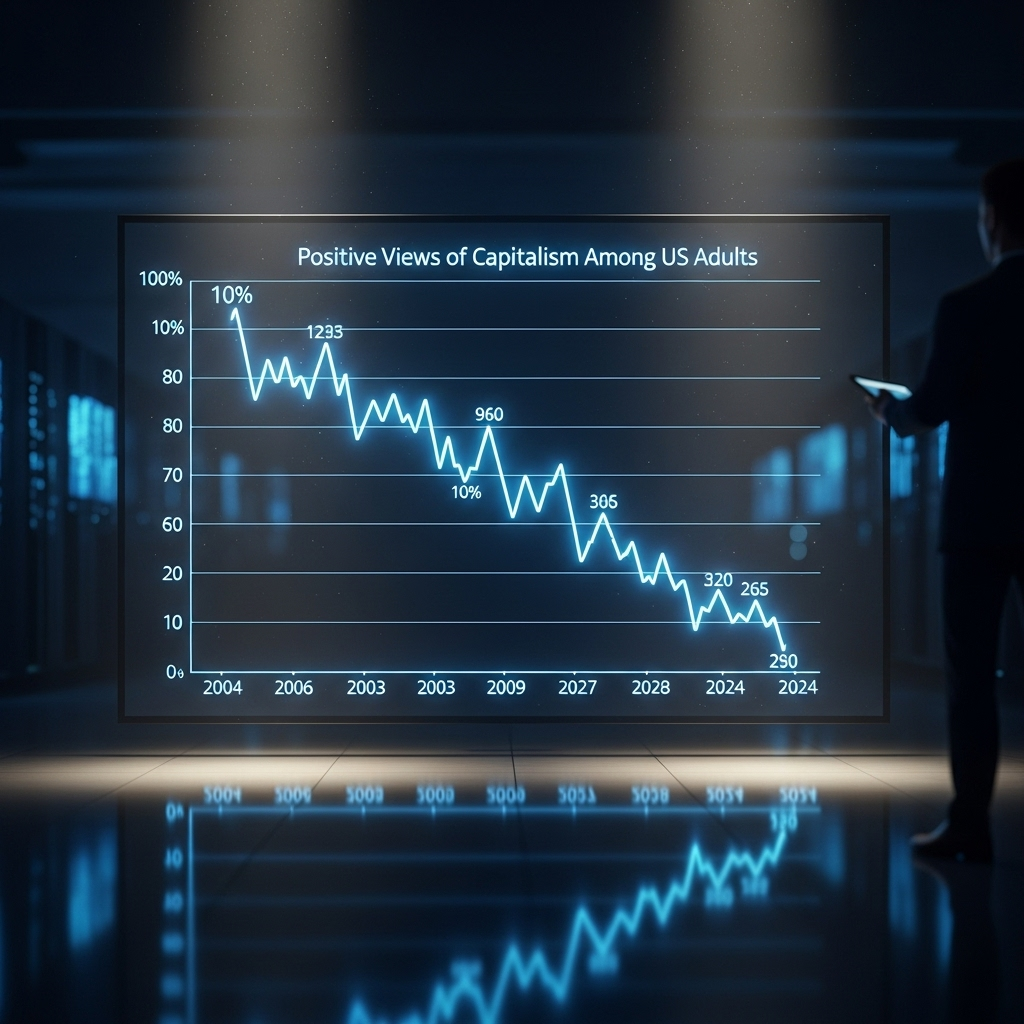
Analysts note that this isn’t just a fleeting reaction to a bad economic quarter. It is part of a longer-term trend reflecting deep structural concerns. The decline is seen across almost all demographics, though it is most pronounced among specific age and income groups, signaling a fundamental disconnect between the promise of capitalism and the reality many Americans experience daily.
Key Factors Driving the Decline
Several powerful forces are converging to drive this negative sentiment. At the forefront is the pervasive cost of living crisis. While corporate profits have soared, wages for the average worker have largely stagnated when adjusted for inflation. The rising cost of essentials like groceries, fuel, and healthcare has stretched household budgets to their breaking point.
Key drivers include:
- Income and Wealth Inequality: The visible and growing chasm between the ultra-rich and the rest of the population is a major source of frustration. Many perceive the system as “rigged,” where wealth accumulation at the top comes at the expense of worker pay and benefits.
- The Housing Crisis: For millions, the dream of homeownership is now completely out of reach. Skyrocketing home prices and soaring rental costs mean a larger portion of income is consumed by housing, leaving little for savings or investment.
- Crushing Debt: The burden of student loans, medical debt, and credit card debt weighs heavily on a huge portion of the population. Young people, in particular, start their careers with tens of thousands of dollars in student debt, severely hampering their ability to build wealth or achieve traditional financial milestones.
- Job Insecurity: The rise of the “gig economy” and the decline of stable, long-term careers with benefits have left many feeling economically vulnerable. The promise of “climbing the ladder” feels increasingly hollow when the rungs seem to be disappearing.
The Generational Divide: Millennials and Gen Z Lead the Shift
The story of capitalism’s declining popularity is largely a story about a generational handover. While a majority of Baby Boomers (68%) still view capitalism positively, the numbers plummet among younger generations. For Millennials (born 1981-1996), positive views sit at just 44%. For Gen Z (born 1997-2012), the number is even lower, at a mere 41%.
This is no accident. These younger generations’ formative years were defined by economic instability. Millennials entered the workforce in the shadow of the Great Recession, while Gen Z is coming of age in an era of extreme inequality, climate anxiety, and pandemic-related disruption. Their lived experience with capitalism has not been one of boundless opportunity but one of precarity and struggle.

For them, the “social contract”—that hard work leads to a better life—appears broken. They see their parents’ and grandparents’ generations achieving milestones like buying a home and retiring comfortably, while they are stuck paying exorbitant rent and wondering if they’ll ever be able to retire. This stark contrast fuels a powerful desire for systemic change.
A Search for Alternatives: Socialism’s Rising Appeal
As faith in capitalism wanes, interest in alternatives is naturally on the rise. The same polls that show a new low for capitalism show a corresponding increase in positive views toward socialism. Approximately 40% of Americans now have a positive view of socialism, a number driven almost entirely by adults under 35.
It’s crucial to understand what “socialism” means to these respondents. For most, it does not conjure images of Soviet-style state control. Instead, it is associated with the policies of democratic socialist countries in Europe: universal healthcare, tuition-free higher education, strong worker unions, and a robust social safety net. They see these policies as potential solutions to the very problems—debt, inequality, and precarity—that have soured their view of American capitalism. For more details on these trends, you can review the full polling data at the Pew Research Center.
This shift is pushing once-fringe ideas into the mainstream political debate. The popularity of politicians who openly embrace democratic socialist ideas is a testament to this changing tide. For a deeper dive into these concepts, you can read our related article, What is Democratic Socialism?
What This Means for the Future of US Politics and Policy
This historic shift in public opinion is more than just a headline; it’s a force that will likely reshape American politics and policy for decades to come. As Millennials and Gen Z become the dominant voting bloc, their skepticism of the current economic order will translate into tangible political pressure.
We can expect to see continued momentum for policies aimed at curbing corporate power and redistributing wealth. Debates around a wealth tax, higher corporate taxes, aggressive antitrust enforcement, and federal student loan forgiveness will move from the progressive fringe to the center of the political stage. The fact that support for capitalism has reached a new low provides a powerful mandate for politicians who champion these reforms.
Ultimately, this polling is a clear signal of widespread discontent. The American public, led by its younger members, is sending a message that the status quo is not working. The debate is no longer about whether to tweak the system, but how to fundamentally reform it to create an economy that offers genuine opportunity and security for all, not just for those at the very top. The “new low” for capitalism may just be the beginning of a new chapter in America’s economic story.
“`


