
Vibe Coding: 5 Ways Senior Devs Are Now AI Babysitters
The role of the senior developer is undergoing a seismic shift. Gone are the days of spending hours manually scaffolding a new service or hunting for a missing semicolon. Now, we have AI copilots and code generators for that. But this hasn’t made the senior dev obsolete; it has transformed them into something new, something… different. Welcome to the era of vibe coding, where the primary job is no longer to write code line-by-line, but to guide a powerful, and often clueless, AI assistant toward a desired outcome.
This new paradigm is less about precise instructions and more about setting a mood, a direction, a “vibe.” You tell the AI, “Make this feel more responsive,” or “Refactor this with a cleaner, more modern approach.” The AI churns out a solution, and the senior dev’s real work begins. In essence, they’ve become highly-paid AI babysitters. Here are five ways this new reality is playing out.
Table of Contents
- 1. The Prompt Whisperer: Translating Business Vibes into AI Commands
- 2. The Code Janitor: Cleaning Up AI’s “Good Enough” Messes
- 3. The Context Keeper: The Repetitive Side of Vibe Coding
- 4. The Architectural Shepherd: Guarding the Gates of Good Design
- 5. The Debugging Detective: Solving “Why Did the AI Do That?” Mysteries
1. The Prompt Whisperer: Translating Business Vibes into AI Commands
The first and most critical role in the world of vibe coding is that of the “Prompt Whisperer.” A project manager might say, “We need the user dashboard to be more engaging and intuitive.” In the past, a senior dev would translate this into a series of user stories, technical tasks, and specific code changes. Today, their first step is different.
Now, they translate that business “vibe” into a carefully crafted sequence of prompts for an AI. It’s an art form. It might start with, “Generate a React component for a user dashboard using Tailwind CSS. It should include cards for user stats, recent activity, and notifications. Use a modern, minimalist design.” The AI provides a first draft. The dev then refines it with follow-up prompts: “Okay, that’s a good start. Now, make the cards animated on hover,” and “Change the color palette to be warmer and more inviting.”
This back-and-forth is the core of the babysitting job. The senior dev isn’t writing the bulk of the code, but they are 100% responsible for the final output, guiding the AI with a mix of technical expertise and abstract direction. They are the human interface for corporate feelings, turning vague requests into functional, AI-generated reality. For more on this, check out our guide to advanced prompt engineering.

2. The Code Janitor: Cleaning Up AI’s “Good Enough” Messes
AI code generators are incredibly fast. They can produce hundreds of lines of code in seconds. The problem? That code is often just “good enough” to work. It might be inefficient, introduce subtle security flaws, or completely ignore established coding conventions. This is where the senior dev puts on their janitor hat.
The AI provides the raw material, and the developer’s job is to sanitize it. They review the AI’s output with a critical eye, asking questions like:
- Is this code scalable? Or will it buckle under a real load?
- Did the AI just introduce a SQL injection vulnerability?
- Does this code align with our team’s style guide, or does it look like it was written by five different interns at once?
- Is this solution over-engineered for such a simple problem?
This is arguably the most important “babysitting” task. An unsupervised AI can quickly fill a codebase with technical debt and security holes. The senior dev acts as a quality gate, refactoring clunky logic, optimizing performance, and patching vulnerabilities. They ensure the AI’s contribution elevates the project rather than compromising it. This reinforces the need for human oversight and a deep understanding of best practices, like those outlined by OWASP for security.
3. The Context Keeper: The Repetitive Side of Vibe Coding
AI models, for all their power, suffer from digital amnesia. They have a limited “context window,” meaning they can only remember a certain amount of the current conversation. In a large, complex project, the AI will constantly forget the overall architecture, previous decisions, and specific constraints.
The senior dev becomes the “Context Keeper.” Their job is to constantly remind the AI of the bigger picture. It’s a repetitive, and sometimes maddening, process that feels exactly like babysitting a child with a short attention span. “No, remember, we are using PostgreSQL, not MySQL.” “Don’t forget, that function needs to be idempotent.” “We already established that the API key should be passed in the header, not as a query parameter.”
This constant re-orientation is a core pillar of the vibe coding workflow. The developer holds the entire project’s blueprint in their head and feeds the AI snippets of it on a need-to-know basis. They are the source of truth, the patient guide who keeps the AI from wandering off into a forest of bad assumptions and forgotten requirements. Without this human context keeper, the AI would generate a chaotic mess of disconnected, inconsistent code.
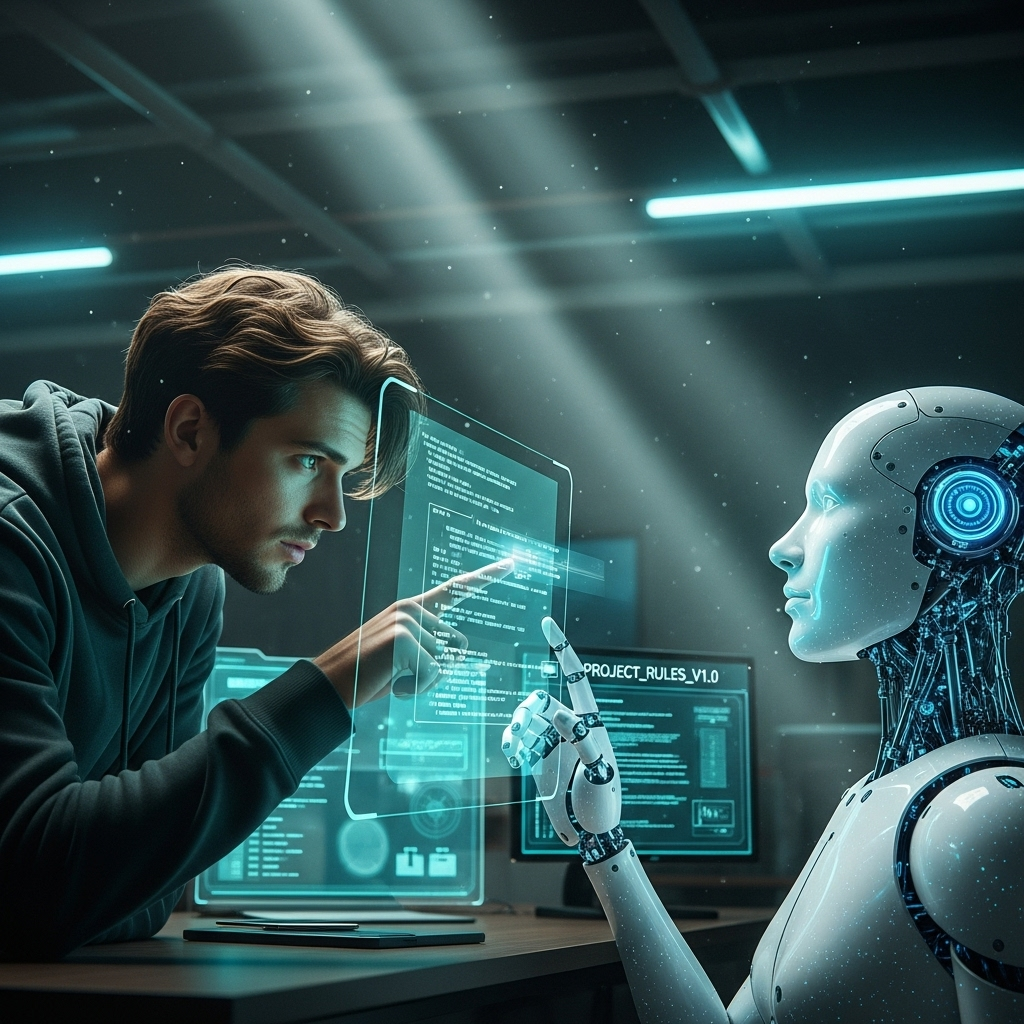
4. The Architectural Shepherd: Guarding the Gates of Good Design
While an AI can write a brilliant, self-contained sorting algorithm, it has almost no understanding of high-level software architecture. It doesn’t know why your company chose a microservices pattern over a monolith, or the specific reasons for using a message queue to handle asynchronous tasks. It just generates code based on its training data.
The senior developer, therefore, becomes the “Architectural Shepherd.” Their primary role shifts from implementation to integration. They take the isolated functions and components generated by the AI and ensure they fit neatly into the established architectural framework. They guard the gates of good design, preventing the AI from introducing anti-patterns that would create a nightmare to maintain.
This means rejecting AI suggestions that, while functional in isolation, violate the system’s core principles. The dev is the one who says, “No, that service cannot talk directly to another service’s database. It must go through the API gateway.” They are defending the integrity and long-term health of the codebase from the AI’s well-intentioned but architecturally naive suggestions. This strategic oversight is more valuable than ever, as it dictates the scalability and maintainability of the entire system. You can learn more about these principles in our guide to modern software architecture.
5. The Debugging Detective: Solving “Why Did the AI Do That?” Mysteries
Debugging human-written code is hard enough. Debugging AI-generated code is a whole new level of detective work. When a human makes a mistake, you can often trace their logic, or lack thereof. When an AI produces a bug, the “why” can be completely baffling.
The bug might stem from a subtle misunderstanding in the prompt, a bizarre hallucination from the model, or an edge case the AI’s training data never prepared it for. The senior developer becomes a detective, tasked with solving these strange mysteries. The debugging process is less about finding a typo and more about answering the question, “What weird assumption did the AI make to produce this result?”
This requires a deep level of experience and intuition. The developer must be able to spot the “tell” – the one line of code that feels slightly “off” or the function that is needlessly complex – and pull on that thread until the entire mystery unravels. This is the ultimate babysitting duty: cleaning up a mess you didn’t make and can’t fully explain, but are responsible for fixing nonetheless.

Conclusion: The Vibe Endures
The rise of AI isn’t eliminating the need for senior developers; it’s fundamentally changing the job description. The focus is shifting away from manual implementation and toward strategy, guidance, and quality control. Through vibe coding, senior developers leverage their deep experience to act as prompt whisperers, code janitors, context keepers, architectural shepherds, and debugging detectives.
They are the essential human element in the loop, the babysitters ensuring that our powerful new AI tools are used wisely, securely, and effectively. The future of software development is a collaboration, and for now, the senior developer is the one setting the vibe.


