
Women’s World Cup Director Defends 13-0 Tournament Score
In the wake of a polarizing 13-0 group stage match that has dominated headlines, the tournament’s top organizer has broken her silence. The women’s world cup director, Anja Schmidt, issued a robust defense of the result, arguing that such scorelines, while difficult to watch, are a necessary and even respectful part of the sport’s global development.
The lopsided victory by the reigning champions over a team making their tournament debut sparked a widespread debate among fans, pundits, and former players. Critics questioned the winning team’s sportsmanship for continuing to score late into the match, while others pointed to the result as evidence of a damaging competitive imbalance in the women’s game.
Article Contents
The Backlash and the Debate Over Sportsmanship
Immediately following the final whistle, social media erupted. The conversation centered on whether the dominant team should have eased up after securing a comfortable lead. Many argued that celebrating goals in the double digits against an outmatched opponent was unsportsmanlike and humiliating for the losing side.
Former international players weighed in, with some suggesting an unwritten rule of professional courtesy should have been observed. The core of the criticism was that such a result could be demoralizing for a developing football nation, potentially harming the sport’s growth in that country. “At some point, you have to think about the bigger picture,” one television analyst commented. “Is this result helping grow the game, or is it just cruel?”
However, an equally vocal contingent defended the players’ actions. They argued that it is a player’s professional duty to perform at their best for the full 90 minutes. Furthermore, in a tournament format, goal difference can be a critical tiebreaker for advancing out of the group stage. To stop trying would be to disrespect the competition and potentially jeopardize their own advancement.
What the Women’s World Cup Director Said About the Scoreline
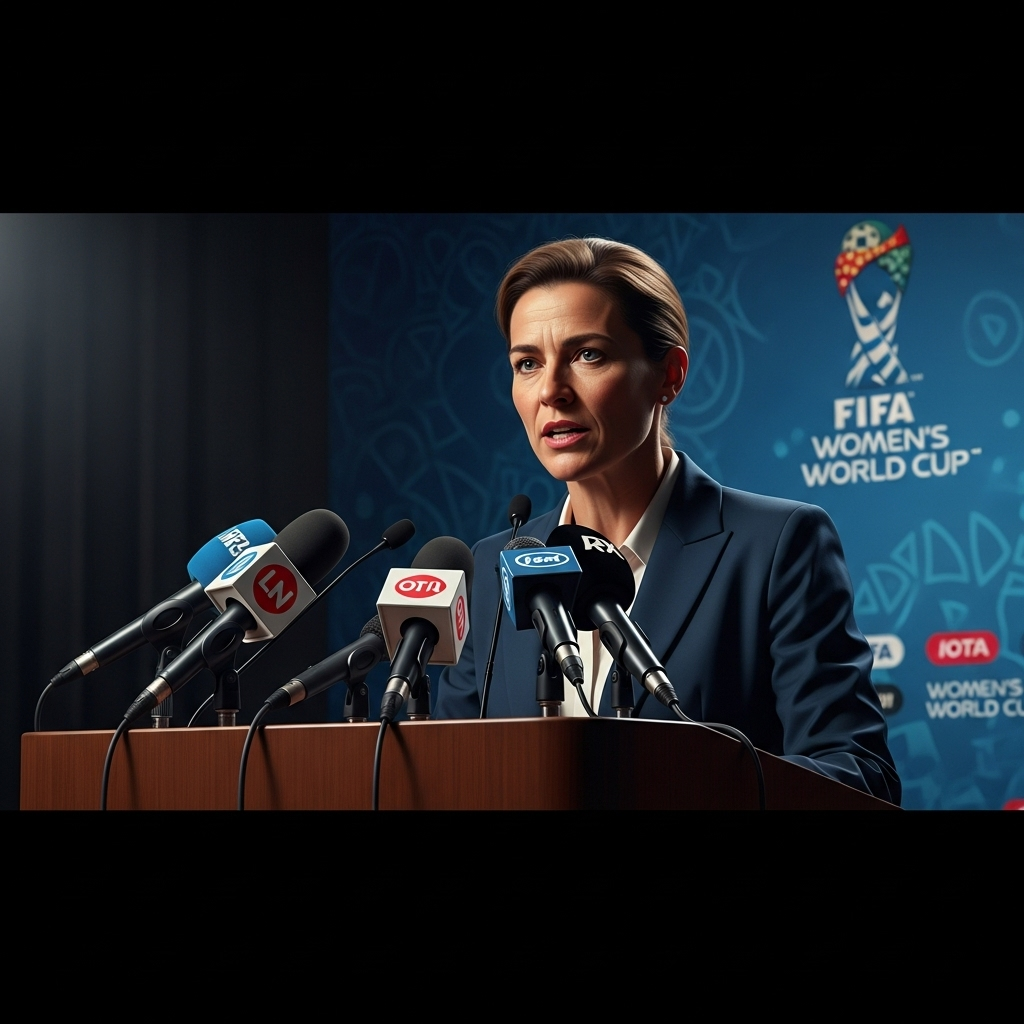
Facing intense media scrutiny, women’s world cup director Anja Schmidt addressed the controversy head-on in a prepared statement and subsequent press conference. She firmly rejected the notion that the result was damaging to the sport, instead framing it as a benchmark for aspiring nations.
“To ask a team to stop playing their best is the ultimate sign of disrespect to an opponent,” Schmidt stated. “Every team that qualifies for this tournament deserves to be played against with maximum effort. To do anything less would be patronizing and would violate the integrity of the World Cup.”
Schmidt elaborated on three key points:
- Competitive Integrity: She reiterated that goal difference is a crucial part of the tournament rules. “We cannot have teams making arbitrary decisions on the pitch about when to stop scoring. Every goal counts, and that rule applies to every team equally.”
- Aspirational Benchmark: The director argued that witnessing the highest level of play provides a clear target for developing programs. “This is the world stage. The debutant team now understands the gap. This isn’t a moment for shame; it’s a powerful catalyst for them to seek more funding, better coaching, and improved infrastructure.”
- Global Growth: She highlighted that these results often shine a spotlight on the disparities in support for women’s football. “This 13-0 score will generate more conversation about funding and resources than any narrow 1-0 loss ever could. This is how we drive change and encourage federations and governing bodies like FIFA to invest more.”
The director’s comments aim to shift the narrative from one of poor sportsmanship to one of professional necessity and long-term strategic growth for the entire sport. You can read more analysis of her strategy in our latest sports news section.

Historical Context: A Global Football Phenomenon
While the 13-0 score was shocking, lopsided results are not unique to the women’s game. The history of the men’s World Cup and its qualifiers is filled with similar examples. In the 2002 World Cup qualifying, Australia famously defeated American Samoa 31-0. Germany beat San Marino 13-0 in a Euro 2008 qualifier.
These results in the men’s game often sparked similar, albeit usually more muted, debates. The general consensus that emerged over time was that these scores were an inevitable part of a global tournament that includes football powerhouses and developing microstates. The solution was not to demand that winning teams hold back, but to create preliminary qualifying rounds to ensure more competitive matchups in the final tournament stages.
The women’s world cup director alluded to this history, noting that the women’s game is on a similar evolutionary path, just at an accelerated pace. “What we are seeing is the rapid expansion of the game,” Schmidt explained. “With expansion comes growing pains. This is a sign of health, a sign that more nations are joining the global football family.”
The current 32-team format is relatively new for the Women’s World Cup, and this expansion was deliberately designed to give more nations a chance to compete on the world stage. The trade-off, as seen in this 13-0 result, is the potential for significant mismatches in the early rounds. It is a calculated risk for the sake of inclusivity and long-term development.
The Path Forward: Investing in Global Parity
The debate ultimately circles back to a single, critical issue: the vast disparity in funding, support, and professional opportunities between the top-ranked women’s teams and those at the bottom.
Players on the champion team are full-time professionals, supported by long-established domestic leagues, multi-million dollar sponsorships, and elite coaching staff. In contrast, many players on the debutant squad are semi-professional or amateur, juggling full-time jobs with their training and receiving minimal support from their national federation.
The director emphasized that FIFA and regional confederations have a responsibility to close this gap. “This result is a call to action,” she concluded. “It’s a message to all of us to increase investment, share resources, and create a more equitable foundation for the sport worldwide. The goal isn’t to see fewer 13-0 scores by asking winners to slow down, but to make 13-0 scores a relic of the past by empowering every team to be more competitive.”
Possible solutions being discussed include:
- Increased solidarity payments from FIFA to smaller federations, earmarked for women’s programs.
- Mentorship programs between established and emerging football nations.
- Creation of more international competitions to give lower-ranked teams more high-level experience.
While the 13-0 score remains a contentious talking point, the perspective offered by the Women’s World Cup director recasts it not as an endpoint of shame, but as a starting point for a critical conversation about the future of the beautiful game.
“`


